







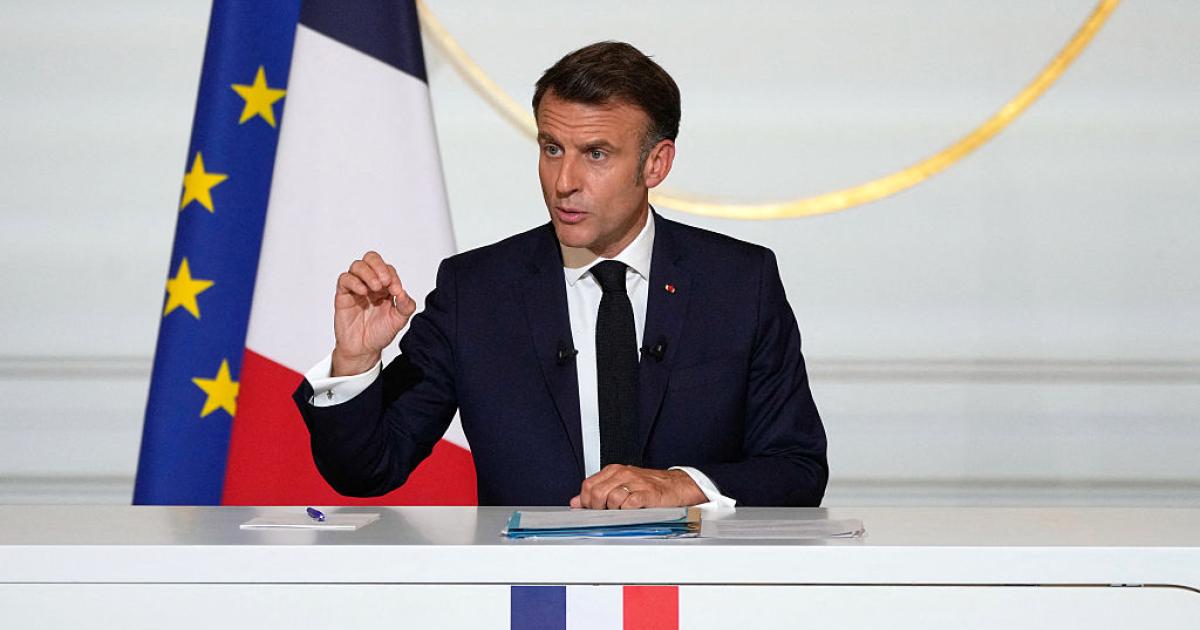
In a delicate political moment, the United States is moving to redraw the path of the Gaza ceasefire agreement by pushing for the start of its second phase, without pre-linking it to the disarmament of the Hamas movement or the recovery of the body of the last Israeli hostage killed during the war. This approach, which the administration of US President Donald Trump informed Israeli Prime Minister Benjamin Netanyahu about, reflects a tactical shift in Washington's approach to the issue, and at the same time reveals a growing gap between American priorities and Israeli concerns.
The second phase of the agreement, according to the American vision, goes beyond the immediate security dimension to address more complex issues, most notably the reconstruction of the Gaza Strip, its post-war administration arrangements, and the launch of a political-economic path aimed at stabilizing the calm and preventing a rapid return to confrontation. However, Netanyahu's government still believes that any progress in this path must be conditional on achieving two clear goals: recovering the remains of hostage Ran Gvili, and completely disarming Hamas.
The United States, for its part, is not backing down from its commitment to these two goals, according to a source for Al-Quds newspaper, but it refuses to make them a hindering condition. Washington, according to informed sources, has become convinced that linking reconstruction and moving Gaza to the “post-war” phase with highly complex issues such as weapons and hostages will practically lead to political paralysis, and perhaps to the collapse of the already fragile ceasefire.
In this context, the US administration intensified its contacts with regional mediators, especially Egypt, Qatar, and Turkey, who conveyed assurances that Hamas might agree to a gradual disarmament process, starting with giving up heavy weapons, and accompanied by a program to buy light weapons from fighters. However, this proposal still faces Israeli reservations, in light of public assurances from Hamas leadership that its weapons will not be subject to negotiation except within a comprehensive political settlement leading to the establishment of a Palestinian state.
In parallel, Washington is preparing to announce the formation of a “Peace Council,” an international framework that includes Arab and European countries, in addition to international financial institutions, with the aim of providing political and financial cover for the next phase. The US administration aspires for this council to be a platform for fundraising, coordinating reconstruction efforts, and perhaps later using it as a model for addressing other conflicts around the world.
In addition to the Peace Council, the United States is working to establish a more involved interim executive committee in daily details, comprising prominent political and diplomatic figures, and serving as a link with a technocratic Palestinian committee responsible for managing civil affairs in Gaza. This committee, whose formation efforts are led by Egypt, consists of non-factional figures, in an attempt to overcome Palestinian division and reassure Israel at the same time. Despite the Palestinian Authority's pressure for direct participation, Israel insists on excluding any official representation for it, content with the presence of figures with previous administrative backgrounds.
As for the security aspect, the idea of an “international stabilization force” still faces significant obstacles. The countries nominated to participate are hesitant to send forces to an unstable environment, despite Washington's attempts to reassure them that the mandate will be limited and will not include direct confrontation with Hamas. This hesitation raises questions about the international community's ability to fill the security vacuum that will be left by the gradual Israeli withdrawal.
The reconstruction file, in turn, is no less complex. The model projects being discussed, including the construction of residential complexes to house tens of thousands of Palestinians, clash with strict Israeli restrictions on the entry of materials classified as “dual-use.” The United Nations warns that the continuation of these restrictions will make any talk of real reconstruction closer to an illusion, given the difficulty of introducing the simplest humanitarian necessities, let alone heavy building materials.
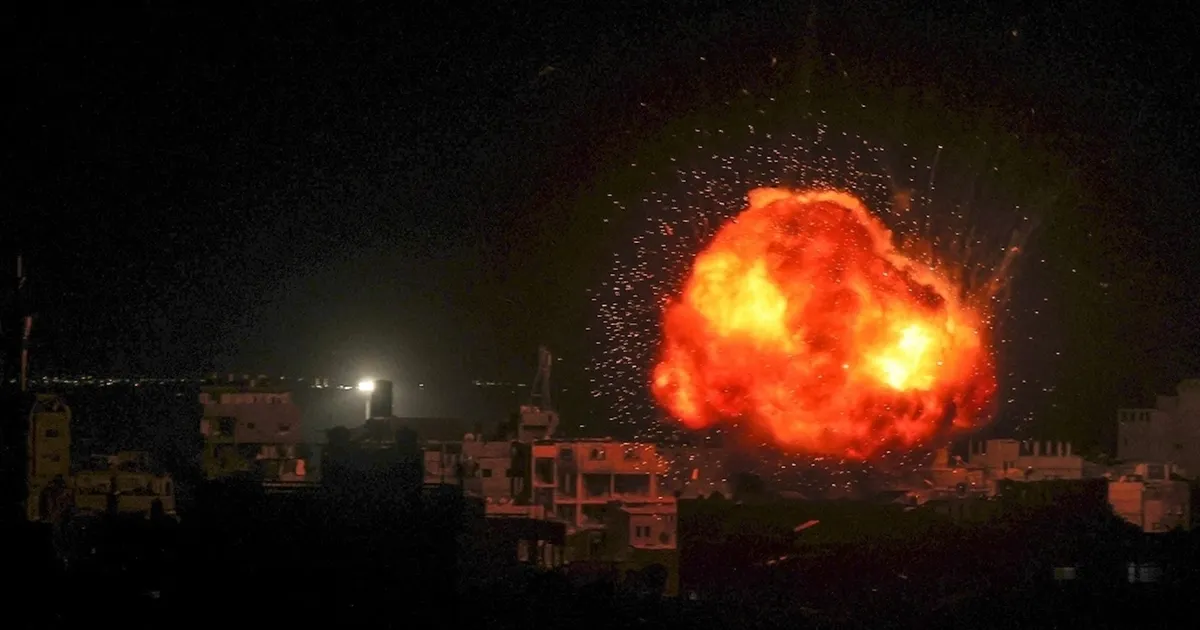
In the background of all this, the file of the last Israeli captive's remains remains strongly present. The search operations for Gvili's remains were affected by military strikes and the killing of field commanders who were overseeing this file. Despite the recent resumption of efforts, the delay has become a factor of internal political pressure on Netanyahu, who links the opening of the Rafah crossing and the completion of some commitments to the return of the body.
The American move to separate the start of reconstruction from disarmament reflects a belated realization of the limits of power in imposing comprehensive solutions all at once. Washington is betting on “managing the conflict” instead of resolving it, believing that improving living conditions in Gaza may create new dynamics that weaken the armed incubator. However, this bet is fraught with risks, as it may be interpreted by Israel as a free concession, and by Palestinians as an alternative to a real political solution, threatening to turn reconstruction into a temporary palliative at best.
Experts believe that Netanyahu's insistence on linking every step to the weapons and hostage file focuses on the internal security angle, but it also reveals a deeper dilemma: the absence of an integrated Israeli vision for the day after in Gaza. The refusal to involve the Palestinian Authority, and the hesitation regarding an international force, leave a vacuum that cannot be filled by security solutions alone. In this vacuum, Washington is trying to play a balancing role, but it clashes with the reality that any sustainable stability will remain hostage to a postponed political process.
Share your opinion
Washington moves to establish post-war Gaza before Hamas's weapons are resolved