







All eyes are on the World Economic Forum in Davos, scheduled to be held between January 19 and 23, amid intersecting reports indicating that US President Donald Trump intends to exploit this international gathering to announce details of what is known as the 'second phase' of the American plan for the Gaza Strip. According to these reports, the plan is not limited to temporary humanitarian or security arrangements, but includes a comprehensive vision for reshaping the political, security, and administrative structure of the sector, under direct international supervision and with a central American role.
According to political and media sources, the plan includes announcing the formation of an international 'Peace Council' that will oversee the transitional phase in Gaza, composed of high-level international figures, whose task is to manage the general political and security path after the war. It is assumed that this council will operate as a supreme reference above local institutions, including overseeing reconstruction, controlling the security scene, and coordinating the work of international parties participating in the next phase.
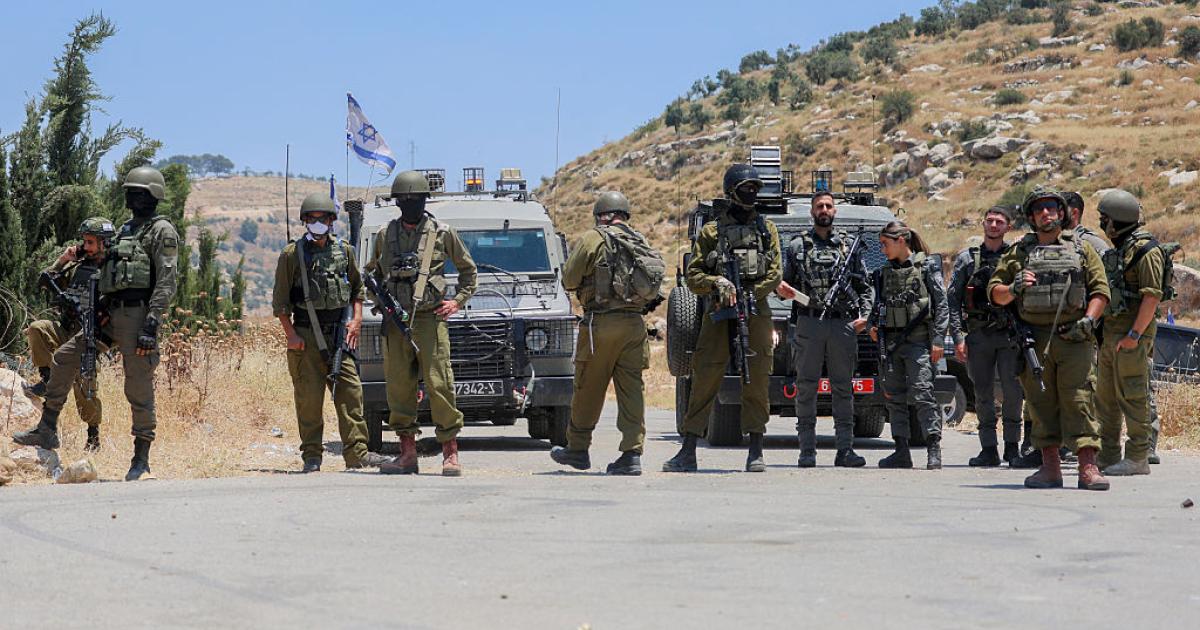
One of the fundamental elements in this plan is the creation of what is called the 'International Stabilization Force' (ISF), a multinational force tasked with deploying inside the Gaza Strip, with the aim of maintaining security, protecting civilians, and ensuring the implementation of transitional arrangements, including monitoring disarmament and preventing the return of armed confrontations. Although the official proposal indicates an international character for the force, the United States is seen as the primary political and military engineer of this mechanism, whether in terms of authorization or indirect command.
In addition to the security dimension, the plan includes forming a temporary technocratic Palestinian government, consisting of non-partisan figures, tasked with managing daily civil affairs in Gaza, such as services, health, education, and reconstruction. This government, according to the American vision, will operate under the supervision of the International Peace Council, which practically means reducing the political role of Palestinian factions and redefining the concept of 'self-governance' in the sector within a transitional framework subject to international oversight.
As for the issue of American military presence, it remains one of the most controversial points. While some leaks confirm that Washington does not plan to deploy extensive combat US forces inside Gaza, talk revolves around indirect military presence, including advisors, security experts, and logistical support elements, in addition to a leading role in directing the work of the International Stabilization Force. This presence, even if marketed as part of a collective international effort, reflects the continuation of the dominant American role in shaping the contours of the 'day after' in Gaza.
The choice of the Davos Forum to announce this plan is not a minor detail. Davos, as a platform that brings together global political and economic leaders, provides Trump with an opportunity to present the plan as an international project for stability and development, not just a unilateral American initiative. It also allows him to rally political and financial support for reconstruction and link Gaza's future to a network of international economic and security interests.
However, this plan raises fundamental questions about its political legitimacy and feasibility. The absence of genuine Palestinian representation and the marginalization of key factions weaken the chances of popular acceptance, turning the project into a form of external management more than a path to a fair political solution. Moreover, the focus on security before politics reproduces previous approaches that have proven their limitations, if not their failure, in achieving sustainable stability.
In conclusion, what is being prepared in Davos seems to go beyond being a technical announcement of a new phase, to constitute a comprehensive attempt to politically and security-wise re-engineer Gaza, according to an American vision that sees temporary international administration as an alternative to radical political solutions. And the fundamental question remains: Does this plan represent a step towards stability, or a new chapter in crisis management instead of resolving it?
The proposed American plan reflects a clear tendency to manage the conflict rather than address it from its roots. It focuses on creating new administrative and security structures without addressing the fundamental political issues, at the forefront of which is the Palestinians' right to self-determination. This approach, although it may seem practical in the short term, carries within it the risks of reproducing tension, because any arrangement that ignores the political and national dimension will remain fragile and exposed to collapse at the first real test.
Moreover, relying on a technocratic government under international supervision reflects a deep crisis of confidence in local political actors, but at the same time, it empties the concept of governance of its democratic content. Technocrats, no matter how competent they are, lack popular mandate, making them susceptible to accusations of being a facade for external administration. This issue may undermine the proposed government's ability to enforce its decisions or gain genuine societal legitimacy.
As for the bet on the International Stabilization Force, it brings to mind previous international experiences that have shown the limited effectiveness of multinational forces in complex conflict environments. The absence of local political consensus and the conflicting agendas of participating countries may turn this force from a stabilizing factor into an additional party in the conflict equation. Without a clear political horizon, the international force will remain a temporary containment tool, not a permanent solution.
Share your opinion
Trump Prepares to Announce the Start of the Second Phase in Gaza from Davos