







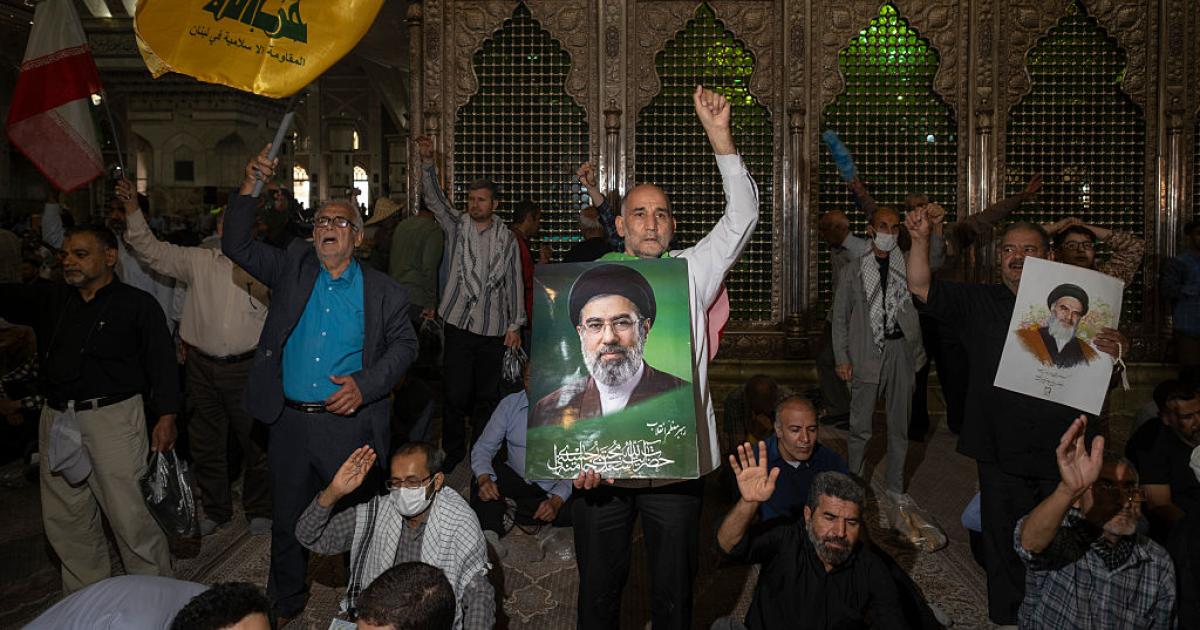
On Sunday, US President Donald Trump threatened Iran that it would face a "very severe strike" from the United States if more protesters were killed during the protests that entered their second week, in a notable escalation of his rhetoric towards Tehran at a highly sensitive regional and international moment.
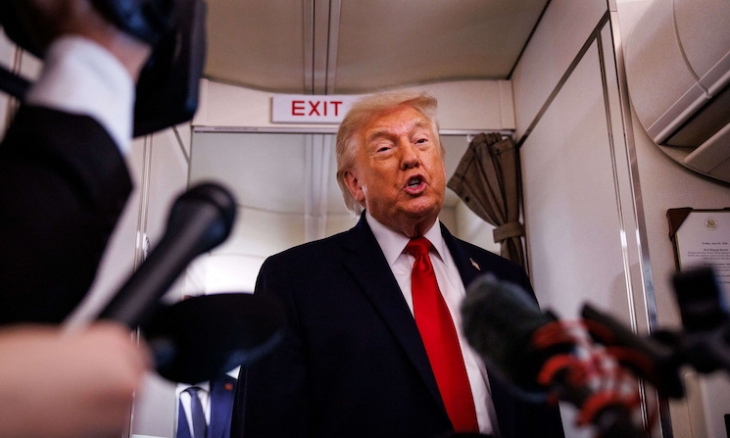
In statements to journalists aboard the presidential plane returning to Washington, Trump said his administration "is closely monitoring the situation," repeating a threat he issued days earlier: "If they start killing people as they did in the past, I think they will face a very severe strike from the United States." Western organizations claim that at least 16 people have been killed since the protests erupted in several Iranian cities, which is considered one of the most serious internal challenges facing the Iranian authorities in years.
However, Trump's threat to Iran does not come in isolation from a broader context, but fits within what the US President himself described as a "new phase" in American foreign policy, based on simultaneous escalation in more than one international arena. In just a few days, Trump combined military threats to Tehran, direct intervention in Venezuela, hints at overthrowing the state in Cuba, and reopening the file of control over Greenland, in a scene reflecting Washington's shift to a policy of maximum pressure relying on military force, and multi-directional.
In Latin America, Venezuela constituted the most prominent testing ground for this phase. Trump announced that the overthrow of President Nicolas Maduro, his kidnapping along with his wife, and his trial in a federal court in New York, represents the beginning of a "new phase" aimed, according to the American narrative, at dismantling "criminal regimes" that threaten regional security. The US administration asserts that its intervention came to combat drug trafficking and restore democracy, but several countries in Latin America, alongside major international powers, saw in the move a blatant violation of sovereignty and international law.
Despite Washington's announcement of its success in ending Maduro's rule, Venezuela continues to experience political and economic turmoil. Internal conflicts have not been resolved, the exhausted economic structure has not recovered, while anti-American sentiments are rising within the country. Nevertheless, Trump continues his escalating rhetoric, hinting at sanctions and harsher measures against any leaders who refuse to submit to the path set by Washington, alongside public talk of restructuring Venezuela's oil sector under the control of American companies.
The escalation did not stop at Venezuela. Trump expanded the circle of pressure to include Cuba, accusing Havana of playing a pivotal role in supporting Maduro and destabilizing regional stability. He went further by saying that Cuba "is ready to fall," in a statement that evoked Cold War language and raised widespread concern in the Caribbean region. Cuban authorities responded by accusing Washington of seeking to impose hegemony by force, warning that any aggression would be met with resistance, while several countries in the region expressed their fear of a new slide towards confrontation.
In a notable shift outside the traditional framework of American conflicts, Trump revived the Greenland file, considering American control over the polar territory a "vital" matter for national security in the face of Russia and China. These statements were met with outright rejection from Denmark and Greenland's leadership, which emphasized that the territory is not for sale, and that determining its fate is a sovereign matter. This move sparked tension within NATO and raised questions about the limits of American pressure even on its closest allies.
Overall, these moves reflect an American approach based on using threats and force as primary tools for managing international relations. Iran, Venezuela, Cuba, and Greenland, despite differing contexts, are all managed with one logic: impose facts first, then negotiate later. While the US administration sees this approach as a means to impose deterrence and restore prestige, experts warn that it threatens to undermine the rules-based international system and increases the likelihood of unplanned escalation.
The blatant American intervention in Venezuela sets a dangerous precedent in contemporary international relations. Overthrowing the leadership of a sovereign state without broad international authorization strengthens the logic of power at the expense of law. While Washington believes it has achieved immediate gains, the price will be weakening the legal deterrence system that protects weaker states. Such an approach opens the door for other powers to justify similar interventions, heralding a less stable world.
Moreover, re-portraying Cuba as an "imminent target" reflects a return to ideological rhetoric that ignores the complexities of reality. Excessive pressure does not necessarily lead to change, but may push Havana to strengthen its alliances with Washington's adversaries. Also, evoking the Cold War climate raises historical fears in the region and undermines any opportunities for building a regional system based on cooperation rather than polarization.
The Greenland issue reveals the tension between American geopolitical ambitions and the requirements of maintaining alliances. Seeking control over a territory belonging to a key ally sends a troubling message about the limits of mutual respect within Western alliances. At a time when international competition in the Arctic is increasing, pressuring allies may lead to counterproductive results, weakening unity instead of strengthening it.
Amid this "new phase" promoted by Trump, the question remains open: Will multi-front escalation lead to strengthening American influence, or to its exhaustion and opening the door to broader international chaos? The answer may determine the contours of the global system in the coming years.

Share your opinion
Trump Wields Force from Tehran to the Caribbean