






A difficult phase is being experienced by the Palestinian Authority due to an escalating financial crisis, unprecedented decline in external support, continued Israeli withholding of tax funds, alongside the political deadlock and escalating occupation measures in the West Bank, including settlement expansion, military operations, and tightening economic restrictions.
Official economic estimates indicate an exacerbation of the financial deficit and erosion of the ability to meet basic obligations, at a time when the Palestinian public finance relies primarily on clearance funds and foreign aid, making it highly vulnerable to any Israeli decision or shift in international mood.
Amid this reality, Palestinian experts and analysts offer several readings of the options available to the Palestinian leadership, converging on describing the phase as one of "managing a long-term crisis," with differences in assessing the feasibility of pursuing radical options or settling for adaptation and phased resilience policies.
The Palestinian government faces a severe financial crisis, with employee and private sector dues amounting to about 4.26 billion dollars, while Israel continues to withhold approximately 4 billion dollars from Palestinian tax funds (clearance), increasing the fragility of public finance and limiting the government's ability to meet basic obligations.
Clearance funds are taxes on goods imported to the Palestinian side, collected by Israel on behalf of the Palestinian Authority, but Israel has used them as a political pressure tool since 2019 through deductions and withholding, deepening the economic crisis and limiting the government's ability for sustainable financial planning.
After the start of the genocide war on Gaza on October 8, 2023, the Israeli government began transferring only 30-35 percent of the clearance funds, after deducting what the Palestinian government pays for Gaza sector salaries and social affairs.
Despite the crisis, foreign aid such as Saudi support amounting to about 90 million dollars enabled the government to pay 60 percent of employee salaries for the past September without needing to borrow from banks, reflecting the Authority's reliance on Arab and international support to alleviate financial pressure.
** "Comprehensive Exhaustion"
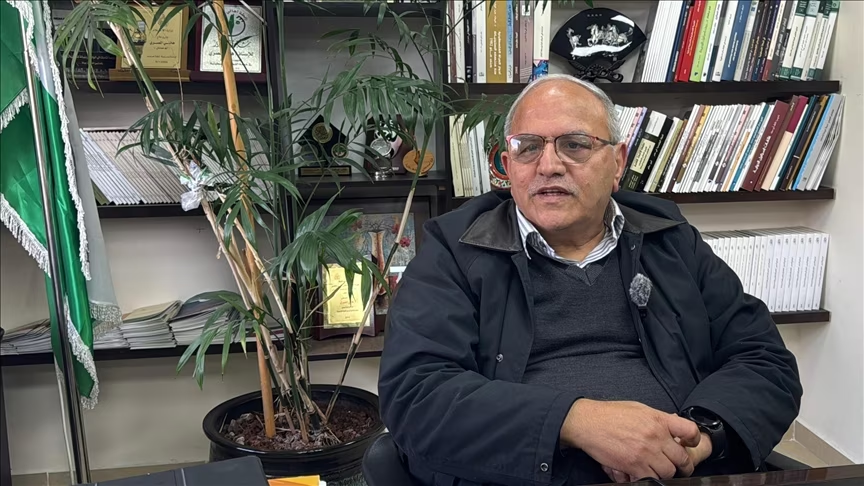
Director of the Yabus Center for Studies, Suleiman Bisharat, believed that the current phase requires "real political courage in decision-making," warning that continuing to deal with the deteriorating reality will lead to complete exhaustion of Palestinian resources, politically and economically.
Bisharat added that accepting the status quo consolidates dependence and subordination to Israeli policies, turning the Palestinian Authority into "an administrative entity with limited powers, incapable of protecting its people's interests or influencing the course of events."
He explained that one of the proposed scenarios is to "actually begin a state of disengagement from the Israeli occupation system," especially at the political level, by reconsidering agreements and treaties that Israel evades implementing, despite being a legal reference regulating the relationship between the two parties.
He believed that Israel's lack of response to Palestinian political demands should be met with a clear and explicit Palestinian position based on dismantling the relationship with Israel, and holding it, along with the international community, legally responsible for providing the daily life requirements of Palestinians, in accordance with international law.
He emphasized the importance of strengthening the Arab, Islamic, and regional incubator supporting the Palestinian cause, considering that this support should not remain in the political or rhetorical framework, but should be translated into tangible economic policies, through the establishment of a clear economic support fund that enhances Palestinian resilience amid resource closure.
** "Blocked Horizon"
For his part, Palestinian expert Ahmed Abu Al-Hayja said that the National Authority does not have real options of significance in the current phase, amid the political and financial deadlock, and weakness in maneuvering ability.
He added that the Palestinian Authority deals with the existing reality by trying to avoid any direct clash with Israel or the American administration, and continuing to engage with the Washington track until the last moment.
He explained that this approach is based on weak bets, the most prominent of which is reliance on future changes, such as upcoming Israeli elections or the possibility of easing restrictions on financial transfers.
Abu Al-Hayja considered these bets "closer to wishes than to realistic analysis based on solid data."
He continued: "The fundamental problem lies in the fact that thinking about restructuring the Palestinian economy came late, as the previous years of abundance were not invested in diversifying income sources or building production sectors relatively independent of Israeli control."
He considered that the near-total reliance on tax funds and foreign transfers made Palestinian public finance highly fragile and unable to withstand recurrent crises.
He pointed out that the difficult financial reality is likely to continue for a long time, warning against "excessive optimism regarding a near financial relief, including in the first quarter of next year."
Abu Al-Hayja indicated that any possible improvement will remain limited and temporary, unless there is a radical change in American policies in the region.
** "Adaptation Policy Continues"
For his part, Director of the Jerusalem Center for Studies at Al-Quds University, Ahmed Rafiq Awad, ruled out that the Palestinian Authority would take "dramatic and uncalculated steps," such as dissolving itself or entering into open confrontation with Israel.
Awad predicted that the Palestinian Authority would continue to operate according to "adaptation and containment policy," by managing the crisis on several fronts simultaneously.
He added that the Palestinian Authority will continue to rely on Arab and Islamic support, alongside European support, to ensure the minimum level of financial and institutional stability, amid the absence of other realistic alternatives.
He said that the Palestinian leadership will continue to show some flexibility in responding to reform and development demands, in an attempt to maintain international support, alongside waiting for any possible change in the Israeli political scene, whether at the government level or the policies followed.
Awad believed that the Authority's reactions will remain within a long-term diplomatic framework, based on containment and building relationships with allies and friends.
He considered that the Palestinian leadership sees the Authority as the existing and available framework for managing the phase, "which makes the option of jumping into the unknown or going towards chaos not an option in the current phase."
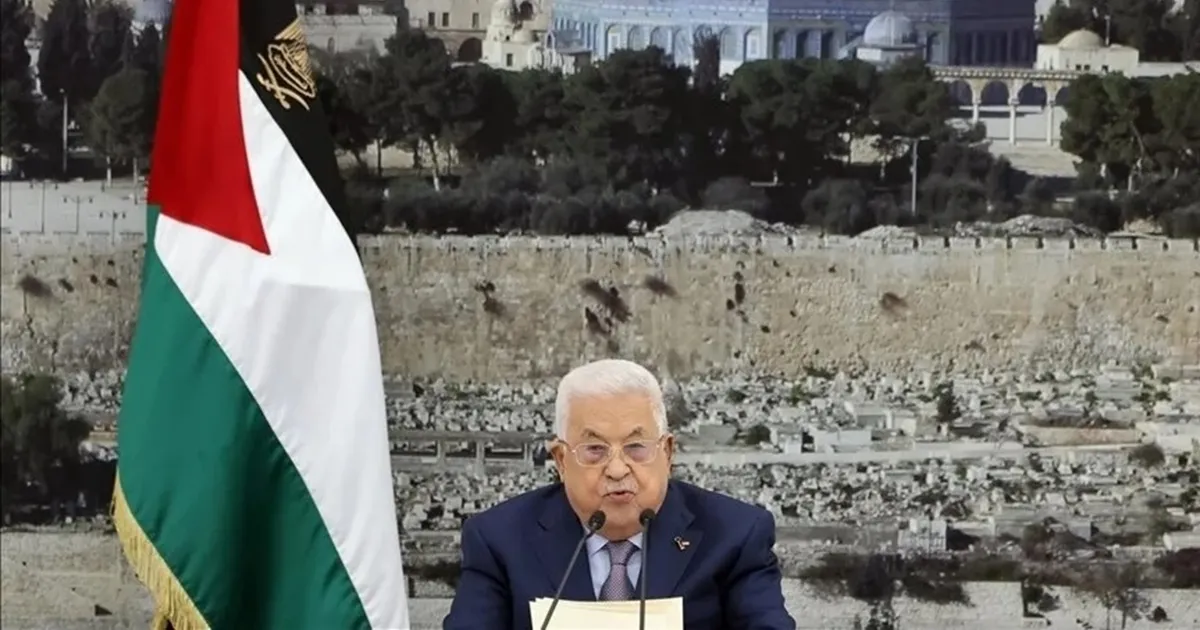
In last October, Palestinian President Mahmoud Abbas called on the international community to "oblige Israel to stop all its unilateral measures that violate international law, foremost among them stopping settlement and settler terrorism, attacks on holy sites, and withholding Palestinian tax funds."
The West Bank is witnessing a wave of widespread Israeli escalation, which resulted in the past two years in the killing of at least 1104 Palestinians and injuring about 11,000, in addition to arresting more than 20,000 people, including 1600 children.
With American support, the Israeli genocide in Gaza over two years, since October 8, 2023, left more than 71,000 Palestinian dead and 171,000 injured, mostly children and women, and massive destruction with reconstruction costs estimated by the United Nations at about 70 billion dollars.
Continuing to deal with the deteriorating reality will lead to complete exhaustion of Palestinian resources politically and economically.
Share your opinion
Palestinian Authority Options.. Managing a Long-Term Crisis or Comprehensive Confrontation?