





Today, in Israel, licenses for 37 international non-governmental organizations were revoked, and the validity of the licenses for these organizations, which operate in the Gaza Strip and the West Bank, expires on January 1st.
Although Israel had required international organizations to register in advance to continue their work, a condition imposed before the ceasefire and the approval of the UN Security Council resolution on Gaza, what followed revealed that the measure was not regulatory or administrative, but part of a pre-planned political strategy to dismantle the relief system, not to regulate it. With the ceasefire, it does not appear that the United States and Israel are heading towards alleviating the humanitarian catastrophe, but on the contrary, they are playing a systematic destructive role targeting the international humanitarian and judicial system, in a clear effort to redefine the rules of international law and international humanitarian law, to deny Israel's crimes in the Gaza Strip, and to provide political and legal cover that ensures impunity.
What is happening today is not limited to obstructing aid or administrative restrictions, but constitutes a conscious attempt to reshape the international system itself, based on the law of force rather than the force of law, serving Israel's interests exclusively, at the expense of the Palestinian people's rights, the dignity of the victims, and the meaning of international justice. In this sense, Israel is not managing a humanitarian crisis, but using it as a tool of sovereignty, and redefining international law as a privilege that it grants or withdraws according to its political and military calculations.
In this context, UN agencies and dozens of non-governmental organizations, in a joint statement, condemned the new Israeli registration procedures, describing them as "vague, arbitrary, and highly politicized". These procedures are not technical or regulatory, but represent a direct political control tool over humanitarian work in Gaza, transforming it into a field subject to the occupation's conditions and security priorities.
The prevention of several international organizations from registering, including reputable ones, opens the door to the actual collapse of the relief network in a sector where more than two million people depend on aid to survive. Refusal of registration means expelling international staff, halting operations, and cutting access to the banking system, i.e., complete paralysis of these organizations' ability to operate.
The United Nations has clearly warned that the collapse of international non-governmental organizations' work cannot be compensated, as these organizations pump more than a billion dollars annually into Gaza, manage about a third of hospital beds, most malnutrition treatment centers, and about 70% of food distribution points.
As for the Israeli pretexts for refusing registration, such as "antisemitism", "terrorism", and "delegitimizing Israel", they are nothing but elastic concepts used to silence any party that documents crimes or conveys victims' testimonies, and to turn human rights criticism into a political crime. Thus, human rights concepts themselves are turned into criminalization tools, and humanitarian solidarity is redefined as a security threat.
In the same context, Israel withdrew work permits from international humanitarian organizations to prevent them from operating in the West Bank and Gaza Strip, claiming incomplete registration procedures, with repeated fabricated accusations against some employees of involvement in "terrorist activity".
Israeli lawyers confirmed that the authorities provide no evidence, making legal defense almost impossible, while organizations that refuse to immediately hand over sensitive information about their Palestinian employees are classified in the "hostility" category, in an obvious attempt to subject humanitarian work to security and military oversight.
Here, the talk is no longer about aid or relief, but about complete political subjugation: who is allowed to work, who receives assistance, how, and under what conditions and discourse.
The most dangerous is what is being prepared for after December 31st. According to European diplomatic sources, the United States is seeking to "start from scratch" in coordinating humanitarian work, meaning emptying Gaza of organizations with accumulated expertise, and replacing them with new entities with no field presence, but politically aligned with the American-Israeli vision.
The talk about "screening beneficiaries", distribution conditions, and direct military administration reveals that the goal is not relief, but controlling the Palestinian society and reengineering it socially and politically, under the labels of "stability" and "peace".
Yesterday, Britain, France, and Canada, along with several other countries, issued a joint statement expressing their concern over «the renewed deterioration of the humanitarian situation in the Gaza Strip». Among the countries that supported the statement: Denmark, Iceland, Norway, Sweden, and Japan. However, these belated diplomatic positions remain futile, without real pressure, despite more than 80 days since the ceasefire.
Meanwhile, the United States is deepening its undermining of what remains of the international justice system, by imposing illegal sanctions on judges of the International Criminal Court due to their participation in the investigation of war crimes and crimes against humanity in Gaza. The Court described these sanctions as «a blatant attack on the independence of international justice», confirming that targeting judges for applying the law threatens the entire international legal system. The American message is clear: Justice is only allowed when it does not touch Israel.
This cannot be separated from Western and Arab positions. With the seriousness of subjecting humanitarian work and targeting the independence of international justice, most Western countries have contented themselves with bland reactions, in the framework of expressing concern or calling for «restraint», without practical steps or real political pressures. This silent complicity has given the United States and Israel a wide margin to impose new rules that weakened the status of international law and consecrated its selective application. Also, the adoption by some Western countries of the Israeli narrative under the titles of «security» and «counter-terrorism» came at the expense of the principles they have long claimed to adhere to, making the defense of humanitarian work and judicial independence conditional on the identity of the victims rather than legal reference.
As for the Arab position, it appeared inadequate to match the scale of the ongoing transformations. Except for general political statements, Arab countries have not succeeded in formulating a collective position capable of pressure or influence, or using their diplomatic, legal, and economic tools. This shortcoming not only reflects weakness in action, but leaves Palestinians in Gaza facing policies imposed on their lives and dignity without an effective regional support.
What is happening in Gaza goes beyond war and destruction, turning the sector into a testing ground for redefining international law, humanitarian work, and justice, according to the logic of domination and impunity. Israel is not content with starving Gaza, but seeks to control who provides it with food, who documents its suffering, and who demands justice for its victims. As for the United States, it provides political and legal cover, and punishes anyone who dares to break this equation.
In this scene, Gaza alone is not targeted, but the concept of humanity itself is targeted, and international law is reshaped to serve the logic of power rather than justice.

OPINIONS
Wed 31 Dec 2025 9:29 am - Jerusalem Time
Political Control Over Relief: How Israel and the United States Are Reengineering International Law on the Ruins of Gaza?
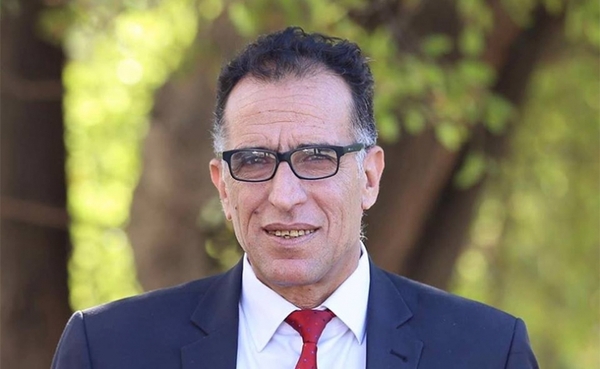
Mustafa Ibrahim
Opinion Writer

Share your opinion
Political Control Over Relief: How Israel and the United States Are Reengineering International Law on the Ruins of Gaza?