





On the one hand, 'Hamas' is trying to reimpose its security and administrative presence by reopening police stations, deploying security elements, and organizing public life, but on the other hand, it is incapable of providing any tangible improvement in people's lives. This contradiction produces a growing gap between the organization and the street, where the movement's measures are read as an effort to consolidate control, not to protect society.
Hamas is living through one of its most sensitive and complex phases since its founding, a phase where military defeat intersects with organizational exhaustion, political confusion with existential anxiety about its future and role. The war has not only weakened the military structure but has also struck the command system and decision-making, pushing it to confront questions that can no longer be postponed: What after the war? Who governs Gaza? And at what cost?
Hamas lost most of its political bureau members during the war, along with the administrative committee leaders who managed the sector for years, creating a deep leadership vacuum that was not easy to contain, and only a limited number of central figures remain to lead Gaza, most notably Khalil al-Hayya, Ghazi Hamad, and Nizar Awadallah, all of whom are outside the sector, which has deepened the decision-making gap between those managing the organization and those living the daily consequences of governance inside.
This vacuum has exploded latent differences between the external leadership and Gaza's leadership, surfacing with the escalation of media discourse and mutual accusations about the 'political line' and the limits of pragmatism. However, these differences are not understood merely as a struggle for leadership, but as a struggle over defining the next phase: a phase of governance? Or a phase of organizational survival? Or merely managing a long-term crisis?
In an attempt to prevent organizational collapse, Hamas formed what is called the 'Leadership Council' after the assassinations of Ismail Haniyeh and Yahya Sinwar, as a transitional framework until 2026, but this council, by its temporary nature, has not produced effective leadership so much as it has managed internal balances and prevented division, and it has become clear that at this stage, it is not seeking leadership for change, but leadership for endurance.
In this context, the trend towards electing a new president for the general political bureau emerges, not as a traditional organizational entitlement, but as a tool to manage a multi-level crisis. Here, the elections are not just an attempt to fill a leadership vacuum, but a means to reorganize the internal house and prevent the movement's disintegration at a critical historical moment. However, what the movement's internal discourse overlooks is that these elections are taking place amid a profound shift in the popular mood inside Gaza. The Gaza street, which used to measure the legitimacy of authority by its ability to 'endure,' now measures it by its ability to secure life, and the question 'Who leads the movement?' is no longer as important as the question 'Who protects people from hunger, cold, illness, and total collapse?'
The sector is witnessing a radical transformation in the relationship between society and authority. After months of genocide, starvation, repeated displacement, and infrastructure collapse, the Gaza society is no longer in the position of a 'political incubator' for any party, but in the position of a victim seeking the minimum of security and stability.
The vast majority of people today live on irregular humanitarian aid, amid the collapse of water, electricity, health, and education services. Thousands of families have lost their homes and been forced to displace more than once, while winter and famine have become daily threats. In this context, discussions about elections and organizational legitimacy seem distant from people's priorities, and sometimes provocative.
On the one hand, 'Hamas' is trying to reimpose its security and administrative presence by reopening police stations, deploying security elements, and organizing public life, but on the other hand, it is incapable of providing any tangible improvement in people's lives. This contradiction produces a growing gap between the organization and the street, where the movement's measures are read as an effort to consolidate control, not to protect society.
And in the absence of real political alternatives, this popular discontent does not turn into organized protest, but into heavy silence, dwindling patience, and slow erosion of legitimacy, which is more dangerous to any authority than open anger.
Alongside the occupation, Hamas faces an escalating internal threat represented by armed gangs supported by Israel, which are draining its security structure and creating chaos, and in facing this threat, it resorts to tightening its security grip, deterrence, and liquidation, not only out of a motive to consolidate rule, but out of fear of losing control.
However, this security approach, in the absence of a political or social horizon, deepens the rift with society and turns security from a protection tool into a symbol of authority, increasing the fragility of the relationship between the movement and the people.
On the other hand, Hamas exploited the truce to reorganize its administrative apparatuses, impose oversight on international associations and organizations, and continue tax collection, even during the war, but these measures, in the view of a wide segment of Gazans, are not read as crisis management, but as insistence on ruling without the ability to save, as it governs a sector without resources, without crossings, and without the capacity to launch real reconstruction, turning authority into an additional burden on a society living on the edge of total collapse.
In this context, Khaled Meshaal emerges as an option that meets Hamas's need to present a marketable political facade regionally and internationally, and less attached to the Iranian axis. However, this option, no matter how pragmatic it is, does not provide an answer to the Gaza street's questions and does not reduce the daily cost of governance, but focuses more on managing relations with the outside than addressing the inside.
The cohesion of Hamas's organization cannot be separated from the high human cost paid by Gaza society. The movement, which shows remarkable ability to manage its internal differences through elections, consensus, and pragmatism, fails in turn to translate this ability into policies that protect people or alleviate their burdens of war and collapse, thus succeeding in saving the organization but failing to save society.
And the elections, no matter how they appear as evidence of internal vitality, are not politically innocent. They are used today as a tool to reproduce legitimacy, postpone confronting difficult questions, and consolidate the rule of fait accompli, not as an entry point for reviewing the experience or assuming responsibility for its outcomes, and while discussions within the movement's frameworks revolve around leadership and representation, the Gaza street faces hunger, cold, and homelessness, without horizon, and without a political partner who feels the weight of its suffering.
The most dangerous thing is that Hamas, while defending its stay in power, has begun to burden society with the cost of this survival, treating popular endurance as a political asset that can be depleted endlessly. Instead of acknowledging the failure of the model combining 'resistance' and 'governance,' and responding to the shift in popular mood, it persists in consolidating security control, as if legitimacy is seized by force, not built by responsibility.
What Gaza faces today is not only occupation and destruction, but the continuation of disaster management with a narrow organizational mentality that prioritizes the movement's survival over people's right to life, and in this context, it is required—ethically and politically—to clearly choose: either to assume the responsibility of governance with all its human and political implications, or to make way for a new national path that is not managed at the expense of people's blood and patience.

OPINIONS
Mon 29 Dec 2025 12:45 pm - Jerusalem Time
The Internal Reality of the 'Hamas' Movement and the Will for Change
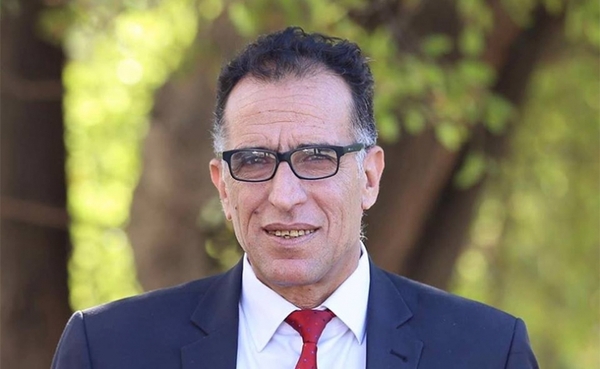
Mustafa Ibrahim
Opinion Writer

Share your opinion
The Internal Reality of the 'Hamas' Movement and the Will for Change