





Israeli media presents the current scene as escalating tension between US President Donald Trump and Prime Minister Benjamin Netanyahu, over the 'day after' in Gaza. However, a deeper reading from a Palestinian perspective reveals that the issue is not about disagreement on the essence, but on the pace and execution. Trump is not working against Israeli goals, but seeks to accelerate their consolidation, before they stumble or face new field and political realities.
Netanyahu, known for his evasion and buying time, enters a more sensitive phase ahead of his upcoming visit to Washington. Trump, unpredictable in his behavior, wants a quick achievement in Gaza presented as a political breakthrough, not out of humanitarian motives, but to preserve his image as a 'peacemaker.' Hence his public insistence that the transition to the second phase of his plan is a settled matter, despite the facts on the ground contradicting that.
Israeli media itself acknowledges that the American plan, which talks about an international stabilization force, reconstruction projects, and transitional arrangements, faces major obstacles. Only a few countries have shown preliminary readiness to participate, and no country is willing to send its forces to areas that Israel insists on describing as 'under Hamas control.' This description is not innocent, but a political tool to disrupt any path that does not guarantee Israel freedom of military action and control over the field.
More importantly, the Israeli establishment, army and security agencies, does not truly believe in the possibility of dismantling 'Hamas' or disarming it peacefully, relying on what is called 'Trump's deterrence force.' Nevertheless, this illusion continues to be marketed because it allows Gaza to remain politically suspended, without a real solution, and without sovereignty.
The tension between Trump and Netanyahu came to light after the assassination of the Hamas leader Ra'id Saad, as revealed by leaks from Nahum Barnea and Barak Ravid. True, Trump does not object to assassinations in principle, but his anger, according to Israeli media, stems from his fear that Netanyahu's government might use measured escalation to deliberately sabotage the path of subsequent phases and fail any political announcement that Trump needs.
In contrast, Israeli estimates indicate that 'Hamas' itself is interested in moving to the next phase, after being convinced that there is no immediate threat to its rule in large parts of the sector. For this reason, it has intensified efforts to close the file of the dead prisoners. Here the question arises: Will Trump force Netanyahu to move forward, or will he continue to give him room for maneuvering?
But the more important Palestinian question is deeper than that. Trump, even when 'pressing,' does not go beyond the Israeli ceiling. He does not seek to end the genocide or lift the siege radically, but to manage its results quickly. What is called the 'day after' is not presented as a liberation project or national rebuilding, but as a management system: a peace council, a stabilization body, a technocratic government.
These names raise serious questions: Who forms the peace council? Who gives it legitimacy? Will the stabilization body be a civilian force or a security arm? And to whom will it be subordinate? As for the technocratic government, it is often used to bypass politics and disable popular representation, not to solve it. A government without sovereignty, without control over land, crossings, and resources, will be nothing but a facade for crisis management.
Then comes the issue of funding and reconstruction: Who will fund it? Under what conditions? Previous experiences indicate that reconstruction may turn into a tool of blackmail, linked to disarmament, security control, and neutralizing any resistance, while Israel remains immune from any accountability for the destruction it caused.
And at the heart of all that stands the security question: disarmament. It is presented as a condition for stability, without any commitment to ending the occupation or guaranteeing the protection of Palestinians. Disarmament without sovereignty means deepening the imbalance of power, turning Gaza into an entity stripped of its ability to defend itself.
No less dangerous is the deliberate ambiguity regarding the Israeli withdrawal. The talk is about redeployment or partial withdrawal, with continued control over the eastern areas, crossings, and air and sea spaces. Withdrawal without sovereignty is not the end of war, but its continuation by other means.
The disagreement between Trump and Netanyahu is not about Gaza's fate, but about how to manage this fate. Trump wants speed and achievement according to his plan, and Netanyahu wants to prolong control and evasion. As for Gaza, it remains hostage to this cold clash, its suffering managed instead of ended, and the price paid from the suffering of Palestinians and their future.

OPINIONS
Sun 21 Dec 2025 9:25 am - Jerusalem Time
Will Trump Force Netanyahu to Move Forward... or Will He Accelerate the Implementation of the Israeli Agenda in Gaza?
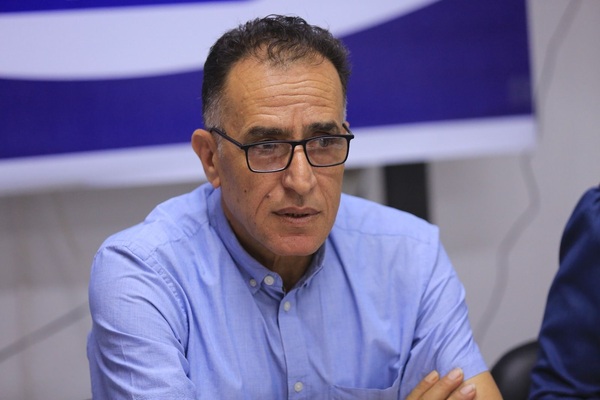
Mustafa Ibrahim
Opinion Writer

Share your opinion
Will Trump Force Netanyahu to Move Forward... or Will He Accelerate the Implementation of the Israeli Agenda in Gaza?