






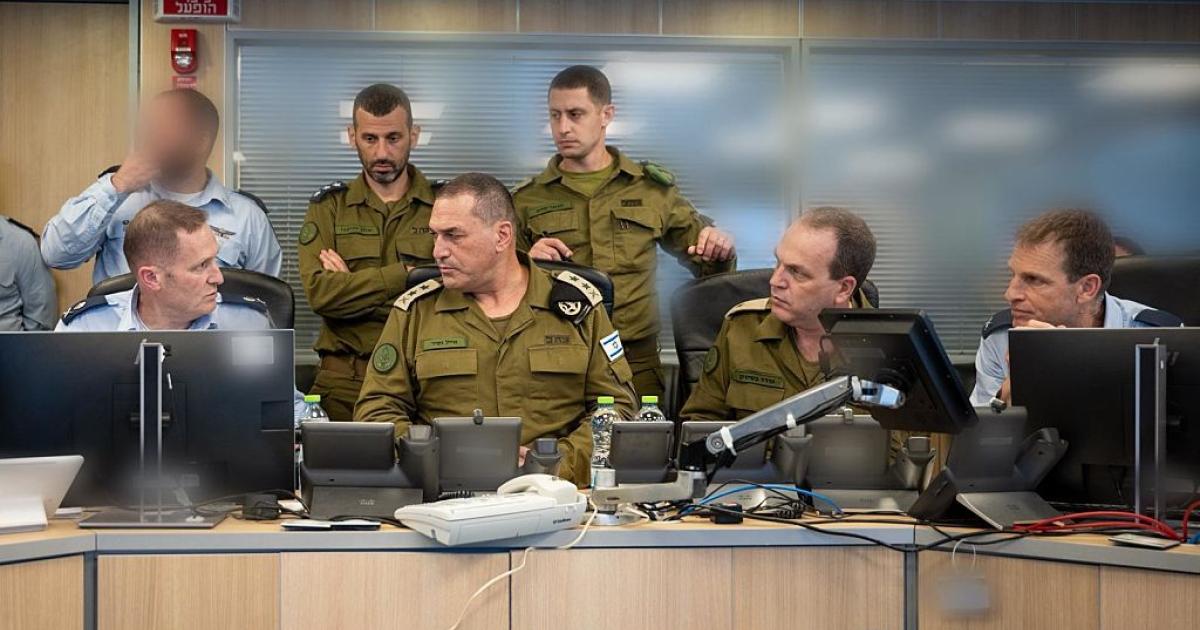
Israeli Prime Minister Benjamin Netanyahu will hold a meeting next Thursday to discuss the second phase in Gaza, according to Israeli Channel 12.
This comes amid American pressure on Israel to enter the second phase of the ceasefire agreement soon.
On December 4, US President Donald Trump said that the second phase of the ceasefire agreement between Israel and the "Hamas" movement will begin very soon, without specifying a date.
Despite international pressures to start this phase, Tel Aviv conditions it on the handover of the remains of its last prisoners in the Gaza Strip, where Palestinian factions continue searching operations amid the massive destruction left by the Israeli genocide war that lasted for two years.
Israel has also reneged on its commitments stipulated in the first phase, including opening crossings, allowing the entry of agreed quantities of food, medicine, shelter and construction materials, and heavy machinery, in addition to committing field violations in the sector.
In the meantime, the UN Special Coordinator for the Middle East Peace Process, Ramiz Alakbarov, briefed the Security Council on the Secretary-General's quarterly report on the implementation of Security Council Resolution 2334 (2016), which affirms, among other things, that Israel's establishment of settlements in the occupied Palestinian territories constitutes a flagrant violation of international law and a major obstacle to achieving a two-state solution.
Alakbarov said that the ceasefire in Gaza remains fragile, as evidenced by the continuation of attacks and strikes (Israeli) in the sector, noting that the United Nations is playing its role in supporting the ceasefire and meeting the enormous needs of the population, calling for advancing negotiations on the next phase and implementing the comprehensive plan for Gaza, in line with Security Council Resolution 2803.
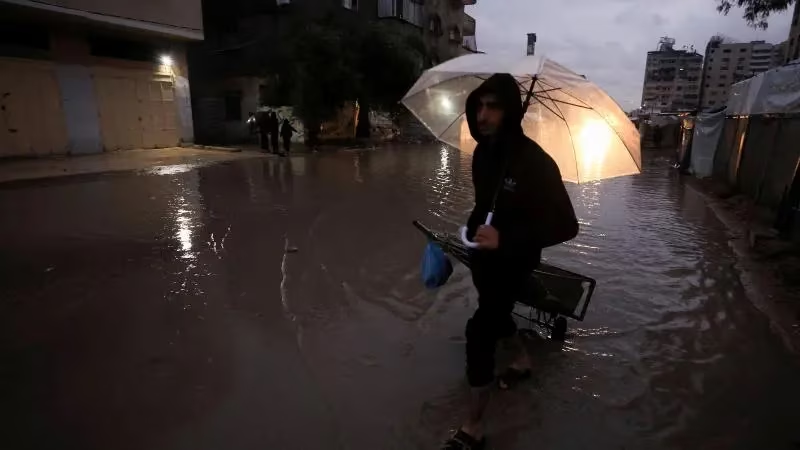
He added: "The United Nations is currently conducting efforts to prepare for winter, including distributing tents, blankets, and other essential supplies, and reaching people wherever they are. However, conditions remain extremely dire, and the risk of hypothermia increases with the onset of winter weather.
Tragically, the first death related to hypothermia has been confirmed, for a two-week-old infant from Khan Yunis in southern Gaza, earlier today.
He continued: "Maintaining and expanding the operational space for the United Nations and its humanitarian partners, including through renewing the registration of non-governmental organizations, is of utmost importance."
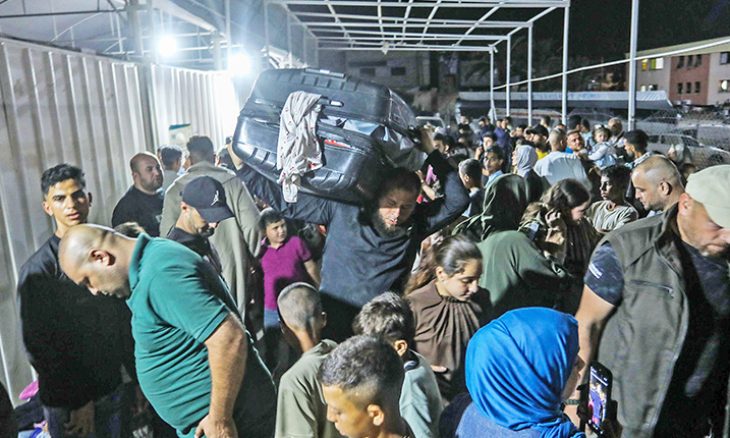
He welcomed the partial reopening of the King Hussein Bridge (Al-Karama crossing) for transporting aid to Gaza, but supplies through this route remain limited, noting that large quantities of aid are stored in warehouses in Jordan, awaiting full resumption.
He urged the Israeli occupation authorities to enable the rapid and extensive movement of life-saving aid through the indispensable Jordanian corridor, in accordance with Security Council Resolution 2720.
For his part, the Permanent Representative of Palestine to the United Nations, Riyad Mansour, said that Israel is doubling its violations of UN resolutions instead of complying with them and fulfilling its duties as an occupying power, confirming that it has not stopped the war on Gaza.
Mansour explained during the same session that "the International Court of Justice clearly affirmed Israel's obligations as the occupying power, including its duty to facilitate humanitarian relief by the United Nations and its agencies, including the United Nations Relief and Works Agency for Palestine Refugees (UNRWA), but it is obstructing its work."
He added that "Israel continues to deprive the Palestinian people of access to life-saving assistance, and Israel's response to the court represents doubling its violations of United Nations resolutions and international law."
On the humanitarian front, the United Nations Office for the Coordination of Humanitarian Affairs (OCHA) warned today, Tuesday, of delays in the arrival of humanitarian aid to Gaza, as winter storms continue to exacerbate the already deteriorating living conditions for displaced families.
The spokesperson for the "OCHA" office in Gaza, Olga Cheriefko, said that needs are increasing at a faster rate than the humanitarian organizations' ability to provide aid, despite the ongoing efforts by the United Nations and its partners.
She confirmed that the humanitarian community continues to provide assistance, but needs exceed the response speed, pointing to the limited volume of supplies entering the sector and the growing list of materials that the Israeli occupation authorities still prevent from entering the sector, including heavy machinery, equipment, and spare parts needed to repair damaged infrastructure.
Cheriefko explained that there are still major restrictions on humanitarian operations, as the number of available routes for transporting aid remains limited, as well as the crossings through which supplies are allowed to enter, emphasizing the need to lift all these obstacles, at a time when people's needs are increasing at a faster rate than the ability to meet them.
The conditions remain extremely dire, and the risk of hypothermia increases with the onset of winter weather.



Share your opinion
Netanyahu to Hold Meeting on Thursday to Discuss Second Phase in Gaza