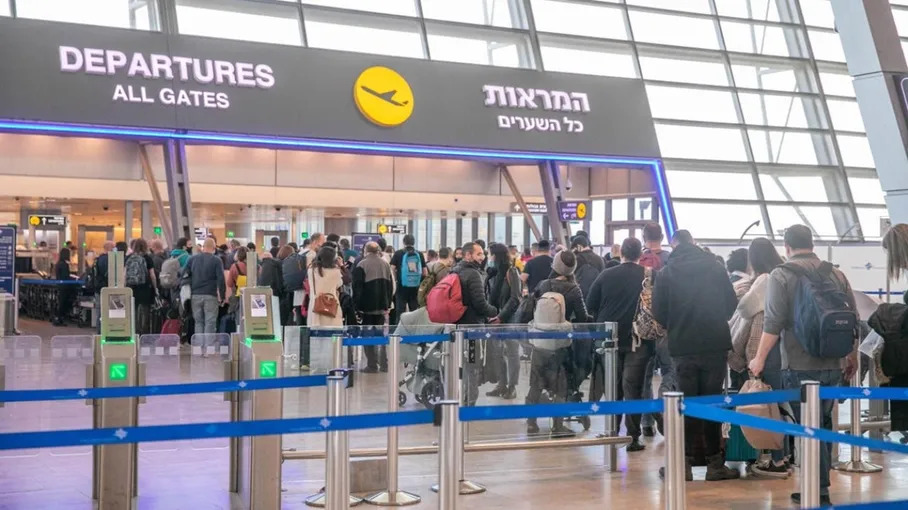







Since the beginning of this year, indicators of the intensity of reverse migration among the occupation have escalated, in light of the genocide committed in the Gaza Strip, its security repercussions, and the increasing divisions within the society of the occupation, which will inflict further losses on the economy of the occupation.
At the beginning of this year, data described as alarming was presented in the Youth Committee of the Knesset, addressing indicators of youth and young family migration during the year 2024. This data shows that there is a noticeable wave of reverse migration, as the number of settlers leaving exceeds the number of new arrivals.
In 2024, about 83,000 settlers left occupied Palestine, while only about 24,000 people arrived, which means a negative migration balance of nearly 60,000 people, more than double the rate recorded in 2023.
Data from the Israeli Central Bureau of Statistics also indicates a decrease of about 42 percent in migration rates to the occupation during the period from January to August 2025, compared to the same period in 2024, reflecting a continued decline in the attractiveness of the occupation state as a destination for stability and migration.
According to data from the Israeli Central Bureau of Statistics, about 81 percent of those leaving are under the age of 49, with the age group between 25 and 44 years making up the largest proportion among migrants, mostly consisting of young families leaving the occupation at the highest rates.
This group is considered a productive force that forms a fundamental pillar for the economy, society, and security of the occupation, making their continued migration a structural challenge with deep economic and strategic dimensions.
This phenomenon, as mentioned in the Youth Committee meeting in the Knesset, is attributed to an increasing sense of insecurity following the genocide in Gaza, as well as economic considerations, primarily the rising cost of living, in addition to other economic and political factors that have contributed to enhancing the desire of some settlers to migrate or seek alternatives to living outside occupied Palestine.
In an interview with Maariv newspaper on September 18, following the publication of data by the Central Bureau of Statistics regarding the increase in migration rates from Israel, Professor Sergio Della-Fargola, an expert in demographic issues, stated: "This is the fourth time in the past hundred years that negative migration has been recorded in Israel."
In light of the data and the increasing concern of the Israeli establishment about the continued expansion of the negative migration wave, along with the decline in foreign investments in the advanced technology sector, which is one of the main drivers of economic growth in Israel over the past two decades, alongside the freezing of hiring processes in this sector, the Ministry of Finance of the occupation has recently initiated a series of economic plans and programs to address this situation.
In this context, the ministry presented in a press conference the outlines of a tax reform aimed at reducing taxes on investment funds operating in the Israeli "high-tech" sector.
This is the fourth time in the past hundred years that negative migration has been recorded in Israel.



Share your opinion
The worsening reverse migration of settlers raises concerns for the occupation... Measures to curb it.