






- Washington - "Jerusalem" dot com - Saeed Arikat
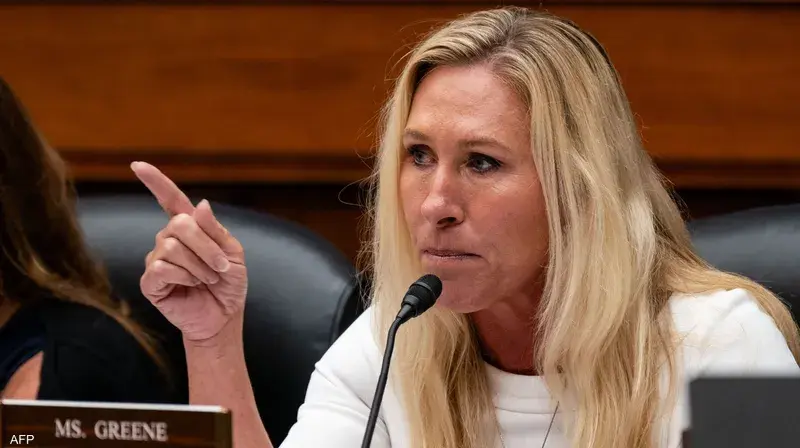
In an unusual stance from a Republican member of the U.S. Congress, Representative Marjorie Taylor Greene (from Georgia) harshly criticized Israel for what she described as "brutal attacks" on the Gaza Strip, which have claimed the lives of dozens of children and women in recent days.
Greene wrote on "X (formerly Twitter):" "The Israeli army announced on Wednesday the resumption of the ceasefire in Gaza after 104 people were killed, including 46 children, according to local health officials. 46 children!!! Aren't these war crimes?"
Her remarks came after a series of intense Israeli airstrikes targeting multiple areas in the strip, which, according to the Gaza Ministry of Health, resulted in the deaths of 20 women and 46 children, in addition to injuring 253 people, including 78 children and 84 women.
Dispute within the Republican Party
Greene, known for her right-wing positions on domestic policy issues, has adopted a sharply critical discourse regarding Israeli policy in recent months, going further than most of her Republican colleagues in her refusal to support U.S. military aid to Israel.
She has proposed bills aimed at canceling military funding allocated to Tel Aviv from the annual Pentagon spending bill, known as the National Defense Authorization Act (NDAA).
Last July, Greene became the first Republican representative to describe the Israeli campaign in Gaza as "genocide," stating: "It is true that the attack on October 7 was horrific and all hostages must be returned, but what is happening in Gaza is genocide, a humanitarian crisis, and famine that cannot be ignored."
Clash with AIPAC
Greene's criticisms have not been limited to the Israeli government alone, but have also extended to the pro-Israel lobbying group in Washington - AIPAC. Last August, she attacked the organization, stating on "X": "The truth is that AIPAC needs to register as a foreign lobbying organization under U.S. law because it represents the secular, nuclear-armed Israeli government 100%."
Greene's positions have sparked widespread discontent within the Republican Party, which has historically been one of the strongest supporters of Israel in the U.S. Congress, and have opened the door to an internal debate about the limits of permissible criticism of Israeli policies within the U.S. legislative body.
Rare shift in Republican sentiment
What we are witnessing from Representative Greene represents a clear breach of the traditional consensus within the Republican Party, which has supported Israel unconditionally for decades. It also highlights the impact of internal conflict within the party, in light of the rise of the "populist nationalist" trend within the party - which tends to reduce foreign interventions - redefining U.S. foreign policy priorities, including the relationship with Israel.
It also underscores the erosion of popular support for Israel. Recent polls show a significant decline in American public support for Israeli military operations, particularly among younger people and neoconservatives, which is reflected in Greene's rhetoric.
Greene's criticisms reflect a calculated political trend to attract segments of the right-wing base that are not enthusiastic about foreign military spending amid difficult economic conditions.
According to in-depth readings, positions of this kind, although isolated within Congress, could exert additional pressure on the Trump administration to justify its continued military and political support for Israel amid the steadily increasing civilian casualties in Gaza.
Marjorie Taylor Greene's positions have highlighted a new fracture in one of the most stable alliances in modern American politics. While President Trump's administration continues to affirm its "steadfast" support for Israel's security, voices in Congress - from both parties, albeit to varying degrees - are increasingly calling for a reevaluation of the costs of this political and military support in light of the rising number of civilian casualties in Gaza.
Observers fear that this trajectory could mark the beginning of a deeper shift in Washington's view of Tel Aviv, especially if Israeli violations of the ceasefire negotiated by the United States in Gaza continue and the humanitarian and political costs rise. The ongoing debate among members of Congress reflects a growing division over the limits of American solidarity with Israel, at a time when human rights standards and international law are increasingly entering the American domestic political discourse, even within Republican circles that have been among the most unconditional supporters of Tel Aviv.



Share your opinion
Marjorie Taylor Greene escalates her criticism of Israel, describing the bombing of Gaza as "war crimes."