







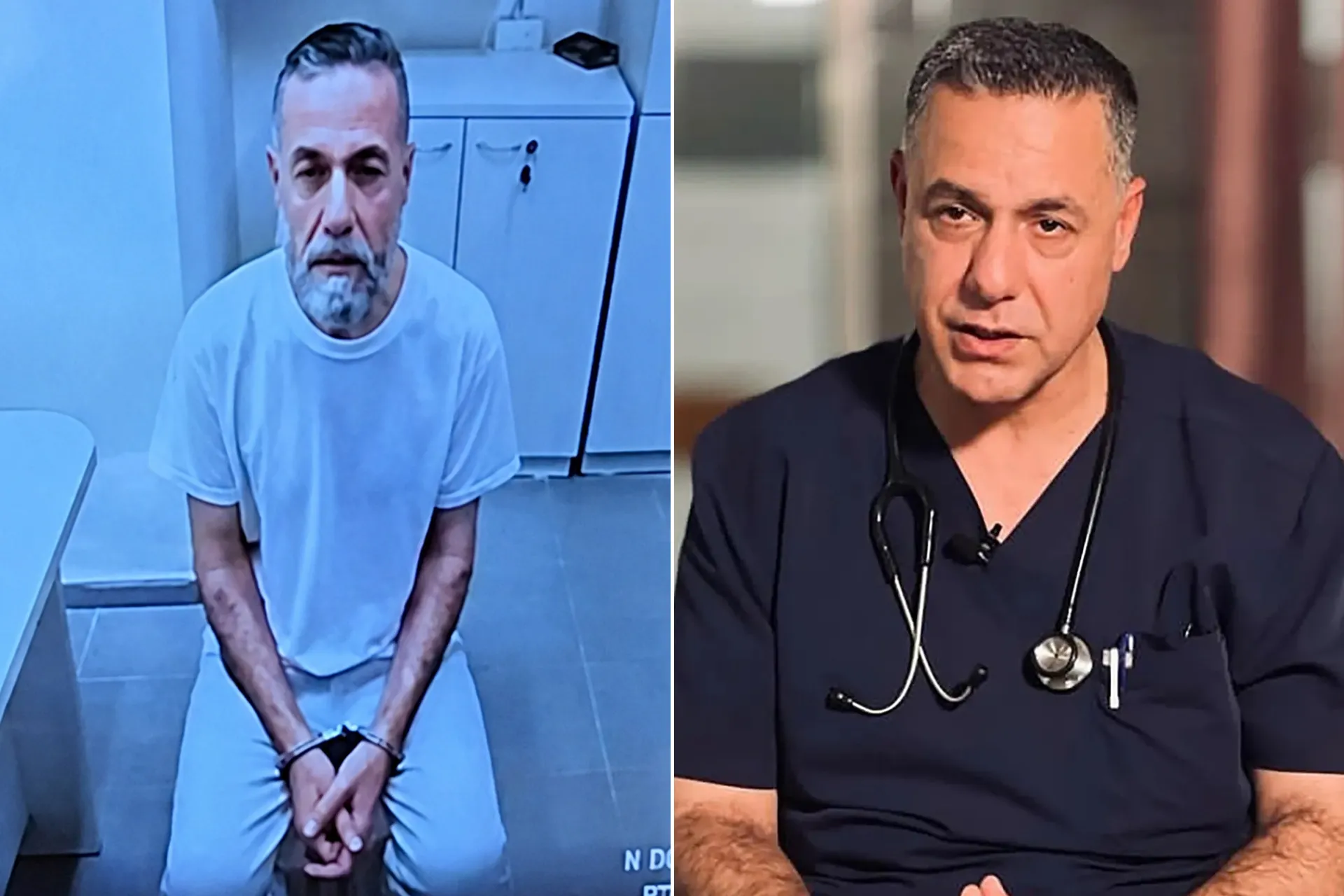
The release of Palestinian prisoner Nader Sadqa came as part of a prisoner exchange deal between Israel and Hamas. Sadqa is considered an exception, as he is the only Palestinian prisoner in Israeli jails from the Samaritan community that resides at the summit of Mount Gerizim in the city of Nablus in the northern occupied West Bank.
Before his release under the exchange deal with the occupying state, Sadqa was serving a sentence of 6 life terms. He was released and exiled to Egypt as part of the exchange deal between Hamas and the occupation, within the framework of a ceasefire agreement that entered its first phase on October 10 of this month.
According to the agreement, Hamas completed on Monday the release of the twenty living Israeli prisoners from Gaza, in addition to handing over the remains of 4 out of 28 prisoners whose bodies the occupying state claims are in Gaza, with the rest to be handed over at a later unspecified time.
The Palestinian Prisoners' Affairs Commission and the Palestinian Prisoners Club stated in a joint statement that the occupying state released on Monday 1968 prisoners, including 250 serving life sentences and 1718 prisoners from Gaza who were arrested after the war.
Sadqa was born in 1977 on the slopes of Mount Gerizim in Nablus, and he received his education in the city's schools. With the outbreak of the "Stone Intifada" in 1987, he was among his peers known as "Children of the Stones."
Nablus, or "Mountain of Fire" as it is called, witnessed continuous confrontations with the Israeli occupation forces during the years of the "Stone Intifada."
"Children of the Stones" is a term used to refer to the children and youth who participated in the first intifada (1987-1993) against the Israeli occupation in the Palestinian territories.
In 1995, Sadqa joined An-Najah National University in Nablus, where he studied history and archaeology. During his studies, Sadqa transitioned from spontaneous activism to organized work, where he became involved in the ranks of the Progressive Student Action Front, the student framework of the Popular Front for the Liberation of Palestine.
Sadqa's name and personality stood out among his peers, as he often addressed university students from platforms.
With the outbreak of the Al-Aqsa Intifada in 2000, Sadqa was set to graduate from university, but he joined the "Abu Ali Mustafa Brigades," the military wing of the Popular Front.
Sadqa, along with his comrades, carried out several shooting operations in which Israeli soldiers and officers were killed. Israeli intelligence pursued Sadqa and his comrades from the "Abu Ali Mustafa Brigades," and he became a wanted fugitive.
He was one of the participants and planners—alongside the brigades' commander at the time, Yamen Faraj, and Amjad Malitah—of a bombing operation in the city of "Petah Tikva" in the occupied territories in 2003, in which 4 soldiers were killed and others were injured, in response to the assassination of the two Popular Front leaders, Fadi Hanani and Jibril Awad, in December of the same year.
After the occupying state assassinated the leaders Faraj and Malitah in the same year, Sadqa became the commander of the "Abu Ali Mustafa Brigades" in Nablus.
On August 17, 2004, the Israeli army arrested Sadqa during a military operation in the Ein Beit al-Ma refugee camp west of Nablus, and he was sentenced to 6 life terms.
Sadqa defines himself according to the official website of the Popular Front as "a Palestinian Arab fighter for freedom and justice."
In 2020, the number of members of the Samaritan community reached 841, of whom 392 live on Mount Gerizim and 449 in the Holon area in the occupied territories, according to the Palestinian Information Center.
The Samaritans speak the ancient Hebrew language in which the Torah was revealed, according to their claims, consisting of 22 letters, in addition to their proficiency in Arabic.
They claim to be "the true descendants of the Children of Israel" and differ from the Jews, possessing the original version of the Torah, which dates back over 3600 years, written on deer skin, and they believe in five books of the Torah.
The Samaritans believe that the Jews have no right to the city of Jerusalem, and they maintain social and friendly relations with Palestinians, as well as a good relationship with Jews.




Share your opinion
The resistance frees the "lone Samaritan" from the prisons of the Israeli occupation.