







The leak of a U.S.-Israeli document discussing the transformation of Gaza into a 'Riviera' for tourism and economy under American oversight, with the complete displacement of its residents, has sparked widespread controversy and has been described as a 'mad' attempt to give an investment character to the crime of ethnic cleansing.
The document, revealed by the Washington Post and republished by the British Guardian, proposes the 'temporary resettlement' of two million Palestinians outside the enclave, compensating them with 'digital tokens' for their lands, while Gaza is redesigned to become smart cities and resorts funded by investments reaching up to 100 billion dollars.
However, what appeared to be an 'exceptional project' is, in reality, inseparable from an old trajectory: from the 'economic peace' promoted by Benjamin Netanyahu in the 1990s, to the 'Deal of the Century' proposed by Donald Trump in 2020, culminating in a bolder version today: 'Gaza Riviera.'
Between the 'Deal of the Century' and the 'Riviera,' the new proposal is based on the same old equation: economy for rights. That is, replacing the right to self-determination and national sovereignty with investment promises and financial returns.
While the 'Deal of the Century' spoke of improving economic conditions in exchange for dropping core issues like Jerusalem and the right of return, the 'Riviera' goes further: no improvement in living conditions, but rather mass displacement repackaged as real estate and technological investments.
When Netanyahu spoke in the mid-1990s about 'economic peace,' the proposal then seemed merely an approach to bypass difficult political negotiations by encouraging development. However, this concept gradually evolved into a tool to justify facts on the ground: expanding settlements, checkpoints suffocating Palestinians, and conditional funding that turns rights into a 'favor' from donors.
Today, the 'Riviera' project reveals that the goal is no longer 'managing the conflict' or 'calming it,' but rather ending it in favor of one party by geographically and demographically removing Palestinians from the scene.
The document talks about 'smart cities,' 'modern ports,' and 'industrial zones in the style of Elon Musk,' but its essence—as described by Swiss human rights lawyer Philip Grant—is 'a plan for mass displacement marketed as development.'
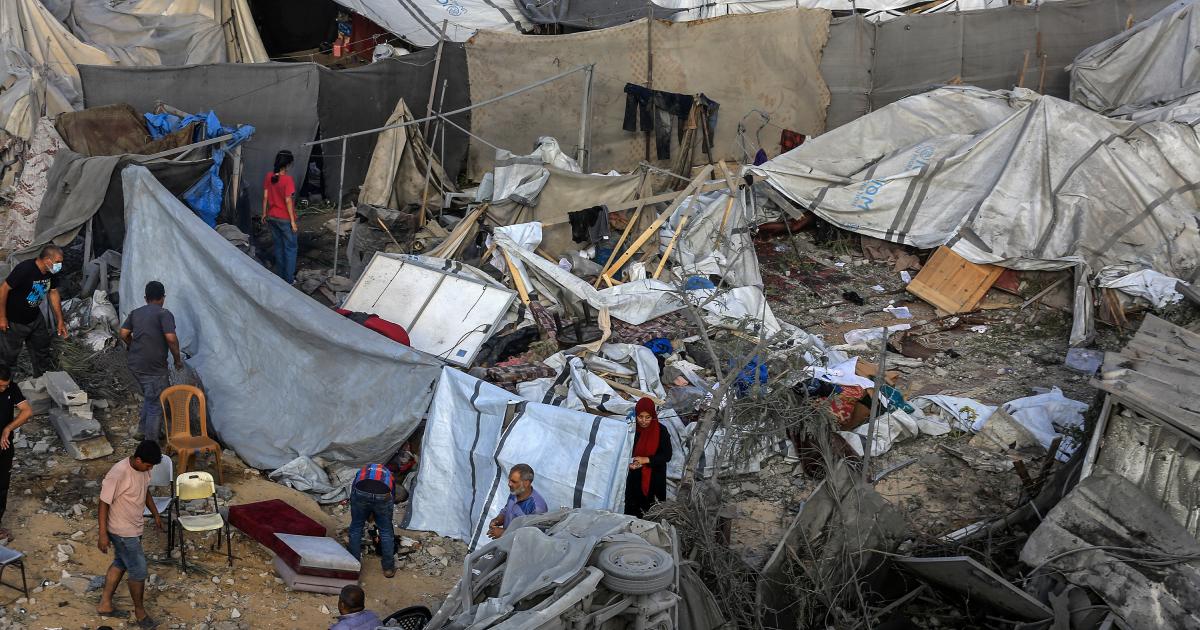
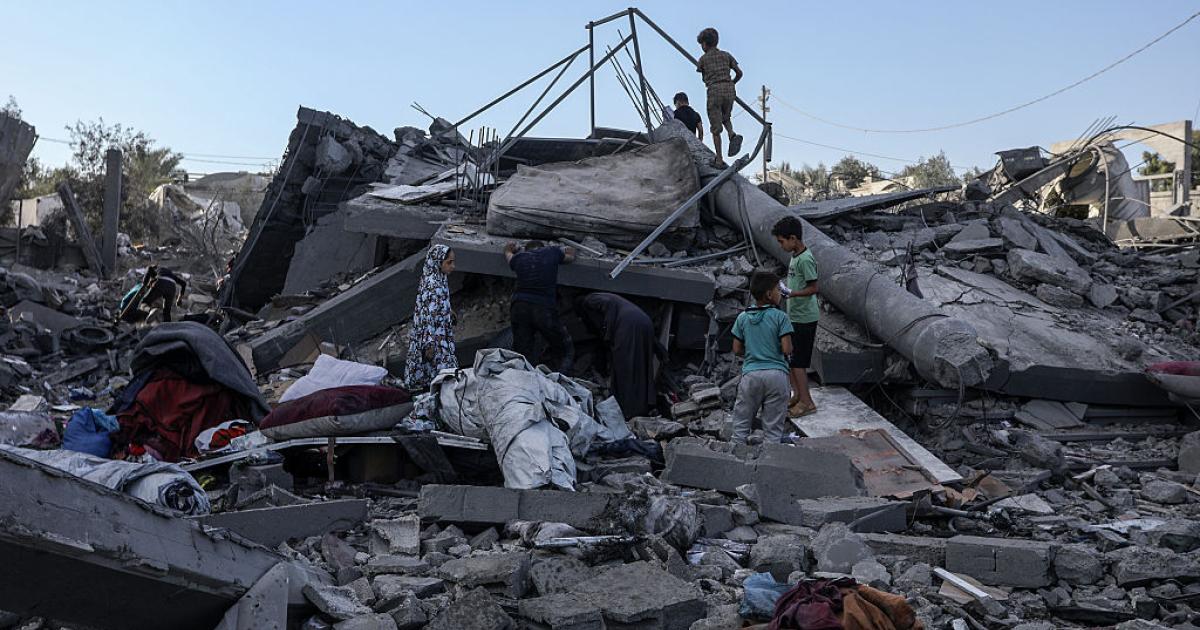
Instead of addressing the Israeli blockade that has persisted since 2007, or the recent war crimes that killed tens of thousands, the plan simply suggests: removing the population and building an investment project on their ruins.
The irony of the leaked plan is that it reflects a harmony in the American and Israeli positions regarding Gaza: no Palestinian sovereignty, no state, but rather a 'functional entity' attached to the Abraham Accords.
This rhetoric recalls the statements of Trump and his son-in-law Jared Kushner when proposing the 'Deal of the Century': 'the economy can buy peace.' The difference is that the 2025 version no longer talks about buying Palestinians, but about forcibly removing them.
The Palestinian rejection was swift, as Hamas official Bassem Naeem emphasized that 'Gaza is part of the greater Palestinian homeland,' asserting that any attempts to compromise the enclave will be met with rejection and resistance.
However, the more dangerous aspect is that these projects, even if not implemented literally, serve as a 'balloon test' to gauge international reactions. Amid the world's preoccupation with accumulating crises, such a proposal may gradually become a reality by tightening the noose around the population and pushing them towards 'voluntary departure.'
The 'Gaza Riviera' project reveals that the essence of American-Israeli proposals since the 1990s has not changed: no Palestinian state, no sovereignty, but rather a barter of national rights for promises of development.
What is new today is that the economic beautification paper has fallen, replaced by a more explicit discourse: displacement for investment. This makes the leaked document not just a 'mad plan,' but an indicator of the open liquidation of the Palestinian cause under the banner of 'reconstruction' of Gaza.
The 'Riviera' project reveals a plan for mass displacement marketed as development.


Share your opinion
An American-Israeli document reveals.. Gaza without Palestinians in exchange for "smart cities"