






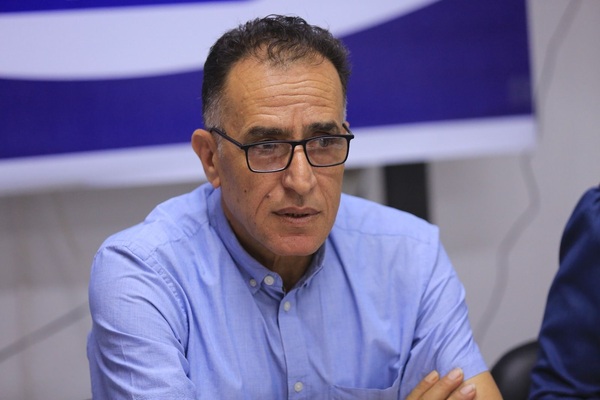

Senior security officials in the cabinet supported a partial deal and warned that occupying the city of Gaza would not lead to subduing Hamas.
Amos Harel, military analyst for Haaretz
The Security Cabinet met yesterday (Sunday) to discuss strategy more than tactics. Although the initial leaks from the meeting addressed, as expected, provocations from the right-wing messianic ministers towards the army, it seems that something significant occurred. All representatives of the security agencies presented a firm stance in favor of a partial prisoner exchange deal. They also warned of the consequences of military control over the city of Gaza, considering that it would likely come at a high cost to Israel without subduing Hamas. It is unusual that some Likud ministers also expressed doubts about the success of the operation.
Behind these developments are two important elements: Hamas's positive response to the partial prisoner exchange plan, which was reported two weeks ago, and Prime Minister Benjamin Netanyahu's insistence on ignoring it and sending army forces soon to Gaza. Security officials were surprised that some ministers, including Foreign Minister Gideon Sa'ar, Science and Technology Minister Gila Gamliel, Regional Cooperation Minister David Amsalem, and even Justice Minister Yariv Levin, raised difficult questions. Amsalem warned that the sector could turn into "Vietnam for Israel." Sa'ar described the deterioration in Israel's international standing amid the ongoing war and questioned why Israel's position (essentially Netanyahu's position) had changed from initially supporting the deal to opposing it now after Hamas's approval.
Netanyahu clarified the support of U.S. President Donald Trump for the Israeli military operation, emphasizing that Trump would support Israel if it acted quickly. The Prime Minister described the dilemma as a historic test for Israel, pointing out that Israeli deterrence is at stake, and that any satisfaction with a partial deal without subduing Hamas would mean that Hamas "brought Israel to its knees" by kidnapping its citizens. Netanyahu appeared to fully align with the rhetoric of the right-wing ministers.
National Security Minister Itamar Ben Gvir called for a vote against the partial deal, while Netanyahu avoided responding directly. Gamliel warned Ben Gvir of the possibility of losing the vote. Settlement Minister Orit Strock attacked Chief of Staff Eyal Zamir, indicating that if he feared the consequences of the war, it would be better for him to resign. Zamir, who seemed less affected than Strock and her colleagues wanted us to believe, clarified that he is not someone who shows blind obedience to the cabinet.
It seems that the cabinet has never executed an operation this extreme, contrary to the position of senior security officials, although they announced that they would carry out orders when issued. According to estimates from all security agencies, a large-scale military operation in Gaza would not lead to a quick subjugation of Hamas as Netanyahu claims, nor would it force the organization to accept his terms for a complete deal.
On the contrary, it is expected to exacerbate Israel's international situation amid increasing international initiatives to recognize the Palestinian state and the risk of rising tensions in the West Bank.
Zamir warned the cabinet that the new operation in Gaza could last a full year, and that there are currently no humanitarian conditions to accommodate the Palestinian populations that will be pushed south from the city. He also noted that the final outcome of the operation would be the establishment of military rule, which the state is not prepared for in any form.
Netanyahu continues to show his determination to act despite widespread opposition in professional circles and the public, and to some extent within the cabinet itself. The reasons are largely clear: he does not want a deal that ends the war and opens the political agenda to discuss his performance since the massacre of October 7 and the demands for the establishment of a national inquiry committee, especially with an election year approaching.
What does Trump want from the sector?
The Washington Post published two days ago an ambitious plan discussed by the U.S. administration regarding the "day after" the war. According to the plan, the United States will administer the sector as a mandate for at least ten years, during which "Palestinian populations will be voluntarily relocated" or confined to small areas within it, while the Americans transform the region into a tourist resort. After a decade, the populations will be able to return to "smart cities powered by artificial intelligence."
The chances of success for this "Riviera," according to Trump, seem similar to the chances of the American-Israeli Gaza humanitarian association providing food aid to two million Gazans, while
Share your opinion
Senior security officials in the cabinet supported a partial deal and warned that the occupation of Gaza City would not lead to the subjugation of Hamas.