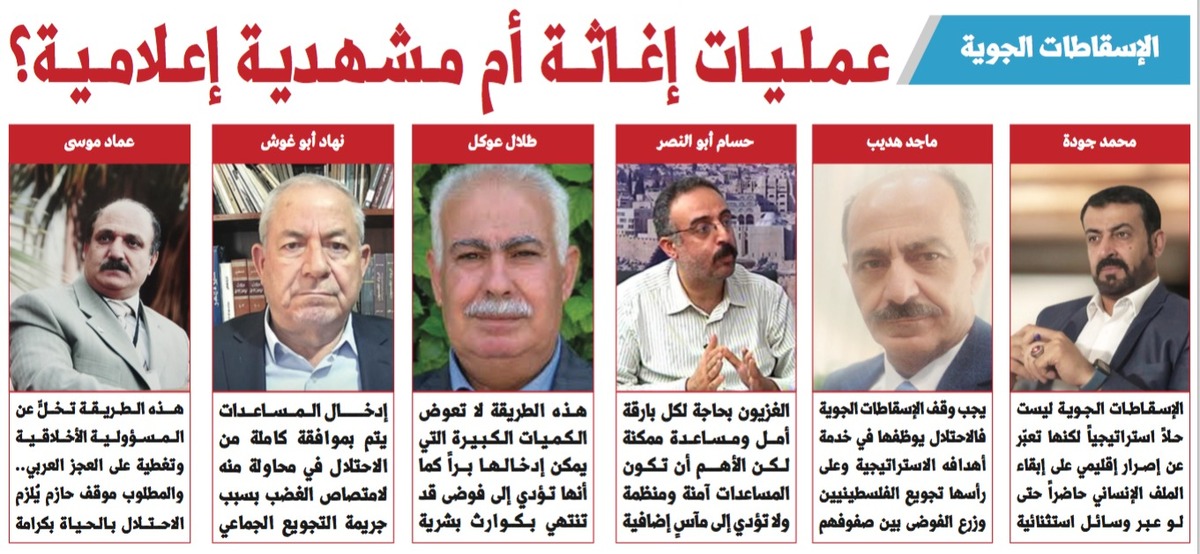







Mohammed Joda: Airdrops are not a strategic solution, but they express a regional insistence on keeping the humanitarian issue alive, even if through exceptional means.
Majed Hadeeb: The airdrops must be stopped, as the occupation is using them to serve its strategic goals, most notably starving the Palestinians and sowing chaos among them.
Hossam Abu Al-Nasr: The people of Gaza need every glimmer of hope and possible assistance, but the most important thing is that the aid be safe and organized and not lead to additional tragedies.
Talal Okal: This method does not compensate for the large quantities that can be brought in by land, and it also leads to chaos that could end in human disasters.
Nihad Abu Ghosh: Aid is being brought in with the full approval of the occupation in an attempt to absorb the anger over the crime of mass starvation.
Imad Moussa: This approach is an abdication of moral responsibility and a cover-up for Arab impotence. What is required is a firm stance that obliges the occupation to live with dignity.
As the humanitarian crisis in the Gaza Strip worsens and the stifling Israeli blockade continues alongside the ongoing war of extermination, some countries have resorted to airdropping humanitarian aid to various areas of the Strip. This comes amid fears that this could become a cosmetic effort to cover up the occupation's crimes.
In separate interviews with Al-Quds, writers and political analysts believe that these projections, despite their symbolic nature, do not address the roots of the disaster. Rather, they may be used as a propaganda tool to beautify the occupation's practices and cover up its crimes and failure to abide by international law, especially since they are carried out with the occupation's approval and under its full supervision. This raises questions about who truly benefits from these initiatives, and whether they actually contribute to saving civilian lives, or have they become a means of relieving international pressure on Israel?
In contrast, some writers and analysts link these "humanitarian" actions to the regional political landscape, arguing that the countries involved in these operations "are content with superficial solutions that fall short of the catastrophe, while what is required is genuine international action to ensure the opening of the crossings, end the blockade, and guarantee a dignified life for the more than two million Palestinians facing genocide in the Gaza Strip."
The international community has failed to impose safe humanitarian corridors.
Writer and political analyst Mohammed Joda believes that the resort by some countries, most notably the UAE, to airdropping aid over the Gaza Strip reflects the international community's failure to enforce safe and stable humanitarian corridors by land or sea. He asserts that this option, despite its high cost and limited impact, also reflects a political desire not to stand idly by while the humanitarian suffering in the besieged Strip worsens.
Joudeh explains that this type of humanitarian intervention, despite its symbolic nature, represents a "breaking of the humanitarian silence" and an indirect message of pressure against the parties obstructing the delivery of aid, particularly the Israeli occupation, which refuses to open the crossings regularly.
Joudeh asserts that airdrops are not a strategic solution, but rather express a regional insistence on keeping the humanitarian issue present in political and diplomatic awareness, even if it is done through exceptional means.
At the same time, Joudeh points out that the debate surrounding the effectiveness of these interventions—both in terms of their relief effectiveness and their political impact—is legitimate, but reflects a complex humanitarian dilemma. On the one hand, there is an urgent need to deliver food by any means possible, while on the other, there is a real fear that these methods could be misused to whitewash a harsh political reality or promote the false notion that the situation in Gaza is under control.
Projections mitigate but do not address the crisis.
Joudeh emphasizes that while airdrops may temporarily alleviate the tragedy, they do not address the root causes of the crisis. Rather, they may be used by some parties as a propaganda tool to weaken international pressure to open the crossings and lift the blockade.
Joudeh calls for every humanitarian action to be accompanied by a clear political message emphasizing that such aid is neither a substitute for lifting the blockade nor an end to the suffering. Rather, it must be part of a comprehensive vision that restores respect for international law and human rights.
Joudeh emphasizes the need not to allow humanitarian work to be transformed into a means of beautifying the political reality. Rather, it must remain a moral pressure tool to achieve radical solutions that guarantee Palestinians their right to a dignified life and freedom.
Airdrops are a double-edged sword.
For his part, writer and political analyst Majed Hadeeb considers the airdrops of humanitarian aid to the Gaza Strip, carried out by some countries, to be a "double-edged sword," which can be understood either as an attempt to rescue civilians trapped from starvation, or as a weapon that supports the Israeli occupation in implementing its plans to kill, starve, and displace the Palestinian people.
Hadib explains that all of these operations are carried out only with the approval of Israel, which pre-determines the executing party, the timing and location of the drop, and even the contents of the relief packages. This means that the occupation completely controls these operations and employs them to serve its strategic goals, most notably starving the Palestinians, sowing chaos among them, creating scenes of clashes over the packages, and even causing the deaths of civilians during the distribution operations.
Hadib points out that the experience of airdrops between 2023 and 2024 revealed a series of tragic incidents, where parcels fell on the heads of citizens, resulting in deaths and injuries, as well as creating problems, particularly in areas controlled by large, armed families, who prevented those in need from accessing aid, monopolizing it to the exclusion of others.
Hadib points out that the occupation is deliberately promoting this policy to perpetuate an image of chaos and collapse, and to hold the Palestinians themselves responsible for the chaos, rather than acknowledging its greater crime of imposing a comprehensive blockade and refusing to allow aid into the territory by land.
Hadib explains that these landings do not meet the minimum needs of the population, as the majority of the landings do not even equal the load of ten land trucks. Hadib believes that these landings are a "means of beautifying the ugly face of the occupation," by attempting to suggest that Israel is not responsible for the starvation policy or the humanitarian crisis, but rather "allows" the passage of aid, even as it closes the crossings and besieges more than two million Palestinians.
"Airdrops" are justified in natural disasters.
Hadib explains that "airdrops" may only be justified if the blockade is the result of a natural disaster or circumstances beyond human control. However, in the Palestinian case, the blockade and starvation are a systematic policy pursued by Israel to achieve clear displacement goals. Therefore, participating in these airdrops without a parallel political stance makes participants complicit in implementing those policies, or at least in improving the occupation's image before the international community.
Hadib calls for an immediate halt to these operations unless they are accompanied by serious political action, as they aim to beautify the occupation's image and support it by killing Palestinians without any pressure being placed on it.
"In order not to be complicit in whitewashing the occupation, we must be honest," Hadib says. "These landings serve Israel's political agenda and cover up the systematic crime of starvation. They must be stopped because they have become a direct threat to the people, due to the stampede and casualties."
Hadeeb calls for a conference at the United Nations headquarters, with Arab and regional support, to launch a new political dynamic based on the two-state solution as the only way to end the conflict and ensure a dignified and secure life for Palestinians.
Hadib emphasizes that "the humanitarian solution must not be separated from the political solution. If aid is not linked to a real international effort to lift the siege and halt the aggression, these initiatives will remain mere tools to beautify the occupation and assist Israel in silently killing Palestinians."
Airdropping aid to the Gaza Strip is useless.
For his part, writer and historian Hossam Abu Al-Nasr believes the UAE's announcement of airdrops of aid to the Gaza Strip is counterproductive, emphasizing that this approach has proven a failure on the ground, both because the aid does not reach those it deserves and because it causes civilian deaths due to the chaos it creates or the parcels falling in populated areas.
Abu al-Nasr explains that this option is futile, especially given the increasing flow of Egyptian aid into the Gaza Strip. He emphasizes that airdropping aid is not only ineffective, but could also cause further civilian casualties, something that has already occurred on previous and current occasions.
Abu Al-Nasr emphasizes that the UAE, as one of the first countries to normalize relations with Israel, must leverage its political ties to pressure Tel Aviv to open crossings, such as the Rafah and Erez crossings, or any of the surrounding crossings, to allow the immediate and orderly entry of aid.
Abu al-Nasr believes that this pressure is the realistic and practical solution to ending the humanitarian tragedy, rather than resorting to "relief measures" such as airdrops, which he described as ineffective and even counterproductive.
Timing of announcement of this air aid!
Abu Al-Nasr stresses that Palestinians in Gaza need every glimmer of hope and every possible assistance, but what's most important is that this aid be safe, organized, and not lead to additional tragedies.
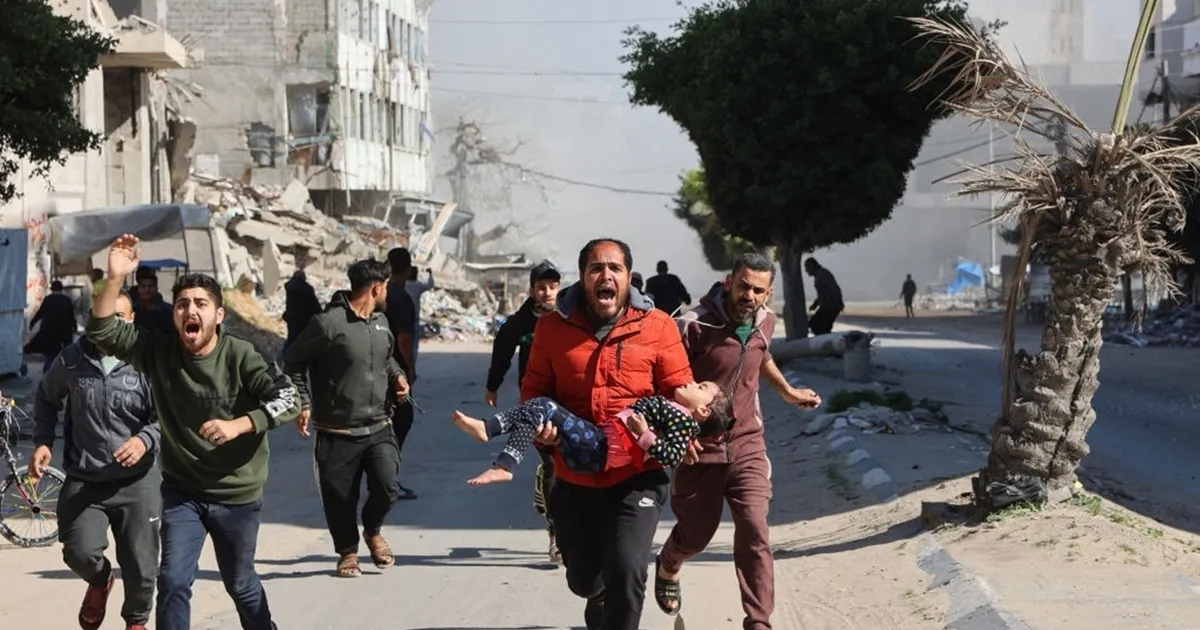
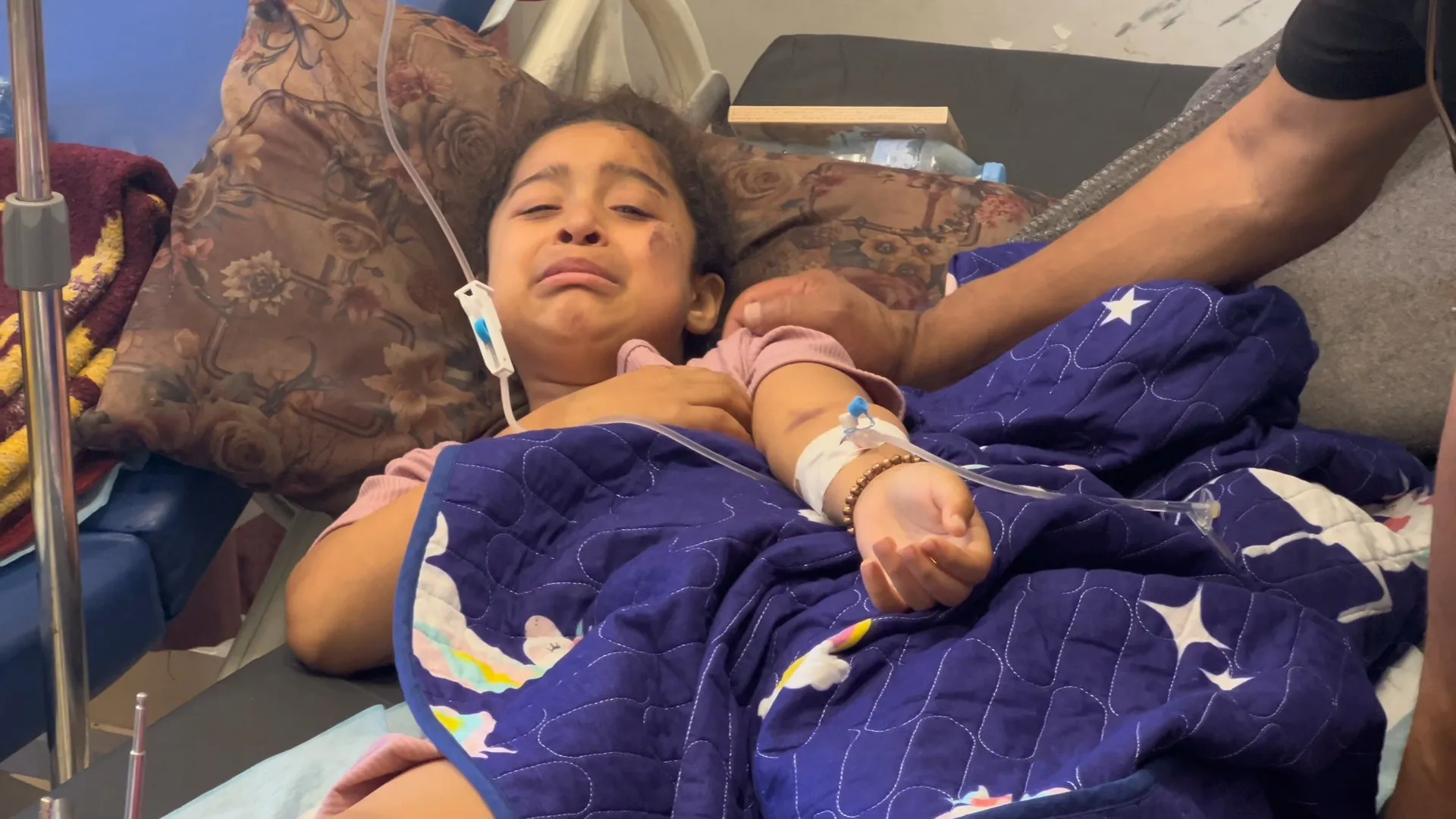
Abu Al-Nasr points out that many civilians, including children, have been killed while attempting to obtain aid, which is being distributed in a haphazard and dangerous manner.
Abu al-Nasr points out that the timing of the announcement of this air aid comes amidst a clear fluctuation in the course of negotiations, which have been oscillating between progress and decline. This reinforces doubts about the use of the humanitarian issue as a political bargaining chip to pressure the passage of certain deals.
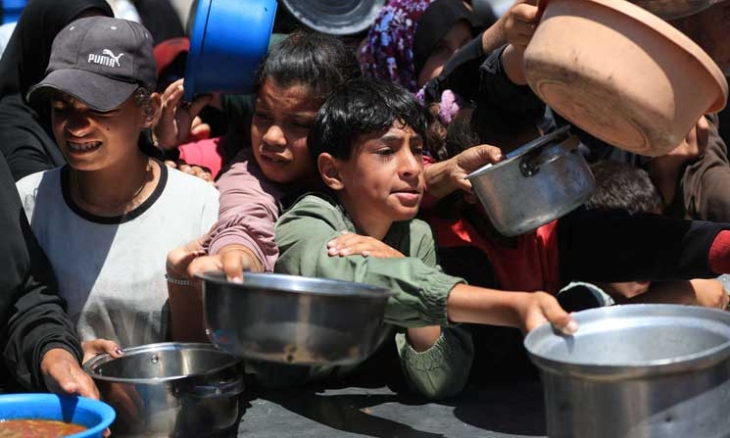
Abu Al-Nasr asserts that the Palestinian people in Gaza are no longer concerned with all this political debate. Rather, they are concerned with escaping the tunnel of hunger and siege, and with the tragic situation imposed by the policy of starvation, which has claimed the lives of many due to widespread famine and the lack of basic necessities of life.
The relief scene in Gaza is "not heroic"
For his part, writer and political analyst Talal Okal explains that the escalating starvation catastrophe in the Gaza Strip and the growing international response have prompted many parties to attempt to evade responsibility or justify their policies by promoting massive relief efforts, while what is happening on the ground does not exceed the strict Israeli restrictions, whether in terms of the amount and quality of aid or the mechanisms for its entry.
Awkal asserts that the relief scene in Gaza cannot be described in any way as "heroic," emphasizing that everything is being done with the approval of the Israeli occupation, which completely controls the details of aid entry, restricting its quantity, quality, and even the content of the relief supplies themselves.
Awkal strongly criticizes the mechanism of airdropping aid, stressing that it is not new and has been tried and proven unsuccessful.
Awkal explains that this method can in no way compensate for the large quantities that could be brought in by land. It also leads to significant chaos on the ground due to the absence of an organized distribution entity, which causes people to crowd together in an unorganized manner, creating a state of chaos that could lead to human disasters.
Awkal points out that some parcels fall into the sea, or even on people's heads, leading to injuries or even death.
Awkal believes this mechanism is not significantly different from the actions of what he calls the "inhumane Gaza Foundation," indicating that the declared efforts do not rise to the level of genuine humanitarian need and may even be used for propaganda or political purposes.
Awkal asserts that no propaganda can beautify this method of airdrops, or promote it as breaking the siege or an effective means of saving lives, given the ongoing "war crime of starvation" being perpetrated against Palestinians in the Gaza Strip.
Previous attempts to drop aid have failed.
For his part, writer and political analyst Nihad Abu Ghosh asserts that all airdrops or deliveries of humanitarian aid to the Gaza Strip, to date, have been carried out with full Israeli approval. This clearly demonstrates that what the occupation authorities are presenting as "humanitarian leniency" is merely a calculated move aimed at absorbing growing global outrage over the crime of mass starvation, rather than a serious effort to mitigate the catastrophe.
Abu Ghosh points out that Israel, despite the international criticism it faces, is continuing its war of genocide, destruction, and displacement, and is not offering any real humanitarian concessions. Instead, it is attempting to portray the crisis as an administrative and technical issue, sometimes claiming that trucks are being stolen and not reaching those they need, and other times claiming that the problem is due to Hamas's control over aid distribution.
These excuses, according to Abu Ghosh, lack credibility and are only intended to distract attention from the fact that the occupation is primarily responsible for the worsening crisis.
Abu Ghosh points out that previous attempts to drop aid, in addition to attempts such as the Biden administration's construction of a seaport that was later retracted, and the performance of the "dubious Gaza security establishment," have not achieved any real results. Instead, some distribution points have turned into "death traps."
Abu Ghosh stresses that all these attempts do not constitute an alternative to a radical solution, which involves opening the crossings and allowing aid into the Strip in accordance with fair and adequate humanitarian standards.
Abu Ghosh believes that manipulating the humanitarian situation and turning it into a means to cover up the war's objectives is part of a systematic Israeli tactic aimed not only at breaking the will of the resistance, but also at breaking the resilience of the civilian population itself.
Abu Ghosh points out that thousands of trucks loaded with aid are waiting at the crossings, most of which have spoiled because Israel refuses to allow them in and deliberately uses "starvation" to force people into migration.
The humanitarian catastrophe is a direct result of the Israeli blockade.
Abu Ghosh emphasizes that the humanitarian catastrophe in Gaza is not the result of poor distribution or a lack of organization, but rather a direct consequence of the blockade and Israeli policies. He asserts that the problem is neither technical nor administrative, but entirely political, and falls within the context of an ongoing war of extermination targeting Palestinian society as a whole.
Abu Ghosh says, "If there were a minimum of regional and international pressure, it would be possible to force the entry of aid before a ceasefire agreement is reached." He points out that demanding that Israel open the crossings and allow aid into Gaza without conditions should be among the simplest and most urgent Palestinian demands.
Abu Ghosh asserts that the daily scenes we see of children and civilians being starved in Gaza are part of the image Israel seeks to project: "an image of victory for its army and its project, and defeat for the Palestinian people."
Abu Ghosh stresses that it is the political and moral duty of all parties to reject this scenario and work to restore respect for the basic humanitarian demand: "ending the siege, stopping the war, and guaranteeing the Palestinians' right to a dignified life."
A media spectacle to silence global public opinion
For his part, writer and political analyst Imad Moussa believes that some countries' continued use of airdrops of humanitarian aid over the Gaza Strip represents a clear departure from their true moral responsibility and a mere formality in place of the political pressure required on Benjamin Netanyahu's government to open the crossings to humanitarian aid, in accordance with international humanitarian law. This is an attempt to cover up Arab incompetence.
Musa believes this move cannot be separated from the current political landscape, asking, "Isn't Netanyahu himself the one who grants them permission to fly over Gaza?" He points out that what is happening is taking place under the umbrella of Israeli coordination, which could strip these efforts of their true humanitarian dimension and turn them into mere media spectacle.
Musa asserts that the airstrikes we are witnessing may be merely a "media stunt" aimed at silencing public opinion, both international and local, and presenting a symbolic image to justify Arab inability to take real steps to halt the starvation catastrophe plaguing the Gaza Strip.
Musa emphasizes that what is required is not to shift responsibility through symbolic means, but rather a firm political stance that compels the occupation to open the crossings and provide protection for aid and the Palestinians' right to a dignified life.
Powered by Froala Editor


Share your opinion
Airdrops: Relief Operations or Media Spectacular?