






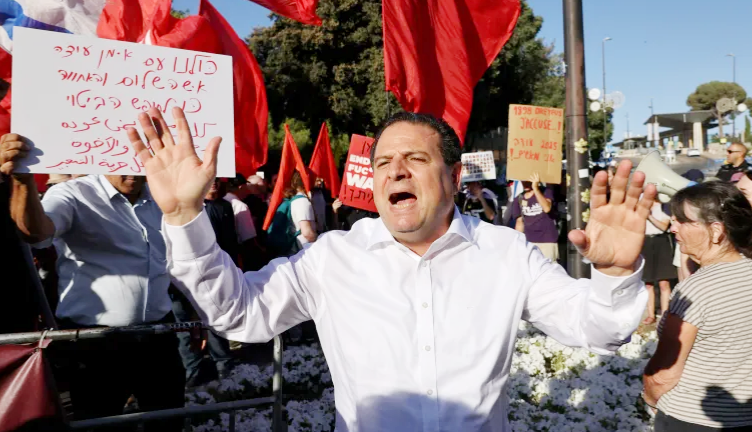
Palestinians of 1948 are suffering further racist oppression, intimidation, land confiscation, and home demolitions, under the protection of the far-right Israeli government led by Prime Minister Benjamin Netanyahu (who is wanted by the International Criminal Court). These practices have increased dramatically since October 7.
The coalition's attempt to pass a bill to expel MK Ayman Odeh, head of the Hadash-Ta'al alliance, from the Knesset provided the clearest illustration of these practices. Seventy-three members of the coalition and opposition parties called for his expulsion, but they were unable to secure the 90 votes out of 120—the legally required majority to expel an elected representative.
According to analysts, this development raises fundamental questions about the future of the 1948 Palestinians and their political participation in the Knesset, and reawakens discussion of the challenges and concerns they face under this extreme right-wing government.
confined existence
The number of Palestinians inside the Green Line is approximately 2.1 million, representing approximately 21% of Israel's population.
Their presence was confined to certain areas as a result of the military rule that lasted from 1948 to 1966, which restricted their movement and confiscated their lands, in addition to the massacres committed by Zionist gangs in 1948 that aimed to displace them from their areas.
Since 1948, more than 90% of Palestinian land inside Israel has been confiscated under the "Absentee Laws" and "State Property Laws," which prohibit the expansion of Arab towns and deny building permits.
Sami Abu Shehadeh, head of the National Democratic Assembly party and former Knesset member, told Al Jazeera Net that Israel has treated its Arab citizens as enemies since the Nakba, not just since October 7, 2023.
racist laws
Since the establishment of the occupying state, the Israeli government has enacted a series of laws that have tightened the noose on the Palestinians of 1948 and stripped them of their rights. The most prominent of these laws are:
Absentee Property Laws (1950): Under which the lands and properties of hundreds of thousands of Palestinian refugees and internally displaced persons were confiscated. Palestinians own only 9% of the land inside Israel, despite constituting 21% of the population.
Admissions Committees Law (2011): which allows Jews in small settlements to refuse Arabs residence among them on the grounds of “social and cultural inadequacy.”
The Knesset Members' Dismissal Law (2016): allows the expulsion of any Knesset member accused of supporting "terrorism" or denying the "Jewishness of the state." It is directed primarily against Arab MKs.
Loyalty in Culture Law (2018): Threatens to cut funding to cultural institutions if they “deny the existence of the State of Israel as a Jewish state.”
The Jewish Nation-State Law, enacted in 2018, is the pinnacle of apartheid laws. It stipulates that the right to self-determination in the country is exclusive to the Jewish people, supports Jewish settlement as a national value, and downgrades the status of Arabic from an official language to a "language with special status." It excludes Arab citizens and perpetuates structural discrimination against them.
There are laws that restrict the political rights of Palestinians living inside Israel, such as laws that raise the electoral threshold, making it difficult for Arab parties to pass them.
In addition to several laws encouraging the displacement of Bedouins in the Negev, such as the Prawer Plan, which was later frozen due to protests, laws targeting the freedom of expression and organization of Palestinians within Israel were also enacted, including:
Settlement Boycott Law (2011): imposes fines and allows prosecution for those who call for a boycott of settlements or Israel, in addition to restrictions on mentioning the Nakba and funding events commemorating it.
Associations Law (2016): Targets civil society organizations, often persecuting Palestinian human rights associations.
Laws facilitate the demolition of Palestinian homes on the grounds of "unlicensed construction," while greatly complicating the process of granting permits to Arabs.
Discrimination is also escalating in education budgets, municipal services, and infrastructure, further deepening the gap between Jews and Arabs.
In addition, the law, which aims to affect the demographic balance of the 1948 Palestinians, is called the Citizenship (Family Reunification) Law, and it prevents the reunification of Palestinian families if one of the spouses is from the West Bank or Gaza.
In a statement to Al Jazeera Net, academic and former Knesset member Jamal Zahalka described the racist treatment of the Palestinians of 1948 as part of the system's structure, not simply a policy of this or that government. This is evident in a set of discriminatory official laws, policies, and practices that Israeli governments have followed since the establishment of the Zionist state.
He added that many laws are applied in a racist manner, including land confiscation laws, which appear neutral and do not address Jews or Arabs. However, they are applied in a single direction: seizing land from Arabs and granting it to Jews, in complex but clearly directed procedures.
Repression after October 7
After October 7, 2023, Israel witnessed a new wave of punitive laws and practices directed against Arab citizens, under the banner of "maintaining security" or "preventing support for terrorism," but in practice, they only increased oppression and discrimination.
October 2023 saw the most severe and racist measures, with amendments to the "Anti-Terrorism Law" being passed, imposing harsher penalties for any expression of opinion, even on social media, allegedly in support of terrorism.
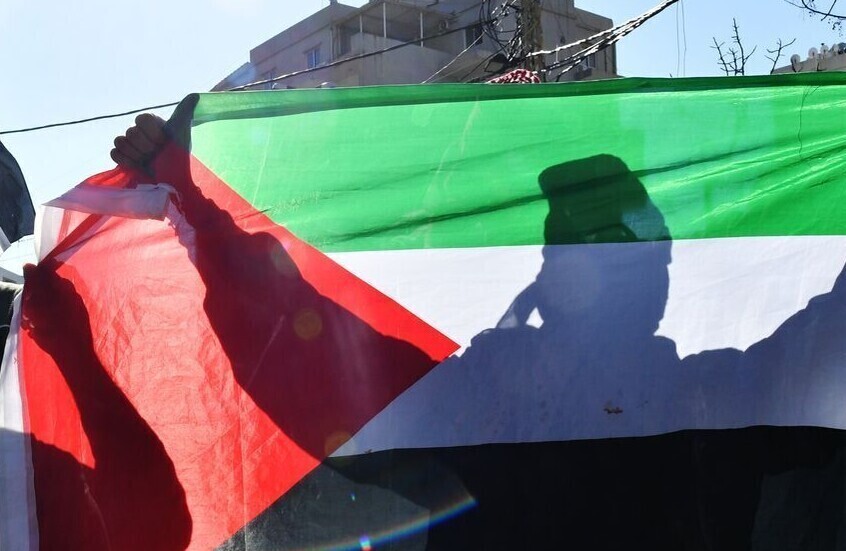
The definition of "incitement" has been expanded to include even symbolic expressions, such as raising the Palestinian flag at a demonstration, and numerous cases have been recorded of Arab employees being dismissed from their jobs due to posts or expressions deemed to support terrorism.
In November 2023, the governing coalition advanced draft laws that would facilitate the revocation of citizenship or residency from Arab citizens accused of supporting "terrorism" or disloyalty to the state, even without trial, claiming that the "higher interest of the state" justifies this.
In return, Israeli university administrations have threatened Palestinian students with expulsion for posting or participating in demonstrations, and the Israeli Ministry of Education has encouraged schools to "monitor" Arab teachers and students and report any "suspicious" behavior.
The powers of the police and intelligence services were expanded by deploying large police and border guard forces to Arab towns under the guise of "riot prevention," in addition to conducting mass searches, arrests, and the creation of special units to spy on social media in Arab communities.
In January 2024, he proposed restricting funding or even banning Arab parties on charges of "supporting terrorism" or "questioning the Jewishness of the state," aiming to prosecute Arab civil society organizations for allegedly receiving funds from "hostile" entities.
The most recent of these laws was passed by the Knesset plenum on July 9 of last year in its second and third readings. This law prohibits the granting of civil status in Israel to relatives of perpetrators of attacks. Under the law, family members of perpetrators will be barred from entering Israel as part of family reunification procedures, and those who have already obtained temporary residency will be deported.
According to Adalah, the Legal Center for Arab Minority Rights in Israel, hundreds of Palestinians have been arrested inside Israel for expressing their opinions, including opposing Israeli attacks targeting innocent civilians, expressing sympathy for the Palestinian people in Gaza, speaking out against collective punishment and war crimes, and reporting on events in Gaza.
In a statement to Al Jazeera Net, Knesset member Ayman Odeh, head of the Democratic Front for Change (DFTC), said that Israel's actions since October 7th are premeditated plans, and that it is exploiting October 7th to advance them.
He added, "The plan against Gaza and the transfer of its residents to Sinai was initiated before October 7. Former Prime Minister Yitzhak Rabin wished for Gaza to sink into the sea, and the Israeli government is exploiting the matter to push through policies against the Palestinian people."
He said that, in parallel, the war against the Palestinians of 1948 is being exploited to return them to the realm of military rule, which means they become illegal citizens in political life, "and to frustrate their ability to influence, thus lowering our voting percentage so that the extreme right remains in power, while withdrawing all the gains - which have always been incomplete rights - in terms of freedom of expression that we have achieved through our struggle over decades."
neglect and chaos
Palestinians in Israel suffer from chaos, neglect, and widespread crime. According to the 2025 midterm report of the Aman Center, the Arab Center for a Safe Society, a center specializing in the human rights of Palestinians of 1948, the number of victims of violence and crime in Arab society has risen for the third consecutive year since the current Netanyahu government took office.
According to a new survey conducted by the Konrad Adenauer Program for Jewish-Arab Cooperation at the Moshe Dayan Center for Middle Eastern and African Studies at Tel Aviv University, published earlier this month, 75.4% of respondents reported feeling personally insecure and depressed, primarily due to violence in Arab communities and the ongoing war in Gaza.
Zahalka says that since the election of Netanyahu's new government, the number of murders due to rampant crime has increased by two and a half times. The annual murder rate among Palestinians in Israel is more than 10 times that of Jews within the same state, and the police are the same police. It exceeds the murder rate in Palestinian society in the West Bank. The people are the same people, and the society is the same society.
He added that the reason for the rampant crime is the policies of the state in general and this government in particular, which does little to combat crime, allowing criminals and criminal gangs to impose a state of insecurity and even terror on Palestinian society inside the country.
political repression
From 1948 until the mid-1960s, Israel implemented a systematic repressive regime against Palestinians, including military rule, confiscation, legal challenges, displacement, and the razing of villages, with the aim of reducing them to a society with limited rights and politically isolated under state control.
Military rule was imposed on Palestinians from 1948 until 1966, depriving them of freedom of movement and subjecting them to exceptional measures, including house arrest, warrantless searches of homes, and frequent curfews. Emergency laws were also used to carry out pretrial detentions and monitor political activity, with the possibility of deportation or denial of return.
Zahalka says that this government is engaging in political persecution and suppressing activists protesting the war and the genocide in Gaza. Hundreds have been arrested, all of whom were interrogated and imprisoned for expressing their opinions. The arrests are carried out under flimsy pretexts and are intended to silence and prevent protests against the occupation's crimes and war.
He added that the Israeli Knesset is enacting dozens of racist laws aimed at suppressing political activity among Palestinians living in Israel, particularly at universities, and that the Israeli establishment is also tightening the noose on political parties and civil society organizations.
A recent attempt was made to remove MK Ayman Odeh from the Knesset simply because he rejoiced over the release of prisoners, "whether Israeli or Palestinian." He was accused of committing the "crime of equating Israeli hostages with Palestinian terrorists," according to Israel's description.
For his part, Shehadeh describes the situation of the 1948 Palestinians after October 7th: "Israel found an opportunity to further besiege the Palestinian minority. There is political and economic persecution, a ban on freedom of expression, and the right to demonstrate. All of this has increased dramatically."
Shehadeh added that the Israeli government has been treating Palestinian citizens as enemies since the beginning of the war. On October 7, Netanyahu declared the Palestinians of 1948 a fourth front in the war, saying that the fourth front is the home front. Netanyahu and his extremist ministers have been dealing with Palestinian Arabs on this basis since the beginning of the war.
Awda pointed to the Netanyahu government's plans to lower the electoral threshold, which will impact the Arab vote in the upcoming elections. This is a powerful factor for the parties active within the Palestinian public in Israel. The higher the electoral threshold, the more it helps unify all the forces. When the threshold drops, some believe they can overcome it alone, which leads to the fragmentation of the Arab vote.
Source: Al Jazeera
Powered by Froala Editor



Share your opinion
Palestinians of 1948 face the storm again