






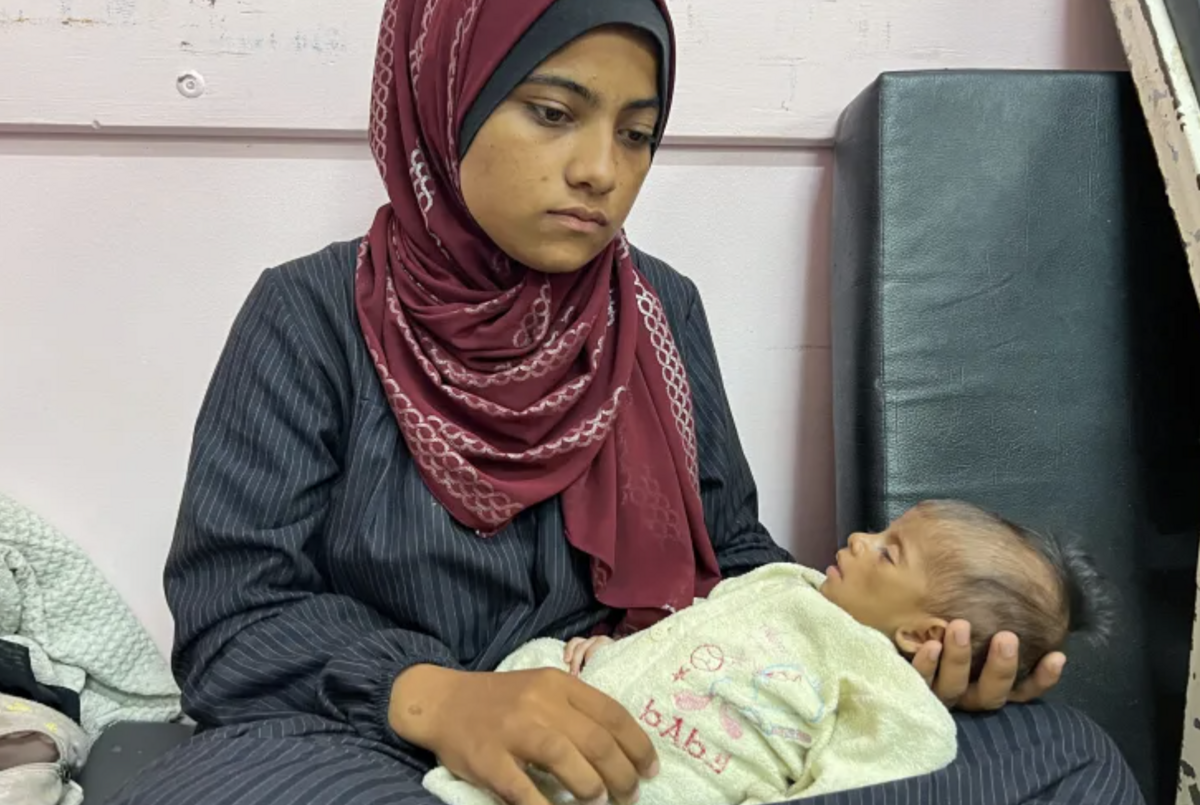
A medical official in the Gaza Strip issued a cry in the New York Times, urging the world to pay attention to the famine the people of Gaza are suffering under the siege and Israeli bombardment. He called on the international community to open the door to aid, protect civilians, and demand an end to the devastation.
In an article in the American newspaper, Mohammed Mansour, senior nutrition director at the International Rescue Committee, one of the few organizations still providing aid in Gaza, said that nearly half a million Gazans are suffering from catastrophic levels of food insecurity, in one of the worst hunger crises in the world today.
Mansour added that these people are on the brink of famine, and that approximately 100,000 children and women are suffering from severe acute malnutrition, the most severe diagnosis of food insecurity.
Mansour noted that since the Israeli occupation imposed a blockade on humanitarian aid to Gaza in March, hunger has spread dramatically, especially among infants and young children, and that the situation is worsening.
He added that Gaza's humanitarian infrastructure is completely besieged, and that the food distribution system established by Israel is not functioning amid escalating hostilities, the deaths of hundreds of Palestinians waiting for aid, the closure of crossings, the delays in issuing permits, and the severe shortages of fuel, medical supplies, water, and food.
Mansour spoke about the plight of mothers who arrive at the clinics where they work exhausted, often after hours of walking carrying their malnourished children, asking, "Will my baby survive?" or "Do you have milk or food?"
Mansour acknowledged that it is not always possible to answer these questions, saying that many children in Gaza are suffering from severe hunger that may never recover, and that the supplies of the organization he works for are extremely scarce.
Children are not the only ones starving in the Strip. A number of parents go several days without enough food, sometimes skipping meals so that their children can eat.
severe malnutrition
Mansour said he was deeply moved by the case of a two-year-old boy he tried to help this month. He was suffering from severe malnutrition, and his condition rapidly deteriorated. He died because the medical team had no way to save him.
Mansour recounts that children are not the only ones starving in the Strip. Several parents told him they go several days without sufficient food, sometimes skipping meals so their children can eat, even just a few pieces of bread, if they can find it.
Mansour, a resident of the Gaza Strip, commented on the situation, saying, "They are not just numbers to me. These are people I see every day, people I live with. They tell me: 'We have lost everything, but we cannot lose our children.'"
Regarding his family's suffering, Mansour said their home was destroyed in an airstrike, and they spent months in tents and makeshift shelters, exposed to cold and heat, with little clean water and electricity. He added that markets were almost empty, "Many days, we eat only once. Some days, we don't eat at all."
Amal Aziz
Mansour described his working conditions, saying that most days he works in an overcrowded shelter in Deir al-Balah (central Gaza), doing his best to help people survive, in coordination with other IOM teams across Gaza, despite resource shortages and power outages.
Mansour hasn't seen his mother for months. She lives in the south, closer to Rafah, and needs care. He said he worries about her all the time, but he can't visit her because the roads are unsafe and movement is restricted.
Speaking about his colleagues, he said that each one of them is experiencing personal trauma. Some have lost their homes, others have lost family members, but all are determined to continue carrying out their mission with courage.
Mansour expressed his hope that all children in Gaza would live in a place where they felt safe and cared for, sleeping without fear and with their stomachs full not of crumbs, but of real, nutritious food.





Share your opinion
The New York Times: This is a cry for the world to pay attention to the famine in Gaza.