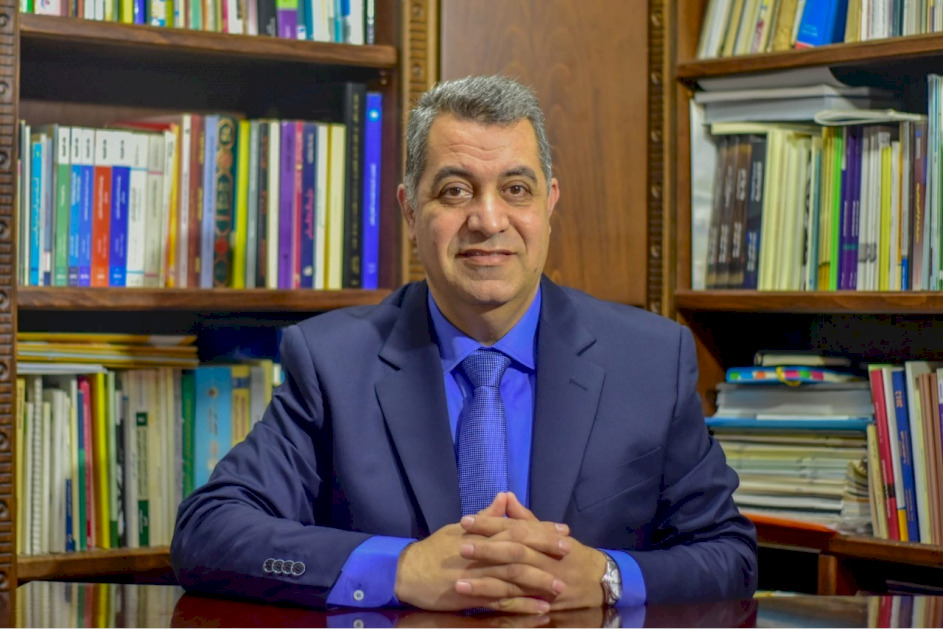






Jihad Harb
The Palestinian Foundation for Empowerment and Local Development (REFORM) has issued a policy paper on restoring constitutional legitimacy in governorate governance and ensuring local development. This paper is part of the Foundation's 2025 policy paper series.
Local administration is a fundamental tool for political development at the local level and for fostering community participation in the management of a geographical area or governorate. This is because local administration is capable of understanding the nature and potential of local development, on the one hand, and a link between the government or the center of public administration in the country and the parties or entities within a framework of functional harmony during normal times, on the other. In addition, it serves as a central unit during emergencies, enabling rapid responses to the needs and requirements of citizens within the geographical area (the governorate). Local administration is also considered a form of administrative organization within the state, and it consists of two levels or divisions at the regional level: governorates and local authorities (municipal and village councils). Countries attach particular importance to various administrative divisions, whether by making them a hierarchical tool that reaches neighborhoods, or by consolidating them within a single framework at the level of the broader geographical area, such as a governorate or geographical region. This is in accordance with the divisions adopted by the country, which enhances the cohesion of governance and ensures functional comprehensiveness between all geographical areas and the central authority represented by the government in the "temporary" capital.
There is no doubt that the local administration structure, according to the administrative formations adopted in the State of Palestine, represented by the governorate as a geographical unit, is still new, without the other formations adopted during the Jordanian and Egyptian eras in Palestine during the period between 1948 and 1967. Following the transformations that took place in the political system pursuant to the amendment to the Basic Law in 2003, and in the midst of the battle to seize the centers of influence in the political system between the two poles of the executive authority and the struggle over powers, Palestinian President Yasser Arafat issued Presidential Decree No. (22) of 2003 regarding the powers of governors, whereby the governor was considered a representative of the president and directly subordinate to him. President Mahmoud Abbas then issued Decree No. 22 of 2021, pursuant to which he made specific and limited amendments. However, both of these amendments came without consideration of the constitutional architecture governing the powers and authorities stipulated in the amended Basic Law for each authority and constitutional institution.
The issue of local administration and its reorganization requires an in-depth discussion on the extent to which the legislation regulating the work of governorates as administrative divisions, their affiliated bodies, the limits of their relationship with the central authority, and the means of oversight over them are consistent with the provisions of Article 85 of the Amended Basic Law and the mandatory constitutional rules it sets forth. This is in terms of the legal hierarchy, political authority, functional powers, institutional structure, local administration system, and forms of local organization within the framework of the constitutional engineering of the political system's structure, including the duality of executive authority.
This policy paper aims to present a comprehensive reform agenda for local administration, focusing on restoring the consistency of the legislation regulating administrative formations or divisions in Palestine with the provisions of the Basic Law and the purpose of the constitutional legislator, on the one hand; developing local administration in a way that enhances local development in the governorates by preparing for the adoption of administrative decentralization in governance, on the other hand; empowering citizens to participate in selecting their representatives in local administration, which enhances political development, on the third hand; and, on the fourth hand, restoring public confidence within the framework of a fundamental and serious reform process.
Five development options
The policy paper proposes five development options for the local administration structure, including its first section, "governorates." All of these options are consistent with the objectives identified above. These options are presented to political decision-makers in the presidency and government, as well as political and social actors and civil society organizations, within the framework of discussions related to institutional reform adopted by the nineteenth Palestinian government. Therefore, these options are suitable for gradual reforms. The first option involves electing two-thirds of the governorate council members, with the remainder appointed by virtue of their positions in government institutions in the governorate, with the government appointing the governor. The second option involves electing the governorate council by citizens, with the government appointing the governor from outside the elected council. The third option involves electing the governorate council by citizens, with the government selecting the governor from among the elected members. The fourth option involves the elected council selecting the governor from among its members. The fifth option involves electing the governor directly by citizens, in addition to electing the governorate council.
Local Administration in Palestine and the Fluctuation of Political Reference
Although the Palestinian Authority maintained the administrative divisions in effect prior to the Israeli occupation of the West Bank in the 1967 period following its establishment, in 1995 and thereafter, it divided the Palestinian territories into 16 governorates (11 in the West Bank and 5 in the Gaza Strip), abolishing lower administrative divisions such as districts and sub-districts. Accordingly, Jordanian Administrative Formation System No. 1 of 1966, which clarified the mechanism for appointing governors, their affiliation, and the powers delegated to them, became applicable in the West Bank. Governors were appointed within the Ministry of Interior in accordance with the Jordanian Administrative Formation System of 1966, which stipulates that "the governor shall be appointed by a decision of the Council of Ministers based on the recommendation of the Minister of Interior and the issuance of a royal decree." The Palestinian legislator, in the draft law on administrative formations, which passed its second reading in the Legislative Council in 1998 and was referred to President Yasser Arafat on April 9, 2000, but was not issued or published, adopted the same approach, whereby the governor would be subordinate to the Minister of Interior, while “the governor would be appointed or relieved of his post by a decision issued by the head of the executive authority and upon the recommendation of the Council of Ministers.”
• The fluctuating dependency of the governors between the Minister of Interior and the President
A review of the decisions appointing governors shows that they were appointed to the Ministry of Interior in the years between 1994 and the end of 2002. It is worth noting that President Yasser Arafat held the position of Minister of Interior from the formation of the first government until the formation of the fourth government, in which the Minister of Interior, Abdul Razzaq Al-Yahya, was appointed on June 5, 2002. However, in Decision No. 32 of 2002, issued on August 4, 2002, Mr. Arif Al-Jabari was appointed Governor of Hebron Governorate while retaining his position in the Ministry of Endowments and Religious Affairs, without mentioning his affiliation to the Minister of Interior or the President.
In 2003, President Yasser Arafat issued Presidential Decree No. (22) of 2003 regarding the powers of governors, which considered the governor as the representative of the president and head of the general administration in the governorate and directly subordinate to the president; such that the governor is appointed and relieved of his position by a decision of the President of the National Authority. The decree stipulates that “the governor is the representative of the President of the Palestinian National Authority and head of the general administration and the highest authority in his governorate and supervises the implementation of the general policy of the Authority and the service and production facilities within the scope of his governorate.” Then, the Department of Governors, their work and departments were transferred to the presidential headquarters pursuant to Presidential Decree No. 74 of 2003.
At the beginning of President Mahmoud Abbas's term, Presidential Decree No. 29 of 2005 was issued on April 14, 2005, appointing Dr. Saeed Abu Ali as governor at the Ministry of Interior and National Security. He was to coordinate and manage governorate affairs within the ministry, effectively transferring the governors' subordination to the Ministry of Interior. However, the decision to transfer the management of governors' affairs to the ministry was quickly reversed through Presidential Decree No. 39 of 2005, which transferred Dr. Saeed Abu Ali to the Presidential Secretariat as coordinator of governors' affairs. With this decision, the governor's authority was restored to the president through the Governors' Affairs Department, in accordance with Decree No. 15 of 2005 regarding governors' meetings.
• Formation of councils in the governorate:
In accordance with Presidential Decree No. 22 of 2003, in addition to the powers stipulated in other laws, the governor presides over the Executive Council, which consists of directors of government departments and a number of mayors of the governorate. Advisory councils have also been established in Palestinian governorates to enable representatives of social and economic sectors at the governorate level to participate in formulating the governorate's general policies and to promote positive investment in visions and practical solutions to the challenges and problems facing the governorate.
• The length of time the governor remains in his position or governorate
The issuance of Presidential Decree No. 22 of 2021 amending Decree No. (22) of 2003 regarding the powers of governors represented a development in the issue of setting the time limits for the position of governor at a maximum of six years, as the article stipulated that “the term of his service as governor in one or more governorates shall be five years, extendable by a decision of the Head of State for one year only.” In contrast, the decree granted the president absolute powers in appointing and referring to retirement without being bound by the working conditions of civilian and military employees in accordance with the laws regulating their work and retirement.
The constitutional engineering of the status of the administrative governor (the governor)
Article 85 of the amended Basic Law states, “The country shall be organized by law into local administrative units with legal personality. Each unit shall have a council elected directly in accordance with the law. The law shall determine the powers of the local administrative units, their financial resources, their relationship with the central authority, and their role in preparing and implementing development plans. The law shall also determine the aspects of oversight over these units and their various activities. When dividing the units, demographic, geographical, economic, and political criteria shall be taken into account to preserve the territorial integrity of the country and the interests of its communities.” Three main issues are:
The first issue relates to the subordination of governors, according to the constitutional architecture of the Basic Law, which stipulates that administrative formations ("local administration") fall under the purview of the Council of Ministers, as stated in Chapter Five of the Basic Law, which relates to the executive authority/the Council of Ministers. This means that the Palestinian legislator intended the governor/administrative governor to be subordinate to the Council of Ministers and to exercise its powers.
The second issue: the necessity of having a council directly elected by citizens in local administration units. This means that the Palestinian constitutional legislator has established the broad meaning of the concept of local administration by adopting the concept of administrative decentralization as an early alternative to administrative centralization by relying on the will of citizens in selecting local officials at the level of local administration units.
The third issue: relates to the fact that the legislation regulating the work of the local administration and its divisions and units should be a law and not a lower legislation approved by the Legislative Council in accordance with the legislative procedures stipulated in the amended Basic Law.
Although the Palestinian legislator, in Article 85, set standards that apply more precisely to governorates as one aspect of the administrative division of the state when speaking about taking into account demographic, geographic, economic and political criteria to preserve the territorial integrity of the homeland and the interests of its communities, and the ability to prepare and implement development plans, in the context of the struggle over powers between the presidency and the Council of Ministers in 2003, the Palestinian rulers limited the provisions of Article 85 of the Basic Law to local authority councils by issuing the Local Authorities Law and its election law. No attention was paid to issuing the Local Administration "System" Units Law, as stipulated in Article 85 of the Basic Law: "The law shall determine the powers of local administration units, their financial resources and their relationship with the central authority."
Options for democratizing local administrative units and restoring their constitutional legitimacy
This section is dedicated to addressing the five proposed options for democratizing local administrative units (LGUs), represented by governorates, and ensuring the constitutional legitimacy of their structure and operation. This is particularly true given that the constitutional legislature has provided general guidelines for adopting administrative decentralization for LGUs, ensuring broad citizen participation in formulating and implementing local policies through the mandate to elect LGU councils. However, this development, in some aspects, requires gradual doses to achieve the constitutional goals of "administrative decentralization," as opposed to the centralization of development visions in the governorates, achieving harmony between administrative decentralization and comprehensive development.
Option 1: Mixed Council (electing two-thirds of the members and appointing the rest)
This option calls for the establishment of a mixed council through the election of two-thirds of the provincial council members by citizens, with the remainder being appointed by virtue of their positions in the province's government institutions (directors of civil and security government institutions), mayors of the province's main municipalities, and heads of sectoral representative institutions. The government/Council of Ministers would then appoint the governor.
The advantages of this option are that it provides an opportunity to examine the extent of harmony between elected officials of various ideological and political persuasions and appointed public officials, including the governor, in managing the governorate's public affairs. It also represents a transitional phase in the management of administrative units, from administrative centralization to administrative decentralization. It also achieves some consistency with the provisions of Article 85 of the Basic Law, which stipulates the establishment of an elected council. It also aligns with the development of local administration in Jordan, upon which the Palestinians have built the local administration apparatus in the West Bank over many years. The Jordanian Local Administration Law of 2021 stipulates that a portion of the governorate council will be elected, while the governor will be appointed by the Council of Ministers. There will also be an executive council for the governorate, headed by the governor and including directors of government agencies in the governorate. Each council has specific powers.
The drawbacks of this option lie in the fact that it does not fully embody the provisions of Article 85 of the Basic Law. The partnership between elected and appointed representatives is a recent experiment that may fail or be marred by problems in the decision-making process and oversight of its implementation. It also raises the possibility that appointees from government departments will dominate decision-making, as they monopolize information or prevent the implementation of the council's decisions.
Option 2: Elected Council vs. Appointed Governor
This option relies on the direct election of the provincial council by the citizens, with the government appointing the governor from among those not elected, whether they are residents of the province or outside it.
The advantages of this option lie in its restoration of constitutional legitimacy in the management of governorate affairs, in the narrow sense of the constitutional text—namely, the provisions of Article 85 of the Basic Law, which stipulates the establishment of an elected council without mentioning the election of the council's head, the "governor." This is a step toward achieving local oversight and accountability of the governor by the elected council. It also enables citizens to choose their representatives on the governorate council to represent them and their demands, according to the specific needs of each governorate. It represents a development toward strengthening administrative decentralization. It is also consistent with the developments in local administration in Egypt, from which the Palestinians derived the concept of local administration from the 1979 Local Administration System Law and its amendments. It is also consistent with the provisions of Article 179 of the 2014 Egyptian Constitution and its amendments, which refer to the election or appointment of the governor.
At the same time, this option allows the government or ruling party to choose the governor as the link between the governorate and the central government institutions, and maintains communication with all institutions, especially since the governor is likely to be familiar with the work of ministerial and governmental institutions.
The disadvantages of this option include the potential for discord between the appointed governor and the elected provincial council. This would hinder the work of the council and governor, and diminish their ability to respond to the needs of the province and its residents. This is especially true given that the council will be unable to withdraw confidence from the governor in the event of a sustained disagreement. Furthermore, the Palestinian experience with political oversight and official accountability remains weak, and government officials are not accustomed to this type of oversight and accountability, particularly given that the Legislative Council has not been fully implemented and has been inactive for nearly twenty years. The partnership between elected and appointed officials is a recent experiment that may fail or be marred by problems in the decision-making process and oversight of its implementation.
Option 3: An elected council, but the government chooses the governor from among its members.
This option involves electing the provincial council directly by the citizens, with the government choosing the governor from among the elected members to head the local administration.
The advantages of this option lie in its ability to enhance political development and enable citizens to elect their representatives on the provincial council to represent them and their needs, based on the specific needs of each province. It represents a significant development toward strengthening administrative decentralization and restoring constitutional legitimacy in the management of provincial affairs, in accordance with the provisions of Article 85 of the Basic Law, which stipulates the establishment of an elected council without specifying the mechanism for selecting the council president (the governor). It constitutes a step toward ensuring local oversight and accountability of the governor by the elected council. At the same time, it provides the government or ruling party with an opportunity, albeit limited, to control the selection of the governor. Conversely, the governor, in this case, will strive to further serve the province, supported by his party or parliamentary bloc. He will be expected to align with the provincial council and not rely on the support of the central government, as he will be running in elections aligned with the council and will be subject to public accountability through the ballot box.
The disadvantages of this option are that it carries the potential for discord between the governor and the provincial council, given that the governor is perceived as biased toward the government's choices. This would hinder the work of the council and the governor. Furthermore, withdrawing confidence from the governor in the event of a sustained dispute between them would be difficult, as it would likely open a dispute with the central government and/or his party or parliamentary bloc. This could have implications for the council and the governor's ability to communicate with each other.
Fourth option: An elected council that chooses its president from among its members.
This option requires the council directly elected by the citizens to elect/select the governor from among its members.
The advantages of this option are that it promotes political development, empowers citizens to elect their representatives on the provincial council, and enjoys broad legitimacy, which strengthens the legitimacy of its decisions. It embodies constitutional legitimacy in the management of the province's affairs, in accordance with the provisions of Article 85 of the Basic Law. It also represents a step toward achieving local oversight and accountability of the governor by the elected council. At the same time, it allows the party with the majority to choose the governor, implement its electoral platform, and strive to further serve the province. At the same time, the governor, along with his parliamentary bloc or political party, remains subject to public accountability through the ballot box. Furthermore, this option embodies widespread and significant administrative decentralization.
The drawbacks of this option lie in the lack of Palestinian experience in the relationship between elected provincial councils and government institutions, which have not been accustomed to dealing with a legislative council since 2007. This reliance is based on absolute subordination, and there is a fear that provincial councils will overreach in their dealings with the government due to the absence of democratic experience and political interaction within the components of the Palestinian political system. This leads to a lack of harmony among government institutions in the province with the orientations and decisions of the elected governor. It also carries the potential for discord among the party blocs represented in the council, which will hinder the council's work and create a state of paralysis in light of the severe political division.
Fifth option: Direct election of the governor by citizens in addition to the election of the provincial council.
This option involves separating the direct election of the governor by citizens from the election of the provincial council, which is held simultaneously. This is particularly true given that the provisions of Article 85 of the Basic Law do not specify the mechanism for selecting the council president, whether by election by the council or by direct election.
The advantages of this option lie in its ability to allow citizens to directly elect a governor from among competing candidates to implement his electoral platform, as well as to elect their representatives on the provincial council. It also supports political development. The governor and council enjoy broad legitimacy, which enhances the legitimacy of their decisions and embodies constitutional legitimacy in managing the province's affairs. Furthermore, this option excels in its embodiment of administrative decentralization, in accordance with Article 85 of the Palestinian Basic Law.
The drawbacks of this option lie in the fear that the governor will monopolize powers and clash directly with the elected council. This would create paralysis in the work of the council and the governor if the governor does not enjoy a party or parliamentary majority in the elected council. This would also create political conflict between governors, prime ministers, and interior ministers, especially since the governor enjoys popular legitimacy that members of the government do not. Not to mention the lack of democratic experience and political interaction within the components of the Palestinian political system, which could lead to a lack of harmony between the governorate's governmental institutions and the orientations and decisions of the elected governor.
Conclusion and recommendations
Undoubtedly, the form and nature of local administration, including the adoption of administrative centralization, administrative decentralization, and anything in between, is a matter of choice. However, this choice is linked to, or related to, the extent of the ruling authority's desire to promote development, political participation, and the democratization of governance in Palestine, as well as its orientation toward enhancing citizens' ability to participate in policy formulation and oversight of its implementation at the local level, and strengthening local resilience and resilience. Foremost among these is respect for the constitutional rules governing this form and method of administrative organization, thus achieving constitutional legitimacy for the state's existing political and administrative institutions.
Administrative decentralization is an important approach to local development, provided that local efforts are consistent within a comprehensive development dimension based on a model that integrates local efforts to maximize resources and prevent fragmentation into fragmented development contributions.
Addressing the issue of administrative organization at the regional (governorate) level is largely ignored in Palestine, despite its vital importance to the cohesion of the state and the comprehensive development of the regional areas in accordance with their nature. Economic development is not discussed in this paper, despite its importance, due to the fact that local development in the Palestinian territories as a whole is linked to the Israeli occupation and its arbitrary measures.
As previously mentioned, the options included in this paper provide an opportunity to choose between five possible options that can be gradually implemented to achieve the constitutional goals of administrative decentralization; to reconsider the nature of regional administrative organization (local administration). These options also gradually help ensure the constitutional legitimacy of its construction and operation, implement the constitutional legislator's orientations towards adopting administrative decentralization for local administrative units, and democratize local administrative units represented by governorates, thus developing citizen participation in policy formulation and implementation through the mandate of elections for local administrative unit councils. This will also enhance comprehensive development in governorates, and strengthen the resilience of local communities at the governorate level, contributing to harmony between development plans at the state level and maintaining administrative decentralization.
A comparison of the five options presented in this paper indicates that the fourth option, an elected provincial council with a president chosen from among its members, and the fifth, based on the direct election of the governor by citizens alongside the provincial council, are the optimal choices. They promote political development, enjoy broad legitimacy that strengthens the legitimacy of their decisions, and embody administrative decentralization on a broad and significant scale. The third option, which involves an elected council but with the government choosing the governor from among its members, is the best option. It represents a significant development toward strengthening administrative decentralization and creates a balance between the will of the voters and the desires of the central government. Furthermore, the governor is expected to align with the council and not rely on central government support to ensure re-election through the ballot box in subsequent elections for the council.
While the second option, which involves an elected council versus an appointed governor, is a reasonable choice, it reflects the narrow meaning of the constitutional text, which stipulates the establishment of an elected council without mentioning the mechanism for electing the council's president (the governor). It represents a development toward strengthening administrative decentralization, in line with the developments in local administration in some neighboring countries. The first option, which calls for a mixed council (electing two-thirds of the members and appointing the remainder), is the minimum option. It represents a transitional phase in the management of administrative units from administrative centralization or decentralization to administrative decentralization. It also represents a trial period to examine the extent of the ability to harmonize between elected officials, regardless of their intellectual and political leanings, and appointed public employees, including the governor, in managing the governorate's public affairs.
Implementing any of these options requires performing all or some of the following steps:
First: The presidency and government must adopt a general policy for local administration and its nature, based on in-depth discussions with various social groups, strata, and political structures.
Second: The government's commitment to ensuring a secure path to transforming the reality of local administration, represented by the governorates, to embody constitutional rules within the framework of the relationship between the central government institution, and to granting constitutional legitimacy to the work and powers of governors, and to shift from administrative decentralization to administrative decentralization.
Third: The government must prepare a draft law on the local administration system, including the nature and size of the Palestinian governorates, the relationship between the governorates and the government, including the responsibilities assigned to the governor and the governorate council, the number of local council members, the term of the council, and the electoral system and method of election followed therein.

PALESTINE
Thu 17 Jul 2025 11:47 am - Jerusalem Time
Five options to restore constitutional legitimacy in provincial administration and ensure local development.

Tags
MORE FROM PALESTINE

Thorough Inspection and Forced Confiscations.. Harsh Testimonies of Palestinians Returning to Gaza via Rafah Crossing

Targeting Palestinian Children.. A Recurring Israeli Pattern Beyond the Limits of 'Military Errors'

Between the Drums of War in Tel Aviv and Cairo Negotiations: Hamas Accepts 'Weapon Confinement' with Conditions, and the Occupation Prepares for a Wide-Scale Operation


Share your opinion
Five options to restore constitutional legitimacy in provincial administration and ensure local development.