






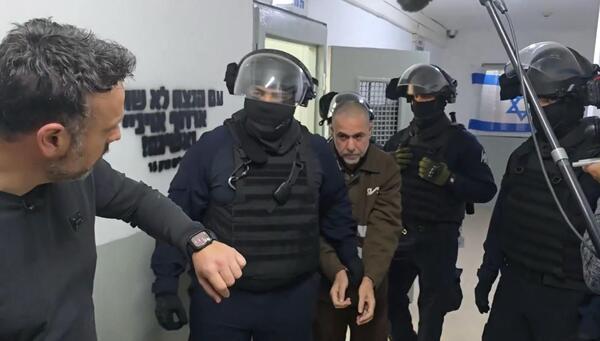
Israeli prison authorities continue to detain and detain more than 10,800 Palestinian prisoners under harsh conditions. Prisoners are subjected to the most severe forms of physical and psychological torture, as well as severe shortages of food, clothing, hygiene, and any form of communication with the outside world.
The legal status of each prisoner varies from one prisoner to another. Some have been sentenced to actual imprisonment, others have been issued administrative detention orders without charges, and others have their cases still pending in court. As for the Gaza detainees, Israel has labeled the majority of them "unlawful combatants," and those with this status are denied the most basic rights in prison.
Among the Gaza detainees, Israel designated the director of Kamal Adwan Hospital, Dr. Hussam Abu Safia, as an "unlawful combatant." Abu Safia has been suffering from difficult detention conditions since his arrest on December 27, 2024, near Kamal Adwan Hospital in Beit Lahia, northern Gaza Strip.
Abu Safia's lawyer, Ghaid Qassem, told Arab48, "I visited Dr. Abu Safia last Thursday, July 9, at Ofer military prison, which houses 450 detainees from the Gaza Strip. The visit lasted about 30 minutes. Signs of fatigue and exhaustion were clear. His body was thin, and he had lost 40 kilograms."
"Abu Safia was assaulted and tortured for the sixth time," Qassem said. "On June 24, prison service personnel stormed Abu Safia's cell and assaulted him, causing severe bruises to his head, neck, rib cage, and back. After experiencing complications from the assault and an irregular heartbeat, Abu Safia asked the prison administration to see a specialist doctor, but the prison administration refused this request. Abu Safia was subjected to six assaults, including during interrogation, on the third day of Eid al-Fitr, and other times."
"The designation of an unlawful combatant renders a prisoner without rights," Qassem explains, adding, "The order to label Abu Safia as an unlawful combatant was issued in mid-February, more than a month and a half after his arrest. Israeli law strips those with this designation of their natural human rights inside prisons. I note that Abu Safia's cell is underground, he is not exposed to sunlight, he knows nothing about the outside world, and he is still wearing winter clothes."
"Sugar and salt are forbidden, and two spoonfuls of rice a day!" Qassem explained the conditions of prisoners in Ofer military prison: "Prisoners suffer from difficult and catastrophic conditions inside Ofer prison. Each prisoner is allowed to eat two spoonfuls of rice a day, and sugar and salt are completely banned, to prevent a rise in the happiness hormone, even a small one, from eating sugar. This is in addition to the raids on cells, the torture, and the searches to which prisoners are subjected around the clock."
“The Prison Authority creates successive obstacles to the safety of lawyers,” explains Qassem, adding, “Each visit is prepared four months in advance, and the Prison Authority tries to create any excuse to cancel the visit. These procrastinations accompany all stages of the visit, from the preparations to the visit. The lawyer is left for about an hour waiting for the prisoner he will meet. Prison Authority personnel bring the prisoner and assault him on the way while he crawls on the ground, handcuffed. The interview is conducted under a microscope, under the eyes and ears of the jailers. If the jailers feel that the visit has boosted the prisoner’s morale, they assault him in revenge.”
"Controlling the narrative and constant psychological torture," says Qassem, noting that "the prison authority exposes Gaza Strip detainees to depressing news and images, such as the destruction in Gaza, scenes of body parts, martyrs, and children, as well as false news such as the martyrdom of their wives, children, and families. When they learn that I am representing a family member, they are shocked to find out that their father, mother, wife, or brother is still alive. The first question every prisoner asks me is about their families and whether they are still alive."
Share your opinion
Dr. Hussam Abu Safia is living under harsh and terrifying conditions inside the occupation's prisons.