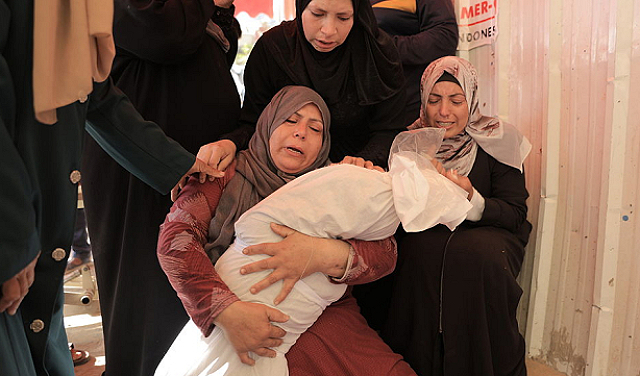







Israeli government and military officials have said they are fighting "human animals" and called for "total annihilation."
Gaza now has the highest number of amputee children and an entire generation will suffer dire consequences.
- In the wake of the Gaza genocide, it will no longer be possible to continue teaching and researching the Holocaust in the same way as before.
Yesterday, The New York Times published a lengthy opinion piece by Omer Bartov, a genocide scholar at Brown University, titled "I'm a Genocide Scholar and I Know It When I See It."
Bartov said that a month after Hamas's attack on Israel on October 7, 2023, he believed there was evidence that the Israeli military had committed war crimes, and possibly crimes against humanity, in its counteroffensive on Gaza. However, contrary to the cries of Israel's harshest critics, the evidence did not appear to him to amount to genocide.
By May 2024, the researcher notes, the Israeli occupation army ordered approximately one million Palestinians sheltering in Rafah, the southernmost city in the Strip and its last relatively undamaged city, to move to the Mawasi area near the sea, where there was little or no shelter. The army then proceeded to destroy much of Rafah, a process largely completed by August.
“At that point,” says Bertov, “it seemed impossible to deny that the IDF’s pattern of operations was consistent with the statements indicating genocidal intent made by Israeli leaders in the days following the Hamas attack. Prime Minister Benjamin Netanyahu had promised that the enemy would pay a ‘heavy price’ for the attack, that the IDF would reduce parts of Gaza, where Hamas operated, to ‘rubble,’ and called on the ‘residents of Gaza’ to ‘leave now because we will act forcefully everywhere.’ Netanyahu urged his citizens to remember ‘what Amalek did to you,’ a quote that many interpreted as a reference to the biblical command to the Israelites to ‘kill the men, women, and infants alike of their ancient enemy.’”
Israel's mission is to "erase the Gaza Strip"
It reveals that Israeli government and military officials have said they are fighting "human animals," and later called for "total annihilation." On the X program, Nissim Vaturi, deputy speaker of parliament, said Israel's mission should be to "wipe the Gaza Strip off the face of the earth."
Accordingly, “Israel’s actions can only be understood as the implementation of the stated intention to make the Gaza Strip uninhabitable for its Palestinian population. I believe the goal was—and remains today—to force the population to leave the Strip entirely, or, given that there is nowhere else for them to go, to weaken the Strip through bombardment and severe deprivation of food, clean water, sanitation, and medical assistance to the point that it is impossible for the Palestinians in Gaza to maintain their existence or rebuild as a group. My inescapable conclusion has become that Israel is committing genocide against the Palestinian people. Having grown up in a Zionist home, lived the first half of my life in Israel, served in the Israeli military as a soldier and officer, and spent most of my career researching and writing about war crimes and the Holocaust, this was a painful conclusion, and one I resisted as much as I could. But I had been studying lessons about genocide for a quarter of a century.”
Bertov emphasizes that this is not just his conclusion. A growing number of experts in genocide studies and international law have concluded that Israel's actions in Gaza can only be defined as genocide. "Francesca Albanese, the UN Special Rapporteur on the West Bank and Gaza, and Amnesty International have done the same. South Africa has filed a genocide case against Israel before the International Court of Justice. The continued denial by states, international organizations, and legal and scientific experts of this designation will do great damage not only to the people of Gaza and Israel, but also to the international legal system established in the wake of the horrors of the Holocaust, which was designed to prevent such atrocities from recurring."
A threat to the foundations of the moral order on which we all depend.
The researcher says this threatens the foundations of the moral order on which we all depend. The crime of genocide was defined by the United Nations in 1948 as “the intent to destroy, in whole or in part, a national, ethnical, racial or religious group, as such.” Therefore, to determine what constitutes genocide, we must demonstrate both intent and its implementation. In Israel’s case, many officials and leaders have publicly expressed this intent. But intent can also be inferred from the pattern of field operations, a pattern that became clear by May 2024—and has become increasingly clear since—with the Israeli military’s systematic destruction of the Gaza Strip.
The researcher points out that most genocide scholars are cautious in applying the term to contemporary events, precisely because of its tendency, since its coinage by Polish-Jewish lawyer Raphael Lemkin in 1944, to attribute it to any instance of massacre or atrocity. In fact, some argue that the label should be abandoned altogether, as it is often used to express outrage rather than to identify a specific crime. However, as Lemkin recognized, and as the United Nations later endorsed, it is crucial to distinguish between the attempt to destroy a specific group of people and other crimes under international law, such as war crimes and crimes against humanity. This is because the latter crimes involve the indiscriminate or deliberate killing of individual civilians, whereas genocide refers to the killing of individual civilians.
According to the researcher, health authorities said more than 2,000 families were wiped out. Additionally, 5,600 families now have only one survivor. At least 10,000 people are believed to be still buried under the rubble of their homes. More than 138,000 people have been injured and maimed.
"Gaza now has the grim distinction of having the highest per capita number of child amputees in the world. An entire generation of children exposed to ongoing military attacks, parental loss, and long-term malnutrition will suffer severe physical and psychological consequences for the rest of their lives. Countless thousands of people with chronic illnesses have not received adequate hospital care," Bertov said.
The author says: "Most observers still describe the horror of what is happening in Gaza as a war. But this is a misnomer. Over the past year, the Israeli army has not fought any organized military entity. The Hamas version that planned and carried out the attacks was destroyed on October 7, 2023, although the weakened group continues to fight Israeli forces and maintains control over the population in areas not controlled by the Israeli army."
Demolition and ethnic cleansing
"Today, the Israeli army is essentially engaged in a process of demolition and ethnic cleansing. This is how Netanyahu's former chief of staff and hardline defense minister, Moshe Ya'alon, described the attempt to cleanse northern Gaza of its population in November on Israel's Democratic TV and in subsequent articles and interviews."
Bartov notes that on January 19, 2025, under pressure from Donald Trump, who was just one day away from resuming his presidency, a ceasefire went into effect, facilitating the exchange of Gaza hostages for Palestinian prisoners in Israel. However, after Israel violated the ceasefire on March 18, it implemented a declared plan to concentrate the entire population of Gaza within a quarter of the Strip's area into three areas: Gaza City, the central refugee camps, and the Mawasi coast at the southwestern tip of the Strip.
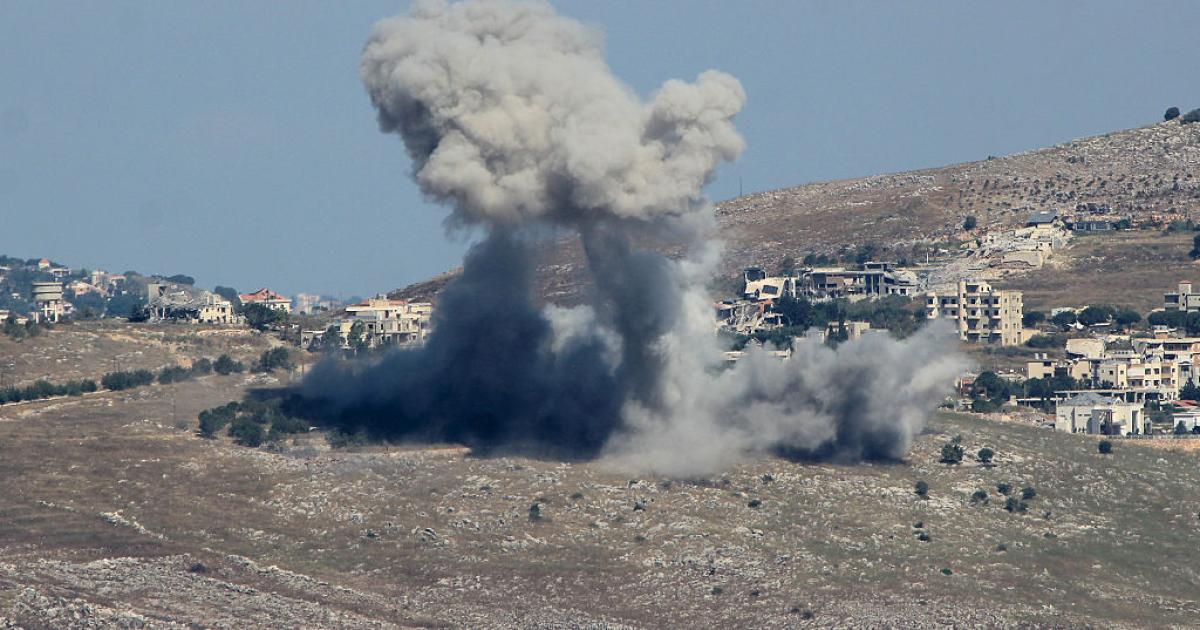
Using large numbers of bulldozers and massive aerial bombs supplied by the United States, the army appears to be trying to demolish every remaining building and impose its control over the remaining three-quarters of the Strip.
This is also facilitated by a plan that intermittently delivers limited supplies of aid at a handful of distribution points guarded by the Israeli military, drawing people south. Many Gazans are being killed in a desperate attempt to obtain food, and the famine crisis is worsening. On July 7, Defense Minister Israel Katz announced that the Israeli military would build a "humanitarian city" in the ruins of Rafah to initially house 600,000 Palestinians from the Mawasi area, who would be supplied by international agencies and not allowed to leave. Some might describe this campaign as ethnic cleansing, not genocide. But there is a connection between these crimes. When an ethnic group cannot find safe haven, is constantly displaced from one so-called safe zone to another, and is relentlessly bombed and starved, ethnic cleansing can turn into genocide. This was the case in many of the well-known genocides of the 20th century, such as the Herero and Nama exterminations in German South-West Africa, now Namibia, which began in 1904; the Armenians in World War I; and even the Holocaust, which began with Germany's attempt to expel the Jews and ended with their murder.
To date, only a handful of Holocaust scholars, and no institution dedicated to Holocaust research and commemoration, have issued a warning that Israel could be accused of war crimes, crimes against humanity, ethnic cleansing, or genocide. This silence has turned the slogan "Never Again" into a mockery, transforming its meaning from an affirmation of resistance to inhumanity wherever it is committed into an excuse, an apology, or even a carte blanche to destroy others by invoking the victim's past.
Moral and historical credibility is running out.
This is another of the countless costs of the current catastrophe. As Israel literally attempts to erase Palestinian presence in Gaza and engages in increasing violence against Palestinians in the West Bank, the moral and historical credibility upon which the Jewish state has relied until now is eroding, according to the author, who says: “Israel, which was created in the aftermath of the Holocaust in response to the Nazi genocide of the Jews, has always insisted that any threat to its security must be viewed as potentially leading to another Auschwitz. This allows Israel to portray those it considers its enemies as Nazis—a term the Israeli media repeatedly uses to describe Hamas, and by extension all of Gaza’s residents, based on the pervasive claim that none of them are “uninvolved,” not even infants, who will grow up to become fighters.”
"This is not a new phenomenon. Ever since Israel invaded Lebanon in 1982, Prime Minister Menachem Begin likened Yasser Arafat, then holed up in Beirut, to Adolf Hitler in his Berlin bunker. This time, the comparison is being used in the context of a policy aimed at uprooting the entire population of Gaza."
The daily scenes of horror in Gaza, protected by the Israeli public's self-censorship in its media, expose the lies of Israeli propaganda that this is a defensive war against a Nazi-like enemy. One shudder when Israeli spokesmen shamelessly repeat the empty slogan that the IDF is "the most moral army in the world." Some European countries, such as France, Britain, and Germany, as well as Canada, have weakly protested Israeli actions, particularly since its violation of the ceasefire in March, "but they have neither suspended arms shipments nor taken concrete and meaningful economic or political steps that might deter the Netanyahu government."
For a while, the US government seemed to have lost interest in Gaza. President Trump initially announced in February that the US would take over Gaza, promising to turn it into a “Riviera of the Middle East.” He then let Israel finish destroying the territory, turning his attention to Iran. For now, one can only hope that Trump will put renewed pressure on a reluctant Mr. Netanyahu to at least reach a new ceasefire and end the ongoing killing.
The author asks: How will Israel's future be affected by the inevitable demolition of its deeply rooted morals, derived from its birth in the ruins of the Holocaust?
The Israeli political leadership and its citizens will have to make the decision. There appears to be little domestic pressure for the urgently needed paradigm shift: the recognition that the only solution to this conflict is an Israeli-Palestinian agreement to divide the land according to whatever parameters the two sides agree upon, be it two states, one state, or a confederation. Israel's allies also seem unlikely to exert strong external pressure. I am deeply concerned that Israel will continue on its disastrous path, transforming itself, perhaps irreversibly, into a full-fledged totalitarian apartheid state. Such states, as history has taught us, do not last.
Another question arises: What are the consequences of Israel's moral decline for Holocaust remembrance culture, memory policies, education, and scholarship, when many of its intellectual and administrative leaders have so far refused to shoulder their responsibility to condemn inhumanity and genocide wherever they occur? Those involved in the global Holocaust remembrance culture will be forced to face a moral reckoning. The broader community of genocide scholars—those who study comparative genocides or any of the other numerous genocides that have scarred human history—is now increasingly approaching a consensus on labeling the events in Gaza as genocide.
Genocide in every sense of the word
The researcher notes that in November, just over a year after the war, Israeli genocide scholar Shmuel Lederman joined the growing view that Israel was engaging in genocide. Canadian international lawyer William Schabas reached the same conclusion last year, and recently described the Israeli military campaign in Gaza as "genocide in every sense of the word." Other genocide experts, such as Melanie O'Brien, president of the International Association of Genocide Scholars, and British expert Martin Shaw (who also declared the Hamas attack genocide), have reached the same conclusion. Meanwhile, Australian scholar A. Dirk Mussa of the City University of New York described the events in the Dutch newspaper NRC as "a mixture of genocidal logic and military logic." In the same article, Ugur Ümit Üngör, a professor at the NIOD Institute for War, Holocaust and Genocide Studies in Amsterdam, said that there may still be scholars who don't believe it was genocide, but "I don't know of any."
In December, according to the author, Holocaust scholar Norman J.W. Goda argued that “such genocide charges have long been used as cover for broader challenges to Israel’s legitimacy,” expressing concern that they “devalue the very word genocide.” This “genocide shaming,” as Dr. Goda noted in an article, “uses a range of anti-Semitic tropes,” including “linking the genocide charge to the deliberate killing of children, whose images are widely circulated on NGOs, social media, and other platforms accusing Israel of genocide.”
Deep springs of fear and hatred
In other words, displaying images of Palestinian children torn to pieces by American-made bombs dropped by Israeli pilots, from this perspective, constitutes an act of anti-Semitism. Dr. Judah and Jeffrey Herf, a respected European historian, recently wrote in the Washington Post that “the accusation of genocide against Israel stems from deep wells of fear and hatred embedded in ‘extremist interpretations of both Christianity and Islam.’ This accusation has shifted the denunciation of Jews as a religious/ethnic group to the State of Israel, which it portrays as inherently evil,” according to Bertov.
What are the implications of this disagreement between genocide researchers and Holocaust historians? This is not just a dispute within academic circles. The culture of memory that has emerged in recent decades around the Holocaust encompasses much more than the extermination of Jews. It has come to play a crucial role in politics, education, and identity.
Holocaust museums have served as models for representing other genocides around the world. The insistence that the lessons of the Holocaust require promoting tolerance and diversity, combating racism, and supporting migrants and refugees, not to mention human rights and international humanitarian law, stems from an understanding of the global implications of this crime at the heart of Western civilization at the height of modernity.
Discrediting genocide scholars who characterize Israel's genocide in Gaza as anti-Semitic threatens to undermine the foundations of genocide studies: the ongoing need to define, prevent, punish, and reconstruct the history of genocide. To suggest that this endeavor is motivated by malign interests and passions—that it is driven by the hatred and prejudice that underpinned the Holocaust—is not only a moral outrage, but also provides an opportunity for denial and impunity.
Likewise, when those who have dedicated their professional lives to teaching and commemorating the Holocaust insist on ignoring or denying Israel's genocidal actions in Gaza, they threaten to undermine everything that Holocaust scholars and commemorators have stood for over the past few decades: the dignity of every human being, respect for the rule of law, and the urgent need not to allow brutality to control people's hearts and guide the actions of states in the name of security, national interest, and absolute vengeance.
“My fear is that in the wake of the Gaza genocide, it will no longer be possible to continue teaching and researching the Holocaust in the same way we did before,” the author says. “Because the State of Israel and its apologists have relentlessly invoked the Holocaust as a cover for the crimes of the Israeli military, Holocaust study and commemoration may lose their claim to being concerned with global justice and retreat into the same racial ghetto in which they began their life at the end of World War II—as a marginalized obsession for the remnants of a marginalized people, a specific racial event, before succeeding, decades later, in finding its rightful place as a lesson and warning to all humanity. Equally disturbing is the possibility that the study of genocide as a whole may fail to withstand accusations of antisemitism, leaving us deprived of the essential community of international scholars and jurists who defend our rights at a time when rising intolerance, racial hatred, populism, and authoritarianism threaten the values that formed the core of these twentieth-century scholarly, cultural, and political endeavors.”
“Perhaps the only glimmer of hope at the end of this dark tunnel is the possibility that a new generation of Israelis will face their future without resorting to the specter of the Holocaust, even if they must bear the stigma of the genocide in Gaza perpetrated in their name. Israel will have to learn to live without resorting to the Holocaust as a justification for brutality. This, despite all the horrific suffering we are currently witnessing, is valuable and may, in the long run, help Israel face the future in a healthier, more rational way, less fearful and less violent. This will not compensate for the massive death and suffering inflicted on the Palestinians. But Israel, freed from the burden of the Holocaust, may finally recognize the imperative need for its seven million Jewish citizens to share the land with the seven million Palestinians living in Israel, Gaza, and the West Bank in peace, equality, and dignity. This is the only just reckoning.”
Perhaps the only glimmer of hope at the end of this dark tunnel is the possibility that a new generation of Israelis can face their future without resorting to the specter of the Holocaust, even if they must bear the stigma of the genocide in Gaza committed in their name. Israel will have to learn to live without resorting to the Holocaust as a justification for brutality.




Share your opinion
Brown University Researcher Omer Bartov: I'm a genocide researcher, I know it when I see it.