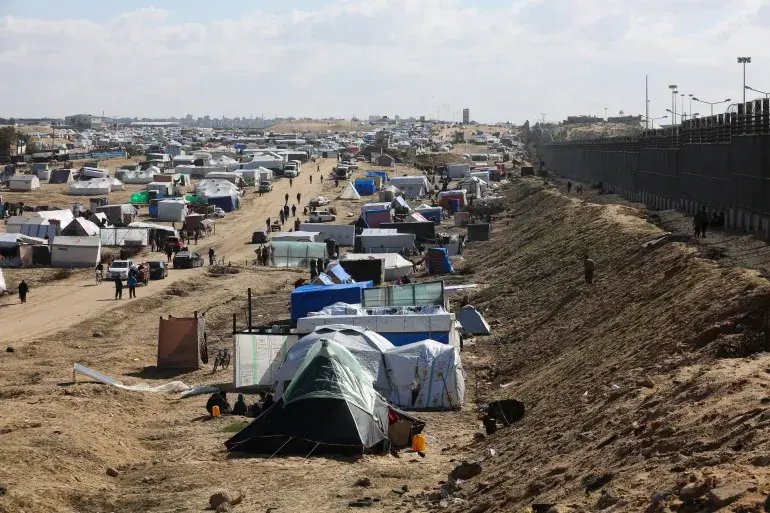







Yedioth Ahronoth quoted senior Israeli sources as saying that the "humanitarian city" that Israel is preparing to establish in the Rafah area of the Gaza Strip will cost between 10 and 15 billion shekels, with Israel bearing almost all of this cost in the first phase.
According to the original plan, the "city" would constitute a large camp, with most of the displaced living there in large tents. Israel does not intend to allow those present there to return to the northern Gaza Strip. The city is expected to accommodate approximately half a million people. The security establishment has harshly criticized the plan, asserting that it constitutes the beginning of imposing military rule over the Strip. Humanitarian organizations view it as a forced expulsion of residents from their homes. In recent weeks, IDF Chief of Staff Lt. Gen. Eyal Zamir has clashed with Prime Minister Benjamin Netanyahu and Finance Minister Bezalel Smotrich over the plan. He asserted that preparing the area would impede the army's ability to carry out its missions against Hamas and return the captives. However, Netanyahu has instructed the army to prepare the plan and be ready for implementation within days.
A meeting was held last weekend to discuss the issue, attended by Smotrich, who approved the allocation of initial budgets for land settlement. Israeli sources confirmed, "The final cost will range between 10 and 15 billion shekels."
This high cost stems from the desire to build a place that will attract Palestinians, with abundant food and reasonable living conditions, tents for long-term living, medical aid, including hospitals, and perhaps even schools. Sources in the security cabinet said the idea hinges on Israel reclaiming these funds from Arab countries like Saudi Arabia and the UAE when they assume responsibility for rebuilding the Strip after the war ends. They expressed their belief: “The conditions for this are not yet in place, and few believe this city will actually be built.”
The Finance Minister's office responded to the report by stating that these allegations are merely attempts to thwart "the Prime Minister's plan to create a humanitarian separation between Hamas and the population by inflating budgets to instill fear and curb the plan."
Smotrich's spokesman confirmed that hundreds of millions of shekels had been approved "to regularize protected land for residents."
The war has cost hundreds of billions of shekels without a resolution, particularly due to the failure to manage aid, which provides Hamas with power. Proper humanitarian response and stifling Hamas are the most effective path to victory. If anyone wants to circumvent budgets, it's best to abandon it.




Share your opinion
The "Humanitarian City" will cost Israel $10-15 billion. Israel plans to recoup its costs from the countries that will invest and rebuild Gaza.