






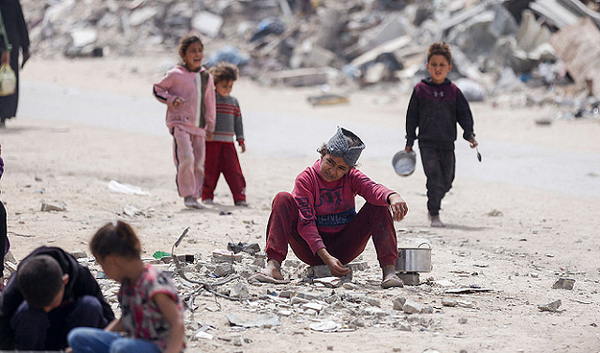
Doctors Without Borders (MSF) confirmed that its teams are recording a sharp and unprecedented increase in cases of severe malnutrition among residents of the Gaza Strip, as a result of the tightened blockade imposed by the Israeli occupation. The organization stressed the need to bring food and medical supplies into Gaza immediately and on a sustained basis to avert an imminent humanitarian disaster.
Doctors Without Borders (MSF) explained that its clinics in Al Mawasi, in the southern Gaza Strip, and Gaza City, in the northern Gaza Strip, recorded the highest number of malnutrition cases, treating more than 700 pregnant and breastfeeding women, in addition to nearly 500 children suffering from severe and moderate malnutrition.
She also noted that the number of patients at the Gaza City clinic quadrupled in less than two months, rising from 293 cases in May to 983 cases at the beginning of July, including 326 children between the ages of six and 23 months.
"This is the first time we have seen malnutrition on such a serious scale in Gaza," said Mohammed Abu Mughaisib, MSF's deputy medical coordinator in Gaza. He emphasized that starving the population is a deliberate choice by the occupation, and can be ended as soon as widespread food entry is allowed.
The organization added that malnutrition is a direct result of occupation policies that limit food access to a minimum, while destroying local production capacity. This has led to unprecedented food prices and made basic food unaffordable for the majority of the population.
She noted that the average price of a kilogram of sugar reached $76, while the prices of potatoes and flour reached approximately $30 per kilogram, according to World Food Programme reports.
The organization also warned of the catastrophic impact of the continued collapse of the health system in the Gaza Strip, with sewage contamination increasing due to the destruction of infrastructure, and fuel restrictions halting the production of clean water, particularly threatening the lives of pregnant women and children.
Doctor Joan Perry of Doctors Without Borders confirmed that the neonatal intensive care unit at Al-Helu Hospital is severely overcrowded, with four to five babies sharing one incubator. She noted the case of pregnant women weighing less than 40 kilograms.
The organization explained that prior to October 2023, the sector relied on the entry of 500 aid trucks per day, but since March 2025, the number of trucks entering has generally not exceeded this number, amid the ongoing closure of crossings and the difficulty of producing food locally.
Under these conditions, many families live on one meal a day, often limited to rice, lentils, or pasta, with no bread, vegetables, or protein. Parents are also forced to abstain from food to feed their children.
In the same context, UNRWA warned of the deteriorating humanitarian and health conditions in Gaza, confirming the rise in malnutrition cases among children and vulnerable groups, while severe shortages of food and medicine continue.
The agency said that the continued blocking of supplies is exacerbating the crisis and threatening the lives of thousands of Palestinians, calling on the international community to intervene immediately to ensure the flow of vital aid.
She warned of an impending humanitarian catastrophe, with the collapse of the health system, rising poverty rates, and water and food shortages, particularly among women and children, who are most affected by the blockade.
The Government Media Office noted that the occupation has been completely preventing the entry of food, medicine, and fuel for more than three months, exacerbating the threat of famine and increasing the death toll from hunger and medicine shortages.
The government office described the occupation's policy as "systematic starvation," with the Strip deprived of flour, baby formula, and medical supplies, while 1.25 million people suffer from "catastrophic" levels of hunger, with 96% of them suffering from food insecurity.



Share your opinion
Gaza on the brink of a humanitarian catastrophe: Food and medicine shortages exacerbate the health crisis.