






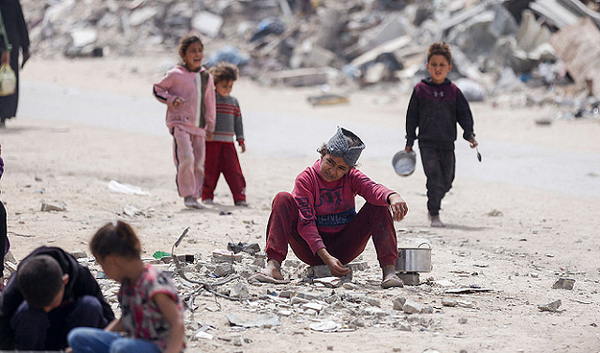
Dr. Saeed Shaheen: The anticipated truce may be "fragile" because the failure of negotiations or any individual incident could lead to its collapse.
Sari Samour: Israel may exploit negotiations to recover its prisoners and then resume its military operations, paving the way for the displacement or extermination of the population of the Gaza Strip.
Mohammed Joda: Hamas faces an internal challenge in controlling armed groups and maintaining unity of decision-making, which is crucial to the success of the truce.
Dr. Raed Al-Dabai: The next 60 days represent a crucial opportunity for Palestinians to build a serious national dialogue aimed at bridging the gaps resulting from the internal division.
Suleiman Basharat: The next few days will witness significant momentum in the negotiating rounds and may culminate in an agreement, but the Trump-Netanyahu meeting is decisive.
Talal Okal: The success of the ceasefire agreement or ending the war depends on the results of US efforts and the extent to which regional parties respond to Trump's vision.
As signs grow that a ceasefire agreement is imminent in the Gaza Strip, the threads of indirect negotiations between Israel and Hamas are becoming intertwined amidst anxiety and anticipation about the possibility of returning to square one and continuing the suffering.
In separate interviews with "I", writers, political analysts, and university professors believe that these efforts, which coincide with an escalating American role, seek to exploit the results of the truce in complex regional issues, starting with Iran and extending to arranging the normalization map in the region. However, fragility remains a key feature of these understandings, as they are accompanied by fears that Israel will exploit the truce as an opportunity to reposition itself or rearrange its military and political cards.
Despite the cautious optimism surrounding the ongoing talks, writers and university professors warn that any failure to translate the agreement into concrete commitments on the ground could undermine the chances of a de-escalation and return the region to a state of escalation. The success of these efforts hinges on the intentions of the parties and the ability of international mediators to secure solid guarantees that transform the truce from a mere temporary respite into a genuine path toward a more comprehensive and stable settlement.
Hamas faces enormous pressure from its popular base.
Dr. Saeed Shaheen, a professor of political media at Hebron University, says that the Palestinian resistance, particularly Hamas, is facing enormous pressure from its popular base in the Gaza Strip, which is being subjected to what he describes as "the most heinous genocide and ethnic cleansing in history."
Shaheen points out that these pressures, resulting from Israeli brutality that exceeds any people's tolerance, have prompted Hamas to accept, with reservations, a truce proposal it had previously rejected, despite its ambiguity, which could later be interpreted to serve the occupying state's objectives.
Shaheen explains that the qualitative operations and ambushes carried out by the resistance inflict significant damage on the occupation army and hinder the achievement of its strategic objectives in the war.
Shaheen points out that the current proposal for a truce, which extends to sixty days, raises concerns about interpretations that could lead to a breakdown in negotiations, particularly regarding the resistance's basic conditions, such as a final ceasefire, the withdrawal of occupation forces from the Gaza Strip, the immediate entry of humanitarian aid, and the reopening of the Rafah crossing and other crossings.
Shaheen believes that Hamas's acceptance of the proposal, despite its reservations, places the extremist occupation government led by Benjamin Netanyahu in a difficult position, as it will be difficult for it to reject the proposal without facing increasing American pressure to stop the war.
Shaheen points to statements by US President Donald Trump, who described Hamas's response as "good," indicating relief that could lead to pressure on Netanyahu to halt the war, paving the way for a focus on normalization projects and other regional issues.
Shaheen expects Trump to announce a truce agreement soon, scoring strategic points in his favor, especially as he seeks to reopen sensitive issues, such as the secret negotiations with Iran over its nuclear program and focusing on the Ukraine-Russia crisis.
The Trump administration's achievements in calming multiple fronts
Shaheen expects the region to witness widespread praise for the Trump administration's achievements in calming multiple fronts, including Syria, Lebanon, and Iran, while pushing forward ambitious economic projects spanning the entire region.
However, Shaheen warns that the anticipated truce may be "fragile," as failure of negotiations or any individual incident could lead to its collapse.
Shaheen asserts that the truce, while important in alleviating the humanitarian suffering in Gaza, does not guarantee a permanent end to the war. He points out that historical experience shows that truces can serve as bridges to a political solution if Israel commits to serious negotiations, free from pressure from the extreme Zionist right.
Shaheen warns of the dangers of the occupation's continued imposition of conditions such as the resistance surrendering its weapons or the withdrawal of its leaders from the Gaza Strip, which could open the door to a new round of war.
"The truce is not an end in itself, but rather a beginning that must be transformed into a comprehensive political process that includes the West Bank and East Jerusalem," Shaheen said.
Shaheen asserts that the success of the "day after" war depends on the intentions of Israel and the United States, as well as international support for building a just and comprehensive peace based on the two-state solution. He warns that any inaction could plunge the region back into a cycle of violence.
Warning of "Israeli ill intentions"
For his part, writer and political analyst Sari Samour believes that the ongoing negotiations between Israel and Hamas, following the latter's positive response, should begin with mechanisms for implementing a potential agreement.
But Samour warns that the details of implementation remain crucial, especially in light of what he described as "bad Israeli intentions."
Samour points out that Israel relies on unconditional American and Western support, coupled with "Arab weakness and impotence," which makes the situation tense and potentially explosive at any moment.
Samour warns that Israel may exploit the negotiations to recover its prisoners and then resume its military operations, paving the way for the displacement or extermination of the population of the Gaza Strip, in light of what he describes as "the shedding of the blood of the people of Gaza" and the international community's disregard.
Samour points out that Israeli aircraft returning from military missions against Iran were unloading their surplus ammunition in Gaza, reflecting a disregard for Palestinian lives.
Samour stresses the need for caution during negotiations, asserting that the issues under negotiation are related to details, not formalities, but rather fundamental issues related to the future and security of the sector.
Trump-Netanyahu meeting has strategic dimensions
Regarding the meeting between US President Donald Trump and Israeli Prime Minister Benjamin Netanyahu, Samour explains that it is not just a regular meeting whose schedule can be changed at the last minute, but rather carries strategic dimensions.
Samour believes that Trump seeks to crown Israel, led by Netanyahu, as the de facto ruler of the Middle East, with Netanyahu as the "king of the region" and a proxy for the United States, while Arabs and Muslims must accept this equation without objection. Samour notes that, in return, Trump is demanding that Netanyahu recognize him as the de facto leader who runs the entire scene.
Samour points out that the meeting between Trump and Netanyahu will discuss the Gaza issue, but it will not be its sole focus, as the Iranian issue, which has not yet been resolved, remains at the forefront of discussions.
Samour expects the meeting to result in an agreement on a new aggressive escalation, rather than peace, whether in the near or foreseeable future, which could include Gaza, Iran, Syria, and Lebanon.
Samour warns that the situation remains uncertain, with the possibility of renewed military escalation on more than one front, further exacerbating instability in the region.
Hamas' approval paves the way for a new negotiating track.
For his part, writer and political analyst Mohammed Joda considers Hamas's initial acceptance of a 60-day truce proposal in the Gaza Strip a significant political development that paves the way for a new negotiating process.
Joda explains that this approval came as a result of intensive international mediation efforts led by Egypt and Qatar, with support from the United Nations and the United States. This reflects growing international interest in containing the ongoing military escalation in the Gaza Strip and preparing the ground for a more stable political approach.
Joudeh points out that this approval will be followed by indirect negotiations between Israel and Hamas in Doha, as evidenced by Israel's announcement that it will send a delegation to Doha. These negotiations are based on an initiative by US envoy Steve Witkoff, which was prepared and modified through Qatari efforts.
Joudeh expects these negotiations to focus on drafting a detailed agreement that includes a clear timetable for a ceasefire, along with a plan for a phased and orderly withdrawal of Israeli forces from Gaza.
Joda asserts that Egyptian and Qatari mediation will play a pivotal role in monitoring the implementation of any understandings, with an emphasis on providing mutual security guarantees to ensure the truce's sustainability and prevent its collapse due to field violations or unexpected developments.
Implications of the upcoming talks between Trump and Netanyahu
In a related context, Joudeh discussed the implications of the upcoming talks between US President Donald Trump and Israeli Prime Minister Benjamin Netanyahu during their meeting in Washington, noting that they will address political and military support for Israel during the truce period, while coordinating positions on the next phase of the conflict.
Joudeh points out that these talks carry strategic dimensions, especially in light of the repercussions of the recent 12-day war between Israel and Iran, which significantly impacted regional dynamics.
Joudeh explains that these talks could influence Israel's position on the truce, whether by making it a permanent step or by considering it a temporary phase preceding a potential escalation.
Despite cautious optimism about the truce, Joudeh warns of fundamental challenges threatening its stability, pointing to the possibility of the truce being exploited to reposition Israeli forces, which could lead to a renewed escalation after the deadline expires.
Joudeh points to the internal pressures facing the Israeli government from right-wing and opposition groups, which view the truce as a political concession.
The truce holds potential gains for both sides.
On the other hand, Joudeh asserts that Hamas faces an internal challenge: controlling armed groups in Gaza and maintaining unity of military and political decision-making, which is crucial to the success of the truce.
Joudeh explains that the truce holds potential gains for both sides. For Hamas, it provides an opportunity to rebuild, reorganize, alleviate popular pressure stemming from the blockade and destruction, and strengthen its negotiating position and political legitimacy. Israel, on the other hand, benefits from the truce by minimizing losses, recovering some prisoners, restructuring its military strategies, and alleviating international pressure stemming from criticism of its military operations in Gaza.
Joudeh stresses that the success of the truce remains a true test of the political intentions of both parties, and depends on their strict adherence and effective monitoring by international mediators.
However, Joudeh warns that the possibility of renewed war remains, especially if negotiations reach a dead end within the specified period, or if violations occur on the ground without strong deterrent mechanisms, making the stability of the region dependent on the commitment of the parties and the accuracy of implementation.
The next stage of negotiations will be very complex.
For his part, Dr. Raed Al-Dabai, head of the Political Science Department at An-Najah National University, asserts that the next phase of negotiations between Israel and Hamas, following the latter's agreement to a ceasefire, will be extremely complex due to Israel's hardline stance.
Al-Dabai points out that Israel's official response to the proposal reflects significant difficulties in the next steps, as Israel continues its hardline approach for 60 days, driven by a sense of euphoria over victory on multiple fronts, including Lebanon, Iran, and the Gaza Strip, in addition to achieving strategic steps in the West Bank aimed at resolving the conflict rather than managing it.
Al-Dabai explains that Israel, despite pressure from the United States, particularly from President Donald Trump, will not reject the principle of a ceasefire, but it has been sending a clear message from day one that it is unwilling to make concessions or accept any settlement.
Al-Dabai addresses the most important issues that will be at the forefront of the negotiations, including a ceasefire, the provision of humanitarian aid such as food, and prisoner exchange.
Al-Dabai expects to discuss the opening of humanitarian corridors, such as the Kerem Shalom crossing or a sea corridor via Larnaca, along with the issue of the "day after" in Gaza, which includes the future of governance in the Strip, the possibility of forming a UN or Arab force, and the establishment of an international reconstruction fund.
Netanyahu is tied to his ruling coalition.
Al-Dabai asserts that the next 60 days represent a crucial opportunity for Palestinians to build a serious national dialogue aimed at bridging the gaps resulting from the internal division and preventing Israel from exploiting this division to circumvent the two-state solution and Palestinian national rights.
Al-Dabai stresses that the next phase is fragile and could collapse or continue as before, making it a true test of resilience.
Al-Dabai notes that the meeting between Trump and Netanyahu will discuss a potential agreement, which is highly fragile due to the internal pressure Netanyahu faces from the far-right coalition, which accuses him of betraying the war's objectives.
Al-Dabai explains that Netanyahu, who relies on this coalition to remain in power, remains tied to it, as opinion polls show he is unable to form a new coalition with other figures such as Yair Lapid.
Al-Dabai expects the meeting between Trump and Netanyahu to focus on issues related to Gaza, including the truce, security guarantees for Israel, and the future form of government in the Strip. Netanyahu rejects the return of the Palestinian Authority or the continued rule of Hamas, preferring the presence of US forces in Gaza, a scenario unwelcome to the US for security reasons.
The meeting will discuss the issues of Iran and Hezbollah.
On the regional level, Al-Dabai indicated that the meeting will discuss the issues of Iran and Hezbollah, including the possibility of Iran returning to the nuclear agreement negotiations, the withdrawal of Hezbollah's weapons to strategically neutralize it, and normalization with Saudi Arabia and the price Israel might pay.
Al-Dabai also expects the discussion to include the Syrian issue, as Netanyahu sees an opportunity to achieve a breakthrough through security arrangements with Syria's new rulers, even if it falls short of full normalization. He ruled out the possibility that relations between Israel and Syria would reach the point of normalization.
Al-Dabai points out that these issues will determine whether the anticipated agreement represents an end to the war or merely a temporary respite before the escalation resumes.
The meeting will outline the next agreement.
Writer and political analyst Suleiman Basharat explains that the next phase of indirect negotiations in Doha, which aim to reach an agreement between Israel and Hamas, comes after both sides agree to resume negotiations.
Basharat asserts that the parties are currently seeking to overcome obstacles and facilitate the negotiation process, rather than complicating it, with the United States playing a prominent role in this context.
Basharat believes that the next few days will witness significant momentum in the negotiating rounds, which could culminate in an agreement. However, Basharat emphasizes that US President Donald Trump's meeting with Israeli Prime Minister Benjamin Netanyahu at the White House will be the decisive factor in determining the nature of this agreement.
Basharat points out that this meeting will shape the future agreement, explaining that the central question is whether the agreement will be a serious and sustainable way to end the war, or whether it will be limited to being a temporary step that serves American and Israeli political goals and interests, with the situation subsequently returning to square one and the Israeli military escalation renewed.
Resistance and the "No-Options" Stage
Basharat believes that the Palestinian resistance, having learned from previous experiences, appears more prepared this time for confrontation, having demonstrated its military capabilities on the ground over the past week. Basharat believes that these operations aim to send a message that the continued Israeli military presence in Gaza will lead to significant attrition and increasing losses among the Israeli army, thus raising the cost of the occupation.
Basharat believes that the resistance has reached a stage where there are "no options" other than confrontation, which creates a pressure point in the negotiations, making Israeli calculations more precise and sensitive.
Regarding the Trump-Netanyahu meeting, Basharat notes that it could involve several levels. The first relates to Israel's political future, as Trump views Netanyahu as the most capable figure in managing the Israeli political landscape.
Basharat points to Trump's statements calling for Netanyahu to be celebrated rather than put on trial, reflecting his personal support for him.
Reorganizing the Israeli political house
Basharat expects Trump and Netanyahu to discuss restructuring the Israeli political house to ensure Netanyahu's survival, and possibly call for the dissolution of the Knesset or early elections to boost his popularity.
The second level of discussion at the meeting, according to Basharat, will address the regional situation, including expanding the Abraham Accords and promoting normalization. Trump is encouraging Netanyahu to move forward in this direction, given the intersection of American and Israeli interests.
Finally, Basharat believes that the most important issue at the meeting will be international challenges, particularly those related to Iran, China, and Russia. Trump will seek to push Netanyahu toward a more rational approach to these issues, one that serves American interests.
Basharat asserts that the results of this meeting will be decisive in shaping the next phase, both regarding the conflict in Gaza and the regional and international landscape.
Signs of an imminent agreement
For his part, writer and political analyst Talal Okal believes that indicators point to the imminent conclusion of a ceasefire agreement in the Gaza Strip, driven by intense US pressure on both Israel and Hamas.
Awkal explains that US President Donald Trump is taking a firm stance to impose an agreement that ends the escalation, noting that the United States clearly controls decisions on war and peace in the region and operates according to its own agenda, which focuses on American interests and defining the roles of regional actors.
Okal points out that internal dynamics within Israel reflect a readiness to acquiesce to the US president's decisions, which strengthens Washington's influence in this context. For its part, Hamas is aware of these dynamics and is exploiting them as an opportunity to improve the terms of the agreement, focusing on removing ambiguity on certain points, strengthening guarantees, and obtaining strategic advantages, especially since its position is considered decisive in determining the course of the negotiations.
Reengineering the Middle East
Okal believes the upcoming meeting between US President Donald Trump and Israeli Prime Minister Benjamin Netanyahu will focus on a comprehensive agenda titled "Reengineering the Middle East," aimed at reaping the fruits of the wars waged by the US-Israeli-Western alliance.
According to Okal, this agenda includes sensitive issues such as the position on Iran and its nuclear program, expanding the Abraham Accords toward establishing the "Abraham Shield," as well as the issues of Syria and Turkey. The Palestinian issue, both in Gaza and the West Bank, will also be discussed, with a focus on the possibility of saving Netanyahu from legal prosecution and supporting his political future.
Awkal asserts that the success of a ceasefire agreement or an end to the war in Gaza depends on the outcome of US efforts to manage these issues and the extent to which regional parties respond to US President Donald Trump's vision.
Share your opinion
The expected Gaza truce: negotiations in Doha, with all eyes on Washington