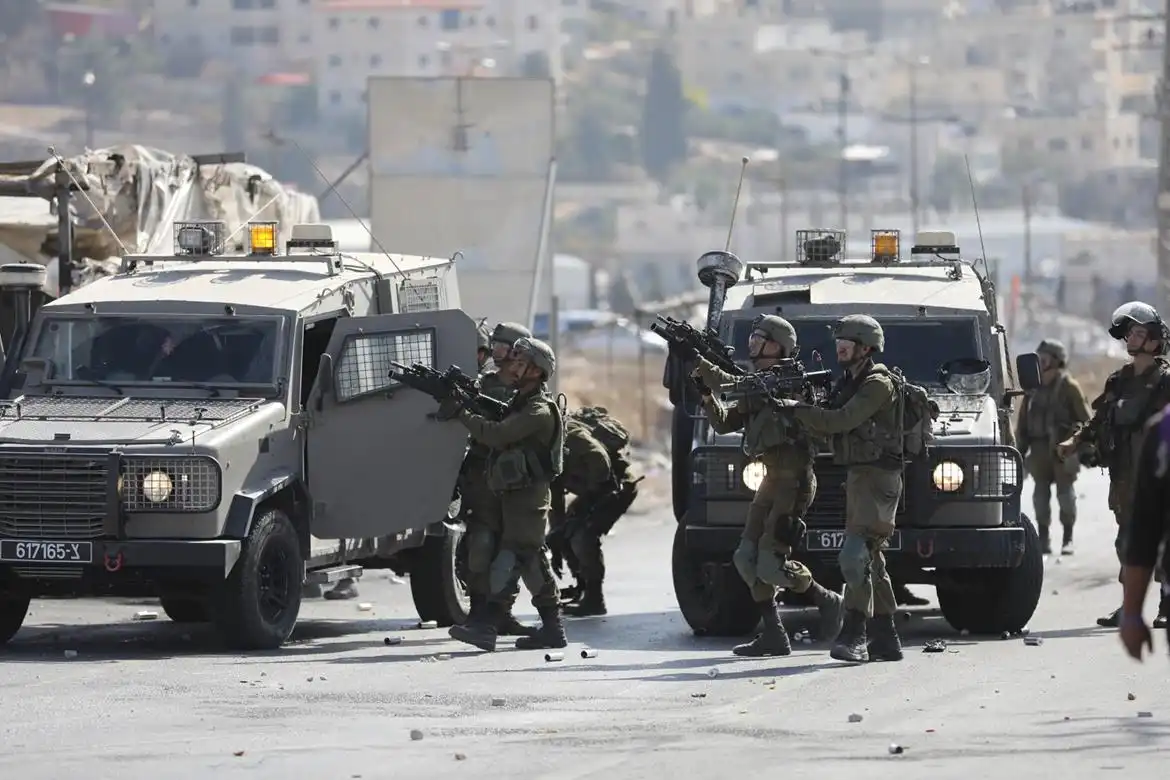







The Financial Times reported on Sunday that over the past two years, Jewish settlers have set fire to a mosque in the village of Al-Ma'arjat, attacked its school, and stolen its residents' livestock.
"But the final straw came Thursday night (July 3), when dozens of settlers entered this remote Palestinian community in the occupied West Bank, after days of harassment during which they looted property, set up an outpost next to the village, and told local residents to leave."
By Friday afternoon (July 4), most of the remaining 200 residents of Al-Ma'arjat had done just that. The few remaining were slowly dismantling their wooden and metal homes, loading furniture, water tanks, and window frames onto trucks, facing the prospect of displacement, the newspaper reported.
"It's a terrible feeling to realize you're losing the place where you were born, where you had a community with shared values, where you earned your living. I can't even describe it," Suleiman Malihat, a 34-year-old villager, was quoted as saying by the newspaper. "But the problem is that it's not just this community... Today it's us. But many others will follow."
"The repeated attacks on al-Mu'arajat - an isolated cluster of low huts and livestock pens on a rocky hillside in the Jordan Valley - are part of an escalation of settler violence that has swept the West Bank since October 7, 2023, when Hamas's attack on Israel sparked the war in Gaza," the newspaper reported.
With the world focused on Israel's devastation in Gaza and its wars with Hezbollah and Iran, the occupied West Bank has experienced its own profound turmoil. Violence by zealous settlers has displaced more than two dozen rural communities. Benjamin Netanyahu's far-right government has accelerated Israel's decades-long campaign to tighten its grip on Palestinian territory, toward annexation.
It's worth noting that last May, the Israeli occupation government approved the largest settlement expansion in 25 years. This week, members of Netanyahu's Likud party called on Israel to annex the occupied West Bank this month. Meanwhile, the occupation army has sharply intensified its operations against civilians, under the pretext of pursuing "militants" in the north of the region, displacing tens of thousands of citizens and raising the Palestinian death toll in the West Bank to its highest level in 20 years.
The deteriorating situation has drawn widespread condemnation, with the United Kingdom and other countries imposing sanctions on two extremist settlers in Netanyahu's government, and French President Emmanuel Macron seeking to rally international support for recognition of a Palestinian state.
But Netanyahu's government has not backed down. After Macron said in May that recognizing Palestine was a "moral duty," Israeli Defense Minister Israel Katz vowed that Israel would tighten its grip on the West Bank, which it has occupied since 1967.
He said, "They will recognize a Palestinian state on paper, and we will build the Jewish state of Israel on the ground." This piece of paper will be thrown in the trash, and the State of Israel will flourish and prosper.
Among the most notable steps taken by the Israeli occupation government was the approval of the construction of 22 new settlements—illegal under international law—signed last May. This expansion represents the largest since the 1990s, and includes settlements in locations that analysts say will further fragment the already fragmented Palestinian territories.
The newspaper quotes Ibrahim Dalalsha, director of the Horizon Center for Political Studies in Ramallah, as saying: "This expansion appears to be carefully designed to divide the West Bank, isolate Jerusalem, and essentially destroy the idea of a two-state solution." He added: "It is actual action on the ground for a specific purpose. It is strategic."
This move was accompanied by renewed calls from members of Netanyahu's coalition for Israel to formally annex the occupied West Bank – which the Palestinians seek as the heart of their future state. On Wednesday (July 25), 15 ministers from Israeli Prime Minister Netanyahu's Likud party called for this to be done before the current parliamentary session ends later this month.
Diplomats doubt Israel will annex the entire West Bank anytime soon, not least because it would complicate Netanyahu's ambitions to normalize relations with several Arab and Muslim countries.
But they say a smaller step, such as the formal annexation of some large settlements close to Israel, cannot be ruled out.
Palestinians and Arabs fear that with Trump in the White House, anything is possible.
“But for Palestinians in isolated communities like al-Mu’arrajat—many of whom have lived through multiple displacements and watched Israel’s gradual, de facto annexation of the rural West Bank eat away at their land for years—the violence is a more pressing problem. In the past 21 months, according to the United Nations Office for the Coordination of Humanitarian Affairs, settlers have carried out more than 2,500 attacks in the area, assaulting villagers, vandalizing property, and destroying their crops. In June alone, settler attacks injured 95 Palestinians—more than any other month in two decades,” the newspaper reported.
For the displaced, the attacks brought psychological trauma, forcing them to search for a new place to live. But they also upended the lives of those who didn't lose their homes, exacerbating the economic pressures on rural communities in the West Bank by cutting them off from vast swaths of land they used for grazing or growing crops. Meanwhile, livestock thefts deprived villagers of a major source of income. Even before this week's displacement, local residents were no longer able to access thousands of dunams of land between al-Mu'arjat and the neighboring village of al-'Auja due to the risk of settler attacks, according to Aref Daraghmeh, a field researcher with the Israeli human rights organization B'Tselem.
What makes the escalation of violence particularly worrying, villagers say, is the near-total impunity enjoyed by settlers.
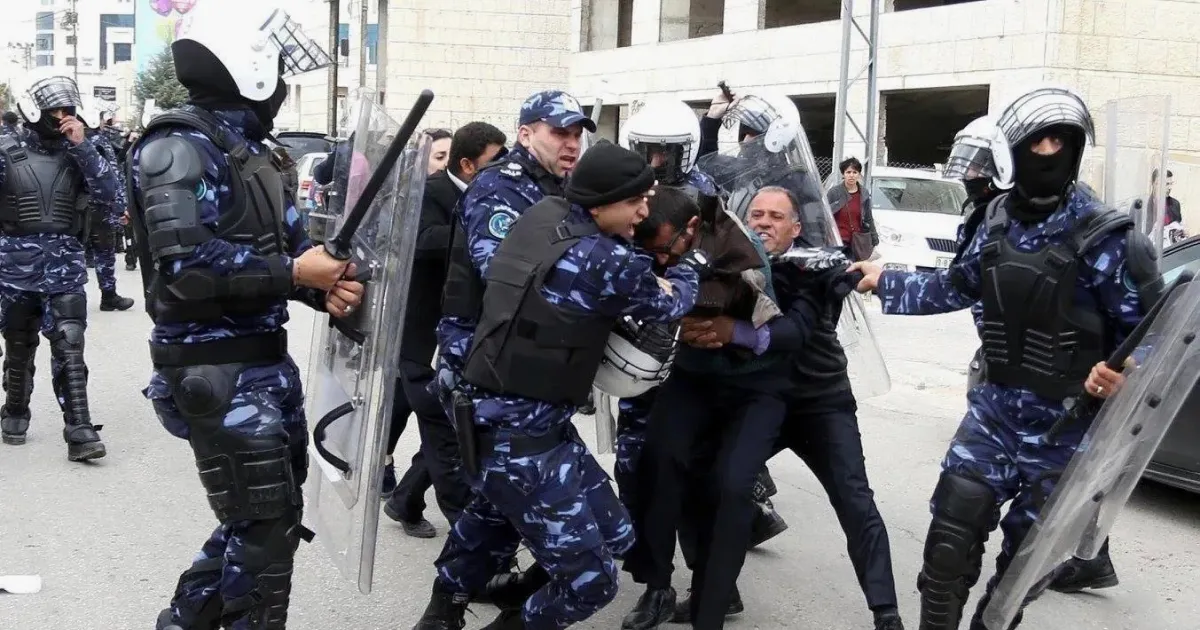
"Before October 7, there were also attacks, but when we called the army and police, they helped us stop them," Malihat says. "After October 7, the attacks began to occur almost daily. The role of the police and army became not to protect us from the settlers, but to support and protect them as they attacked us." The Israeli military stated that it had not observed any "acts of violence or assault" during its soldiers' presence in the village of al-Mu'arjat "in recent days," and that it had taken disciplinary action against soldiers who did not comply with orders. The police emphasized that it has "zero tolerance for violence or acts of revenge."
There is little hope that the increasing international pressure on Israel—including new rounds of sanctions and threats by the European Union to review its trade arrangements with Israel—will have a greater impact.
Among the violent settlers sanctioned by the UK in the latest round of measures in May was Zohar Sabbah, who lives in a settlement outpost two kilometers from al-Mu'arrajat, whom the UK said in its decision was involved in "threatening, promoting, and supporting acts of aggression and violence against Palestinian individuals."
But local residents say the sanctions have not changed Sabah's behavior. According to B'Tselem, he was among the group of settlers who entered al-Mu'arrajat this week. Malihat says the sanctions imposed by the international community "are just to ease their consciences, so they can say they did something. But in reality, they don't stop anything."
He adds: "Part of our fear is that [the pressure on us] is not just a settler issue. It is the project of the State of Israel: They want to displace us from these areas... and the settlers are one of the tools of our displacement."
Share your opinion
Israel's Quiet War in the Occupied West Bank