





After more than 24 hours of deliberations, Hamas initially agreed to the mediators' ceasefire proposal, with some substantive reservations. The core of the reservations revolved around Israel's continued control of the aid distribution mechanism, a process that deepens the humanitarian crisis and prepares the ground for an alternative government through private security companies, rather than a legitimate Palestinian Authority.
On the military side, the agreement speaks only of a "cessation of offensive operations," while leaving the door open for Israel to carry out raids or shelling under the pretext of "defense." The withdrawal, on the other hand, is a "redeployment" conditional on new maps to be agreed upon later, thus establishing a reality on the ground that serves Israel.
Within 60 days, negotiations are supposed to take place on post-war arrangements, including disarmament and the exile of some leaders and fighters. These conditions alone are enough to thwart any negotiating process and pave the way for a return to war. The only guarantee is Trump's pledge to follow through if the parties comply; otherwise, a return to war is guaranteed.
In contrast, the Israeli press clearly reveals the occupation government's true position regarding Hamas's response. Channel 12 correspondent Yaron Avraham noted that Israel is unwilling to accept any amendments related to the withdrawal or the mechanism for the entry of aid, and that there are other sensitive issues related to the arrangement for the release of prisoners and abductees.
Political correspondent Gili Cohen (Kan Channel) described Hamas' response as a "challenge to Israel," and confirmed that a cabinet meeting would be held to discuss the future of the war and negotiations in light of this response.
According to a Yedioth Ahronoth report, despite US President Donald Trump's optimism, Israeli circles believe the negotiations will take longer than advertised, especially after Hamas demanded an end to the role of the US-based Gaza Humanitarian Foundation, which is accused of being a tool for controlling aid flows and an alternative to UN organizations. This demand will be rejected by both Washington and Israel.
Yedioth also reports that Israel will agree to the release of approximately 1,000 prisoners, including those serving long life sentences, but will refuse to release senior leaders from Hamas or other factions. It will also insist on establishing a buffer zone extending approximately 1.2 kilometers inside Gaza even after the redeployment.
These leaks from the Israeli media indicate that the proposed agreement is a temporary phase for the Israeli military's redeployment without a full withdrawal, while maintaining control over aid as a political and humanitarian pressure card.
Here, Netanyahu's goal intersects with Trump's plan, which sees the 60-day truce as necessary to pave the way for his plans to normalize relations with new Arab states and revitalize the Abraham Accords, which have been stalled by the ongoing war in Gaza.
The truce provides Trump with a "achievement" that he can use as a campaign slogan and that will be marketed internationally as a preliminary step toward a broader "regional peace" that includes the Gulf states, other Islamic countries, and perhaps later Syria and Lebanon, according to what his media promotes.
The current version of the agreement is an evolution of the Witkoff Agreement, which Hamas previously rejected due to the lack of genuine guarantees. Experience has shown that Israel violated its commitments last time. Trump himself is manipulating the issue to enhance his image as the godfather of normalization, while Gaza remains a bargaining chip and an open bargaining arena.
What's dangerous is that the so-called "Day After Agreement" includes arrangements for the reconstruction of the Gaza Strip through a funding mechanism subject to the participation of Gulf Arab states and the exclusion of the Palestinian Authority. Netanyahu sees this as an opportunity to weaken Hamas and turn reconstruction funds into a political tool in the hands of regional parties.
However, no one expects the core issues to be resolved within two months: from reconstruction to ending the siege and arranging an alternative civil administration.
The reality is that Gaza will remain trapped in a vicious cycle: a temporary truce for redeployment, negotiations on paper, and then renewed bombardment under the pretext of "resuming deterrence."
In the background, Netanyahu is exploiting this vortex to buy time and prevent any final settlement that might embarrass the Israeli right. Meanwhile, Trump is using the truce as a tool to rebrand himself as a historic dealmaker, even if Gaza remains on the brink of famine.
Thus, normalization becomes a regional dream hanging over the remains of Gaza, while the temporary truce fails to guarantee any radical solution. Rather, it may pave the way for a new round of escalation, using the same tools: the siege, the bombing, the empty negotiations, and the manipulation of the fate of the two million Palestinians in the Strip.
The question remains: Will this truce be enough to deceive the world that the war is over, when it's merely being used to buy time? Or will Gaza pay the price once again, as fuel for a war that no one truly wants to end?

OPINIONS
Sat 05 Jul 2025 11:14 am - Jerusalem Time
How successful is the agreement between Israel and Hamas?
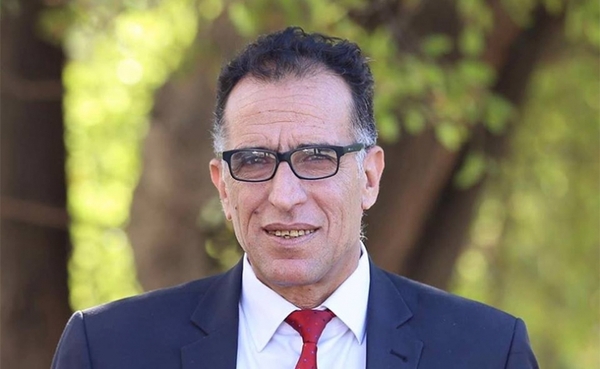
Mustafa Ibrahim
Opinion Writer

Share your opinion
How successful is the agreement between Israel and Hamas?