






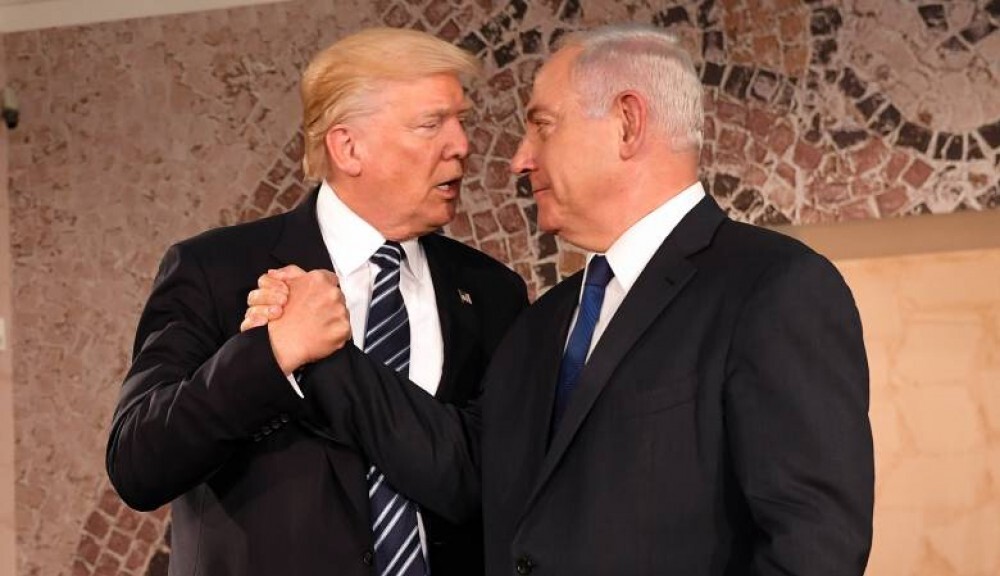
Israeli Prime Minister Benjamin Netanyahu said he will travel to Washington next week to meet with US President Donald Trump and White House officials. This visit is expected to be crucial to resolving the war in Gaza and other issues related to expanding peace agreements in the region.
It's clear that Netanyahu wants to capitalize on the "successes" achieved by the Israelis in recent months, whether against Hamas in Gaza, the significant change taking place in Syria, or the targeting of Iran's military capabilities and its nuclear facilities.
Netanyahu confirmed on Tuesday that, in addition to Trump, he will meet with Vice President J.D. Vance, Secretary of State Marco Rubio, Defense Secretary Pete Hegseth, US President Donald Trump's Middle East envoy Steve Witkoff, Secretary of Commerce Howard Lutnick, and members of the US Senate and House of Representatives. He explained: "This step follows the great victory we achieved in Operation Rising Lion (against Iran). Capitalizing on success is just as important as achieving it."
Netanyahu did not say when he would meet with Trump, but Israeli media reported that he would travel to Washington on Sunday and meet with Trump next Monday.
An Israeli source confirmed to the official Kan Broadcasting Corporation that Netanyahu will meet with Trump next Monday in Washington, D.C., in their third meeting since Trump assumed his second term.
A White House official confirmed to The Times of Israel that the meeting will take place on Monday.
The visit comes exactly two weeks after Israel and Iran agreed to a US-brokered ceasefire. A second US official told The Times of Israel that the top issues on the agenda will be Gaza and Iran, emphasizing Trump's desire to achieve an end to the war in Gaza and the release of the remaining hostages. Syria will also be discussed, according to the US official.
Strategic Affairs Minister Ron Dermer arrived in Washington for meetings with US officials, in preparation for Netanyahu's arrival. Netanyahu also prepared for the visit with a series of meetings with his senior aides and ministers regarding the Gaza ceasefire negotiations.
The Security and Political Cabinet met twice, on Sunday and Monday, to discuss the future of the war in the Gaza Strip, but disagreements emerged that prevented a clear agreement.
Israeli sources confirmed that Netanyahu will hold another meeting on the issue on Thursday.
Finance Minister Bezalel Smotrich rejected calls to end the war in Gaza, saying, "The way to bring Israel to its knees is not with missiles or nuclear weapons, but with kidnapping Jews."
He added, "No more dialogue with the murderers, no more pause, no more hesitation. It's time to continue the momentum of victory over the Iranians for a strong, decisive, and swift war that will destroy the enemy in Gaza and eliminate the threat it poses to Israel for many years to come."
But this was not the position of Chief of Staff Eyal Zamir, who said at the meeting that the war was difficult and complicated because of the presence of detainees.
Zamir argued with Smotrich, who told him that the country's security must not be sacrificed for the sake of the detainees' return. He also argued that the army was misleading the political leadership and failing to implement decisions made by the political echelon, including aid. He also argued with National Security Minister Itamar Ben-Gvir, whom he accused of repeating the approach of his predecessor as army chief. He insisted that the primary goal was to defeat Hamas, not the return of the detainees, and that their return could only be achieved through military pressure.
Yedioth Ahronoth reported that Ben-Gvir and Smotrich's remarks did not please Zamir, who said that the army was fighting in Gaza, but would not be able to control a million and a half people. Zamir asked the ministers, "Are you kidding? We are fighting in Gaza, and the decision must come from the political echelon."
Yedioth Ahronoth reported that during the session, the army presented several options for continuing the battle in Gaza, including occupying the entire Strip, reaching an agreement, or employing a blockade and opening more distribution points.
Thursday's session, which precedes Netanyahu's trip to Washington, is expected to be decisive.
Israeli sources said Netanyahu wants an agreement because Trump also requested it.
In what appears to be a prelude to this agreement, Netanyahu, ministers, and senior Israeli military leaders have recently made statements suggesting that Israel is close to agreeing to an end to the war against Hamas.
An official in Netanyahu's office said earlier that Dermer was in the United States "in an attempt to get the Americans to pressure the Qataris to pressure Hamas."
"First and foremost, the hostages must be freed. Of course, we will also have to resolve the Gaza issue and defeat Hamas, but I believe we will accomplish both tasks together," Netanyahu said during a visit to a Shin Bet facility in southern Israel on Sunday.
His remarks were interpreted in local media as prioritizing a deal to return the remaining 50 hostages in Gaza above all else, a sign of mounting pressure from the Trump administration to end the conflict that has been ongoing since October 7, 2023.
Israeli Defense Minister Yisrael Katz also made statements saying that the current war in the Gaza Strip is nearing its end.
Trump has been vocal in recent days about his desire for Israel to agree to a deal to end the war.
Israel's Channel 12 reported that the Netanyahu-Trump meeting will focus on the Gaza issue. It added, "Israel still insists on two stages, according to the Witkoff plan, but the Americans want to see a faster and more comprehensive solution. The two sides must bridge this gap together in the room."
A source familiar with the negotiations told the channel that talks could take place within a few days, potentially leading to progress toward an agreement in the near future.
According to the source, Israel is striving to be flexible in formulating the agreement, allowing for significantly narrowing gaps regarding the deployment of military forces within the framework of the ceasefire and the entry of humanitarian aid, thus preventing Hamas from strengthening its power.
There are also indications from the mediators that the pressure they are exerting on Hamas may lead to greater flexibility on its part. According to Channel 12, the prevailing assumption in Israel is that after the Dermer-Wittkov talks, and only then, will the delegations be able to begin advancing the process. If negotiations resume, it will take a full week to reach an agreement. The channel added: "The preferred option for Netanyahu, as well as for the ministers and the defense establishment, is to seek an agreement and complete the process of returning the kidnapped soldiers."
According to the channel, Israel is clearly aware that the fighting in Gaza has been exhausted, and that entering new combat zones could put the kidnapped soldiers at great risk. Narrowing the gaps in the short term appears possible, and efforts are underway to allow delegations to depart to begin proximity talks.
In addition to Gaza, the United States is also interested in renewing negotiations with Iran. Israel wants to be involved in all aspects of the agreement and all possible scenarios, as well as influence the decision-making process regarding its content.
The United States is also seeking to create a new Middle East by expanding the scope of peace and normalization agreements. The country currently in the spotlight is Syria. Channel 12 reported, "There is a sense of decisive moments in Israel."





Share your opinion
Netanyahu meets Trump on Monday, eyeing successes in Gaza, Syria, and Iran