







DropSite reported that for the first time in more than a month, "thanks to the ceasefire between Iran and Israel," there appears to be the beginnings of a renewed US focus on resuming ceasefire negotiations in Gaza.
US President Donald Trump expressed optimism on Wednesday in The Hague, where he is participating in the NATO summit, that a deal on Gaza could be reached soon. He said, "I think there's a lot of progress being made on Gaza. And because of this attack that we've launched on Iran, I think we're going to have some very good news." Trump added that his special envoy, Steve Witkoff, told him that a deal on Gaza was "very close."
An envoy to President Trump said in an interview Tuesday evening that he believes an agreement between Israel and Hamas is within reach. Since the Iran issue has been resolved, Egyptian, Qatari, and American mediators are now focused on reaching a permanent ceasefire as soon as possible. "God willing, a ceasefire can be reached within days," said Bishara Bahbah, a Palestinian-American and unofficial envoy to the Trump administration.
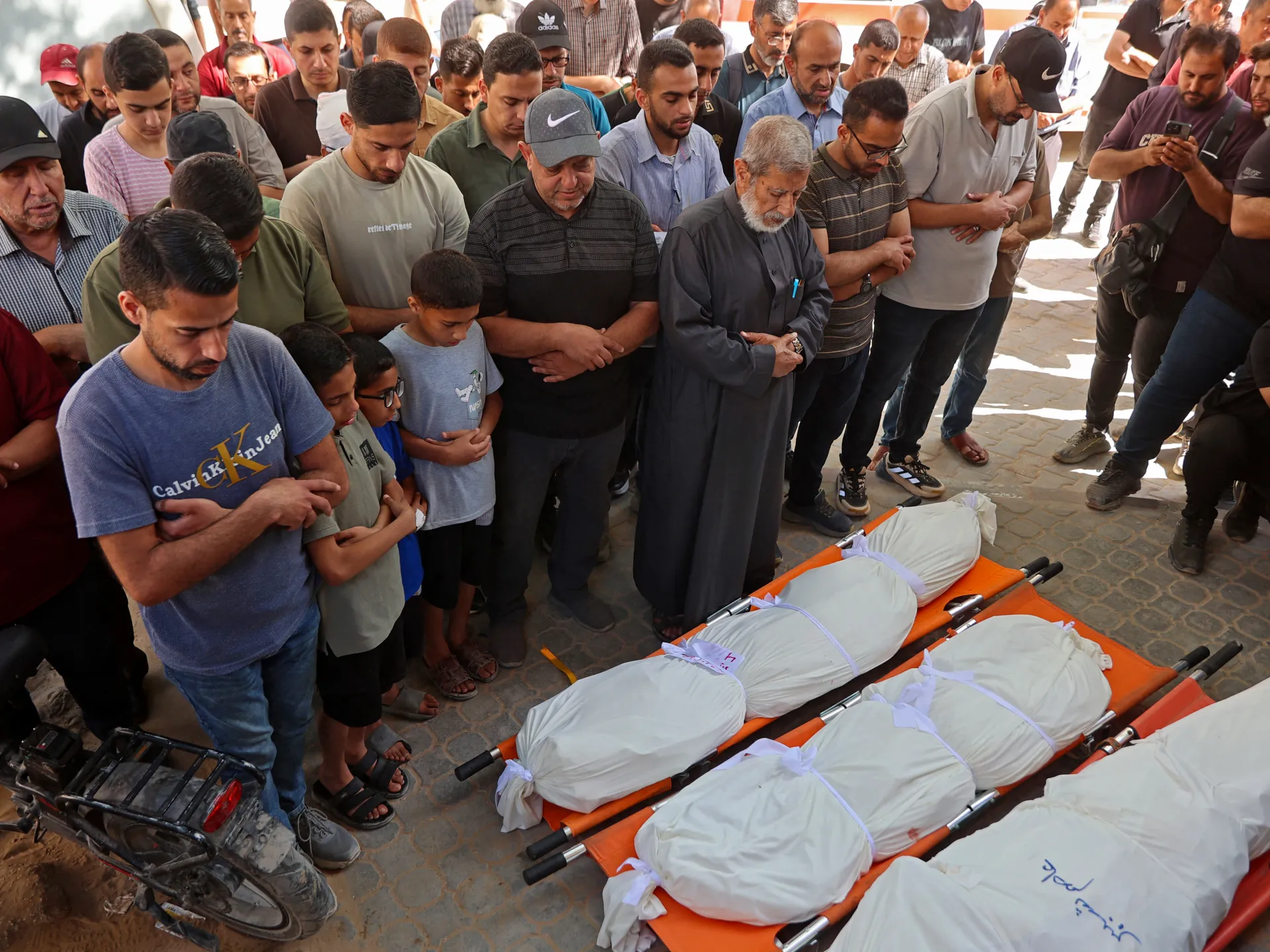
It's worth noting that with the world's focus on the US-Israeli war on Iran over the past two weeks, Israel has intensified its campaign of mass killings against Palestinians in Gaza. The situation in the besieged enclave is more dire than at any time during Israel's genocidal war, which has been ongoing for more than 20 months. Dozens of Palestinians are killed daily as they make the perilous journey to secure some of their meager food rations, the distribution of which is tightly controlled by the United States and Israel.
While Bahbah sought to portray a sense of renewed momentum in a wide-ranging Arabic interview with Egypt’s Al-Ghad TV, a source close to the Palestinian negotiating team told DropSite that no senior Hamas leaders have recently met with Bahbah or other US officials, and that any optimism expressed by the Trump envoy that does not include pressure on Israel to make concessions is meaningless. “There are some delegations in Cairo, but no one senior,” the source said. “Bahbah is trying to give the impression that something is happening based on personal conversations with some people, but the key decision-makers are not there.”
Bahbah, who is currently in Cairo, recently met with Hamas official Ghazi Hamad. "Hamas has a strong understanding of the need to find a quick solution to the situation in Gaza," Bahbah said, according to the report.
Although Hamad is a longtime Hamas member and has been the main point of contact with Bahbah, he does not have the authority to conclude any deals for Hamas. Bahbah is also not a US government official and must obtain Witkoff's approval for any decisions or offers. "I convey Hamas's considerations to Mr. Witkoff and the US administration," Bahbah said in his interview. "I am also limited by what Witkoff allows me to do. I convey all the information to him, and the decision is his."
Hamas confirmed to DropSite that it is continuing to communicate with American, Qatari, and Egyptian mediators, although sources within the movement have warned that no substantive steps have been taken toward an agreement. Hamas's position remains that Israel's insistence on reserving the right to resume genocide is the main obstacle to reaching an agreement. In a Facebook post on Tuesday, Bahbah wrote, "The Israeli delegation has been summoned to Cairo" to resume ceasefire talks. "Hamas informed us that it is fully prepared to begin negotiations now."
According to DropSite, an internal Hamas assessment of the current situation (published Wednesday and obtained by DropSite) confirmed that "Trump is trying to exploit what happened in Iran to strike a deal with Gaza, and his recent statements about progress in the negotiations indicate this. Israel is talking about progress, but without agreeing to an end to the war."
The assessment also added that Hamas believes the recent ambushes and killing of Israeli soldiers by armed Palestinian resistance fighters from Hamas's Qassam Brigades and the Islamic Jihad's Al-Quds Brigades are contributing to the domestic pressure on Israeli Prime Minister Benjamin Netanyahu. On Tuesday, seven Israeli soldiers were killed in the southern city of Khan Yunis in a complex ambush using an improvised explosive device.
Hamas's assessment concluded that "after the Khan Yunis operation, voices rose within the [Israeli] opposition, the ruling coalition, and media and political circles regarding the need to stop the war, its futility, and the resulting losses, including the increase in casualties and the continued detention of prisoners inside Gaza."
Sources within the Palestinian negotiating team have also told DropSite over the past few weeks that, despite continuing disagreement over a range of technical details, Hamas has indicated a willingness to make concessions on the timing of the release of Israeli prisoners, the number of prisoners to be released, the duration of the initial phase of the ceasefire, and other issues. This flexibility was reflected in the ceasefire proposals Hamas drafted in May, when it submitted several written amendments to its previous positions following discussions with US officials. Hamas also offered the immediate release of all Israeli prisoners as part of an extended truce—known in Arabic as a hudna—of between five and seven years. Israel rejected all of Hamas’s offers. “Hamas offered months ago to release all Israeli hostages, living and dead, in a single deal in exchange for a permanent ceasefire to end the war in the Gaza Strip,” Bahbah said. “However, Israel rejected this initiative by Hamas.”
Bahbah confirmed that Hamas had agreed to cede all governing authority in Gaza to an independent Palestinian technocratic committee, and that Israel had removed this clause from the draft ceasefire proposal Hamas presented to mediators in May. “[Hamas] proposed this,” Bahbah said. “In one of the versions we wrote, this point was clearly stated. Unfortunately, [Israel] came and tried to sabotage it.” Bahbah said that Hamas’s offer to relinquish power in Gaza was again part of renewed US efforts to reach an agreement. Bahbah said he believed both the US and Hamas wanted to end the war. When asked if he believed this was Israel’s position, Bahbah replied, “God knows. It is in Netanyahu’s interest to end it. Let’s say he might not want to, but it is in his interest to end the war.”



Share your opinion
After the Iranian-Israeli ceasefire, signs of a deal regarding the war on Gaza appear.