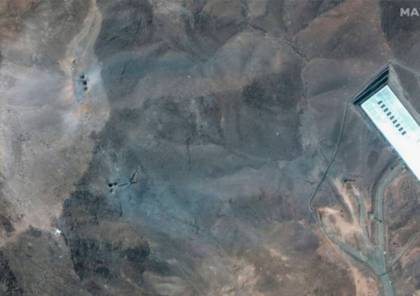







CNN reported on Tuesday that the US military strikes on three Iranian nuclear facilities last Saturday did not destroy key components of the country's nuclear program and likely set it back by only several months, according to a preliminary US intelligence assessment.
According to CNN, this assessment, which has not been previously published, was prepared by the Defense Intelligence Agency, the Pentagon's intelligence arm. A source said it is based on a battle damage assessment conducted by US Central Command following the US strikes.
Analysis of the damage to the sites and the impact of the strikes on Iran's nuclear ambitions continues, and the conclusion may change as more intelligence becomes available. However, the initial findings contradict US President Donald Trump's repeated claims that the strikes "totally destroyed" Iran's nuclear enrichment facilities. Defense Secretary Pete Hegseth also stated on Sunday that Iran's nuclear ambitions were "eliminated." Two people familiar with the assessment told CNN that Iran's stockpile of enriched uranium was not destroyed. One said its centrifuges were largely "intact." Another source said the enriched uranium assessed by intelligence was removed from the sites before the US strikes. This person added, "So, the DIA assessment is that the US delayed them by a few months at most."
The White House acknowledged the assessment, but said it disagreed with it, according to CNN.
“This alleged assessment is completely false,” White House press secretary Carolyn Leavitt told CNN in a statement. “It was classified as ‘top secret,’ but was nevertheless leaked to CNN by an anonymous, low-level, and failing member of the intelligence community. Leaking this alleged assessment is a clear attempt to discredit President Trump and the brave fighter pilots who carried out a perfectly executed mission to eliminate Iran’s nuclear program. Everyone knows what happens when you drop 14, 30,000-pound bombs with precision: total destruction.” The U.S. military stated that the operation went as planned and was a “stunning success.”
It is still too early for the United States to develop a comprehensive picture of the impact of the strikes, and none of the sources described how the Defense Intelligence Agency's assessment compares to the views of other intelligence agencies. The United States continues to collect intelligence, including from within Iran, as part of its damage assessment.
Israel had been carrying out strikes on Iranian nuclear facilities for days prior to the US military operation, but claimed it needed US-made 30,000-pound bunker-buster bombs to accomplish the mission. While US B-2 bombers dropped more than a dozen bombs on two nuclear facilities – the Fordow fuel enrichment plant and the Natanz uranium enrichment complex – these bombs did not completely destroy the centrifuges and highly enriched uranium at the sites, according to people familiar with the assessment.
Instead, the impact at the three sites—Fordow, Natanz, and Isfahan—was largely confined to above-ground structures, which were severely damaged, according to the sources. This includes the sites' power infrastructure and some above-ground facilities used to convert uranium into bomb-making metal.
The Israeli assessment of the impact of the US strikes also found less damage at Fordow than expected. However, Israeli officials believe that the joint US-Israeli military action against multiple nuclear sites set back Iran's nuclear program by two years, assuming they can rebuild it unhindered, which Israel will not allow. However, Israel had publicly stated before the US military operation that the Iranian program had been set back by two years.
“Based on everything we’ve seen—and I’ve seen it all—our bombing campaign has eliminated Iran’s ability to produce nuclear weapons,” Hegseth told CNN. “Our massive bombs hit exactly the right spot on every target, and they worked very effectively. The impact of those bombs is buried under a mountain of rubble in Iran, so anyone who claims the bombs weren’t devastating is just trying to undermine the president and the successful mission.”
On Tuesday morning, Trump reiterated his belief that the damage caused by the strikes was significant.
"I think it was completely destroyed," he said, adding, "The pilots hit their targets. Those targets were wiped out, and the pilots should get the credit."
When asked about the possibility of Iran rebuilding its nuclear program, Trump replied: "That place is under the rocks; it's destroyed."
While Trump and Hegseth expressed optimism about the success of the strikes, Chairman of the Joint Chiefs of Staff Dan Keane said on Sunday that while damage assessments were still underway, it would be "premature" to comment on whether Iran still retained some nuclear capabilities.
Republican Representative Michael McCaul, the honorary chairman of the House Foreign Affairs Committee, declined to confirm Trump's claim that Iran's program had been "destroyed" when pressed by CNN on Tuesday.
"I've been briefed on this plan in the past, and it was never intended to completely destroy the nuclear facilities, but rather to cause significant damage," McCaul told CNN, referring to US military plans to strike Iranian nuclear facilities. But it was always understood to be a temporary setback.
According to the network, Jeffrey Lewis, a weapons expert and professor at the Middlebury Institute of International Studies, who closely reviewed commercial satellite imagery of the strike sites, agreed with the assessment that the attacks do not appear to have ended Iran's nuclear program.
"The ceasefire came without Israel or the United States being able to destroy several key underground nuclear facilities, including near Natanz, Isfahan, and Parchin," Lewis said, referring to the ceasefire between Israel and Iran announced by Trump on Monday.
It is noteworthy that Parchin is a separate nuclear complex located near Tehran.
"These facilities could be the basis for quickly rebuilding Iran's nuclear program," he added.
Earlier on Tuesday, classified briefings for both the House and Senate on the operation were canceled.
The full House briefing was also postponed, and it was not immediately clear why or when it would be rescheduled. Democratic Rep. Pat Ryan of New York said on Channel X on Tuesday, "Trump just canceled a classified House briefing on the Iran strikes without any explanation. The real reason? He claims he destroyed 'all nuclear facilities and capabilities,' and his team knows they can't support his threats and nonsense."
As CNN reported, questions have long been raised about whether US bunker-buster bombs, known as massive explosively formed penetrators (MOPs), would be capable of destroying Iran's heavily fortified nuclear sites buried deep underground—particularly at Fordow and Isfahan, Iran's largest nuclear research complex.
It's worth noting that the United States struck Isfahan with submarine-launched Tomahawk missiles rather than a bunker-buster. One source said this was due to an understanding that the bomb would likely fail to penetrate Isfahan's lower levels, which are buried deeper than Fordow.
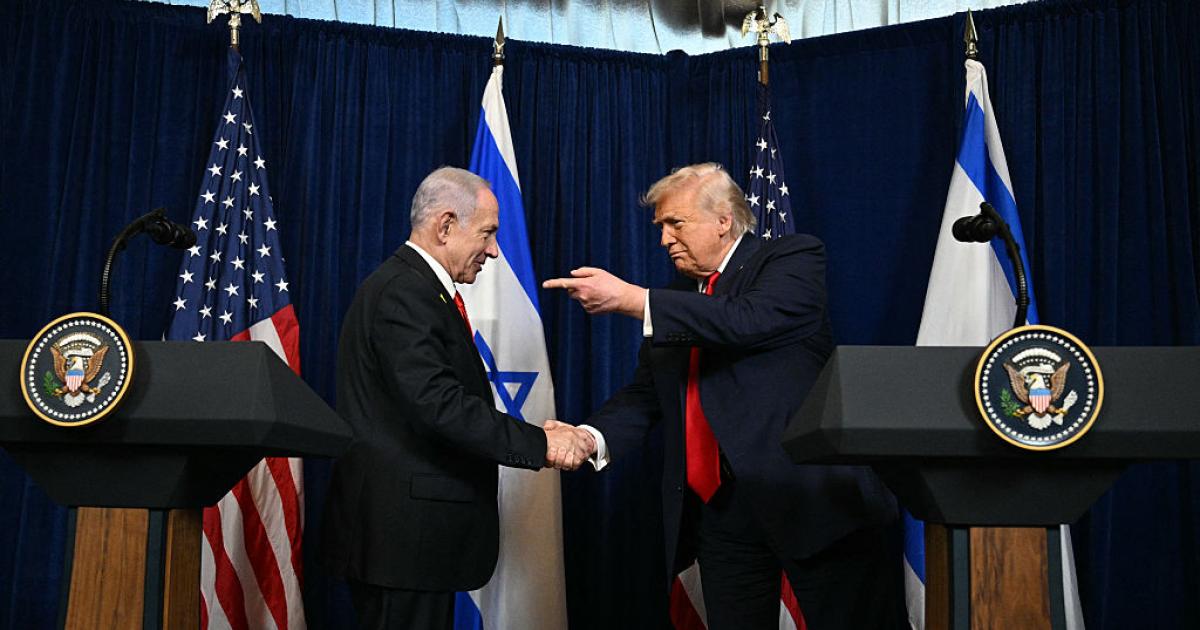
The US capital is witnessing a concerted effort by the Israeli lobby, supporters of Israeli Prime Minister Benjamin Netanyahu, and hawkish and neoconservative figures to push the Trump administration to back down from the ceasefire and launch more intensive and sustained strikes on Iran.
They promote the idea that Iran also maintains secret nuclear facilities that were not targeted in the strike and are still operating.

Share your opinion
Initial US intelligence assessments indicate that the strikes on Iran did not destroy nuclear sites.