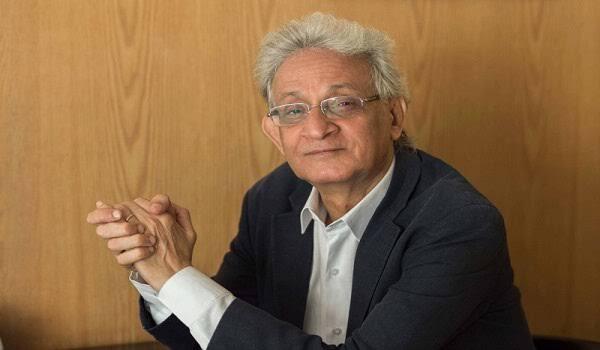






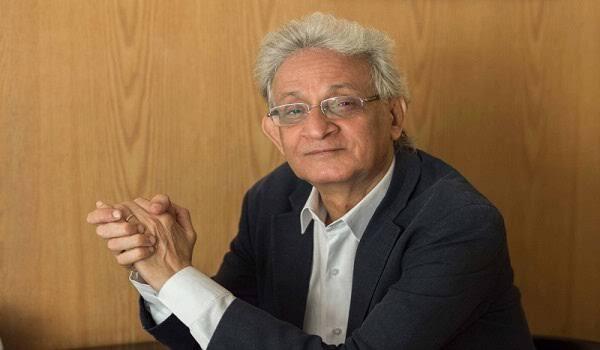
Abdullah Al-Sanawi
The war is not over, and Iran has not raised the white flag.
The US strike on three nuclear facilities—Natanz, Isfahan, and Fordow—deep in the mountains seemed to be the final word in the Iran-Israel war. With euphoria, US President Donald Trump described the strike as "magnificent." He said, "Israel is now safe." At the same time, he called for what he called "peace through strength," borrowing the same expression from Israeli Prime Minister Benjamin Netanyahu's lexicon. It is unconditional surrender.
The Israelis believed that American military intervention would pave the way for a "good deal," or that they would reap through negotiations what they had failed to achieve through war. Iran responded with waves of ballistic missiles targeting strategic Israeli sites. These strikes were the most powerful and violent since the start of the confrontations.
The specter of chaos looms over the Middle East, a region Netanyahu wants to redraw, without the ability to win any war alone or possess any political vision for the day after in Gaza or Iran.
Every scenario is possible and every danger is present in the entire region.
Wars are measured by their political outcomes and the resulting new equations in the raging conflict over the fate of the Middle East. If we do not stand with Iran, support it, and back it, the consequences will be dire. The Iranian nuclear project was not the only reason for American military intervention.
It is intended as a political way out of the entrenched Israeli impasse, or to intimidate the Iranians with more violent strikes and greater tragedies if they do not accept a peace agreement that meets Israeli demands. If the repeated Iranian leaks that enriched uranium has been transferred to other locations are true, the implication is that what was supposed to be a peaceful solution could turn into an overt effort to produce a nuclear bomb.
The American intervention was not surprising.
It is actually involved in planning, strategic deception, and supplying all the intelligence, weapons, and ammunition required for the war, without being directly involved in its operations. However, the course of the confrontations did not meet expectations and prior calculations.
In the opening strike, Israel bombed a large number of nuclear facilities, assassinating heavyweight military leaders and scientists at once, and the entire country appeared infiltrated and exposed.
Despite the violent shake-up of command and control centers, Iran surprised the entire world with its ability to restore leadership and swiftly respond in the evening of the same day.
Then, it surprised him with new and diverse generations of hypersonic missiles, capable of bypassing air defense systems and reaching sensitive strategic, security, military, and economic targets.
This prompted public Israeli pressure on Trump to enter the war directly, as if there were no agreed-upon arrangements in the most minute detail.
Trump gave the strong impression that his inclinations led him to support Israel to the greatest extent possible, but that deterrence prevented him from issuing a decision to intervene.
Direct involvement in the war contradicts his pledges, on the basis of which he was elected, and contradicts the will of the majority of American public opinion, which rejects involvement in any wars.
According to recent public opinion polls conducted by YouGov, only 16% support intervention, while 60% oppose it. Opposition within his own Republican Party stands at 51% compared to 23%.
Intelligence reports warned him of the consequences and repercussions that could harm American interests in the Middle East, as well as the enormous economic cost of any intervention, especially if Iran closed the Strait of Hormuz, a vital route for oil and gas transportation.
Despite all of this, he continued his political and military gamble to the end, ignoring all fears and calculations.
Before the US strike, Trump informed his senior aides of his approval of the intervention plan, but postponed the final decision for two weeks to assess the likelihood of Tehran abandoning its nuclear program.
Opening the door wide for diplomatic communications and messages to Iran through semi-public channels: "A political solution is still possible."
Iran has expressed its readiness for this option, with one condition: that the Israeli attack stops.
He fooled everyone, without exception, and his party may pay the price for this gamble in the upcoming midterm elections.
Upon his return from the G7 summit, he said, "Our patience has run out," threatening to assassinate Iranian Supreme Leader Ali Khamenei. That statement meant nothing other than that military intervention was imminent.
A short time later, he made counter-statements denying any willingness to engage directly in war. He is a man of peace who came to office to end all wars, as he literally said.
He made no secret of his aspiration to win the Nobel Peace Prize, or to become the fifth American president in history to receive it, after Theodore Roosevelt, Woodrow Wilson, Jimmy Carter, and Barack Obama.
He's a confusing, unpredictable man who can say one thing and the opposite in a single speech. At the White House, Netanyahu surprised the cameras by announcing that he had opened a dialogue with Iran to reach an agreement on the nuclear project.
This was a grave insult to a close strategic ally, but he continued to coordinate with him in the smallest details: “We speak on the phone every day.”
He then went to unimaginable lengths in his praise of Netanyahu, claiming he was a man of peace. He described him in terms that would be hard to believe in the world, not even within his own family: "He is a good and charitable man who does not receive justice from his country."
In legal and political terms, it speaks of a man accused by international courts of war crimes and genocide.
Calling for justice for him is an endorsement of his policies and crimes. It is a complete violation of every human value and yet another violation of our very qualities and meanings.
Who would believe a deceitful president now?!
About "Al-Shorouk"
.............
Iran surprised the entire world with its ability to seize command and react quickly on the evening of the same day. It then surprised the world with new and diverse generations of hypersonic missiles capable of bypassing air defense systems and reaching sensitive strategic, security, military, and economic targets.

OPINIONS
Tue 24 Jun 2025 9:37 am - Jerusalem Time
Trump is a deceiver...the US strike and its aftermath
Share your opinion
Trump is a deceiver...the US strike and its aftermath