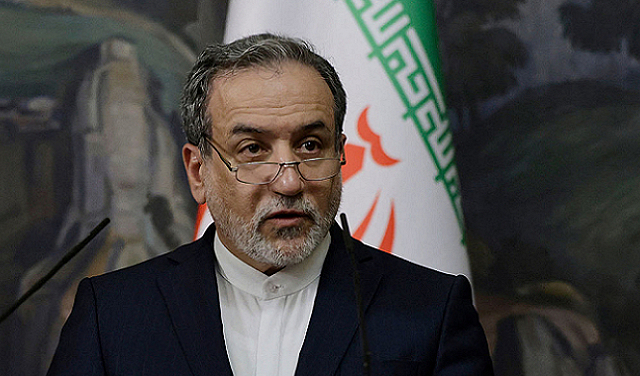







Iranian Foreign Minister Abbas Araqchi said Monday that Tehran is prepared to accept any agreement that prevents it from possessing nuclear weapons if it leads to an end to the war, but it will reject any agreement that restricts its "legitimate rights" to nuclear capabilities. This Iranian position has not changed over the past months of US-Iranian negotiations.
According to experts, senior Iranian military leaders, some of whom assumed their positions hastily after Israel killed several of their predecessors, worked quickly to adapt their plans to developments in the war, while maintaining diplomatic channels to end the war.
Foreign Minister Abbas Araqchi is leading Iran's diplomatic front, acting on the orders of Supreme Leader Ali Khamenei. They say the goal is to stop the war, in part by building an international coalition to pressure Israel, which launched its aggression on Friday without any Iranian provocation.
According to Iranian media, the war has begun to be described as a "war of the cities" – a phrase reminiscent of the mutual missile attacks during the Iran-Iraq War in the 1980s. According to Araghchi, who spoke on Sunday during a meeting with foreign diplomats, Iran does not want its conflict with Israel to spread to neighboring countries "unless it is imposed on us." He added that Iran's response was a "completely legitimate" act of self-defense, and that the Islamic Republic's attacks on Israel would end once Israel halted its military campaign.
The Iranian political and military leadership has repeatedly stated that any Israeli attack would lead to a devastating response against Israel, in line with Araghchi's diplomatic statements.
Current Iranian rhetoric emphasizes that Iran is a country willing to cooperate in finding a diplomatic solution and, more importantly, that it was attacked without provocation. At the same time, Araghchi makes no effort to conceal the potential threat Iran poses to other countries in the region, particularly the Gulf states, a threat that could have far-reaching consequences for Europe and the global economy.
According to Araghchi, Iran, seeking a diplomatic solution to end the war, is prepared to accept "any agreement aimed at preventing us from possessing nuclear weapons." However, he added that if the purpose of such an agreement is to deprive Iran of its "legitimate rights" to develop its nuclear capabilities, they will reject it.
It's worth noting that the "legitimate rights" Araghchi is referring to are Iran's right to enrich uranium on its own territory, as a fundamental part of its legal rights as a signatory to the Nuclear Non-Proliferation Treaty (NPT) and the original 2015 nuclear agreement, as well as its sovereign right to develop a nuclear industry "for civilian purposes." When Iran and the United States began their nuclear talks, the US administration spoke of Iran's right to enrich at low levels, but later, the US president backed down from this point under pressure from Netanyahu and his allies in the US Congress. Trump began insisting that Iran would not be allowed to enrich uranium on its own territory.
There is speculation about what Araghchi meant on Sunday, and whether it was a signal that Iran was willing to make a concession on this issue. He stated that Iran was ready to present its response to the US delegation during the sixth round of talks, which were supposed to be held in Oman on Sunday, but were postponed, though not canceled, due to the war.
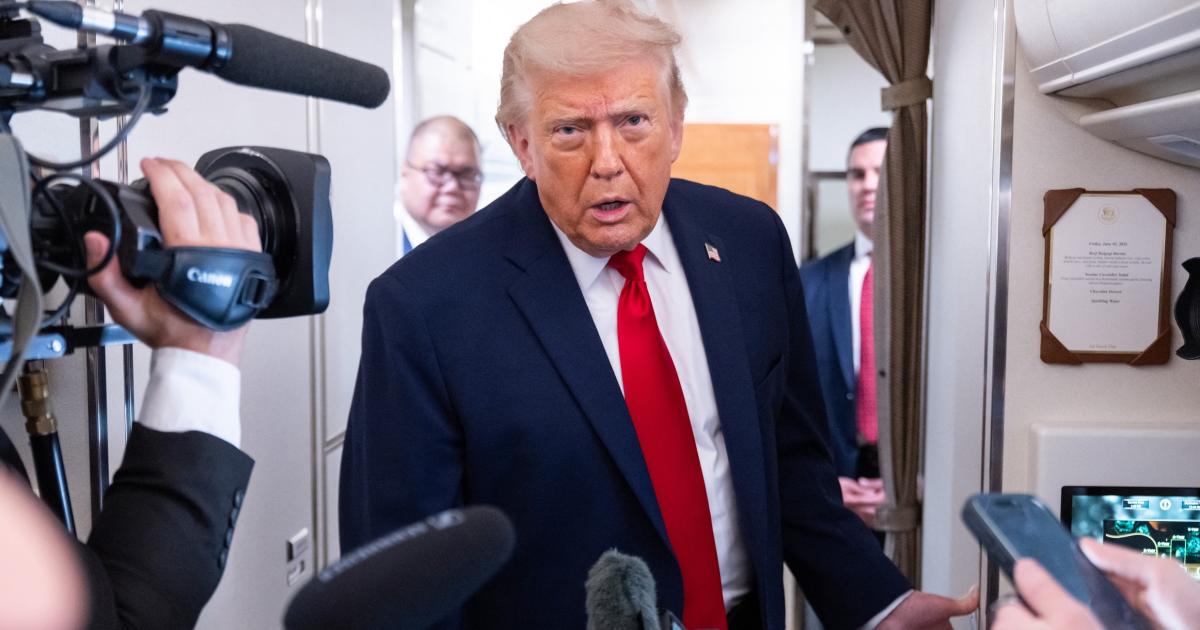
There was widespread speculation in Washington that Trump's statements offered a real chance for a quick nuclear agreement. After warning Iran against attacking US forces, he said, "We could easily reach an agreement between Iran and Israel and end this bloody conflict," referring to an agreement "between Iran and Israel," rather than one between the United States and Iran.
Implicitly, the United States, Iran, and the other countries (who sponsored the 2015 agreement) are believed to share the understanding that the nuclear agreement means stopping the war. This means that if Iran signs an agreement, Trump will ensure that Israel adheres to his agreement, even if Prime Minister Benjamin Netanyahu previously declared that Israel will not abide by it and that it will fight with all its might to defend itself if necessary.
Araghchi's statements, following the Israeli strikes on his country, indicate at least that Ayatollah Khamenei's basic position, which agreed to negotiate the nuclear agreement, has not changed.
Despite Iran's assessment that the United States was aware of and coordinated with Israel's plans—"and we have compelling evidence that American forces and bases in the region support the attacks of the Zionist regime's military forces," Araghchi said—it does not want to avoid the diplomatic track. It is reasonable to assume that Iran also sees a stark contradiction between the war goals defined by Israel and those expressed by Trump. While Israel brazenly declares that the overthrow of the Iranian regime is the only way to ensure the end of Tehran's nuclear program, Trump remains committed to the possibility of reaching a workable agreement with the current regime.
According to experts, Iran feels some comfort that Trump's position appears to be in line with those of its Arab neighbors, including Saudi Arabia, the United Arab Emirates, and, in particular, Qatar, its partner in the world's largest gas field, which was attacked by Israel.
These countries were joined by three European signatories to the original nuclear agreement—Germany, France, and the United Kingdom—which began intensive talks with Iran on Sunday aimed at reaching an understanding on a possible agreed-upon formulation for a new agreement.
According to estimates, Israel does not see the European position as having any particular impact—especially regarding the Iranian nuclear program—however, a coalition of European, Arab, and American actors may impose a shortened timetable that is inconsistent with Israeli military and strategic plans. These developments may force Israel to reconsider its next steps in light of the possibility that Iran and Washington may soon reach understandings that oblige Israel to adhere to a ceasefire.


Share your opinion
Speculation that Trump and Tehran are looking to reach a nuclear agreement to end the war