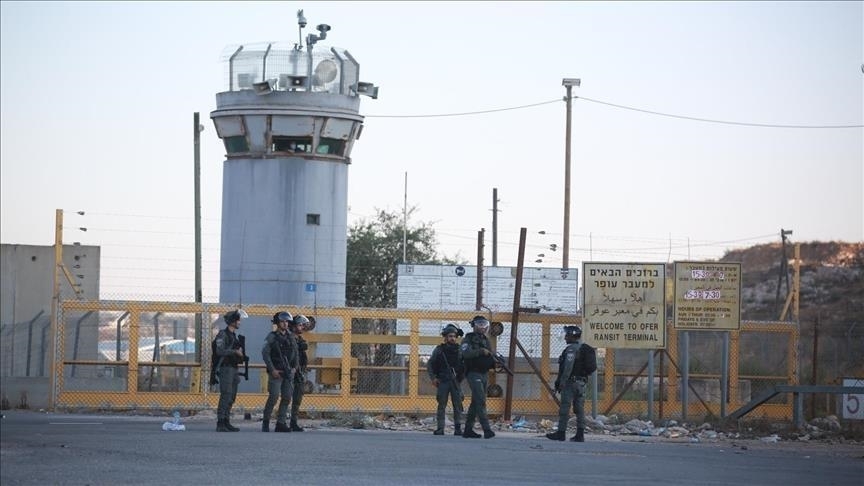







The Human Rights and Democracy Media Center (SHAMS) stated that the Israeli occupation army's closure of the occupied Palestinian territories constitutes a flagrant violation of international law. The center stated that the occupation army, in a dangerous escalation, declared the occupied West Bank a "closed military zone," preventing Palestinian citizens from accessing their lands or moving freely within their residential areas, thus closing the doors of daily life in the face of more than three million citizens. This decision, which came without prior announcement and under arbitrary military instructions, is the latest evidence that the occupation's policies have gone beyond the limits of (security) control to impose a reality of overt and systematic apartheid. The matter is no longer limited to military barriers, checkpoints, or concrete walls, but rather extends to depriving Palestinians of their basic rights to life and movement, turning their land into a forbidden zone, as if their very existence has become a military threat.
The Shams Center emphasized that the legal nature of the occupied Palestinian territory, including Jerusalem, is considered occupied territory under international law, and the provisions of the Fourth Geneva Convention of 1949 relative to the Protection of Civilian Persons in Time of War apply thereto. The Israeli occupation is also subject to obligations under customary international law and the Rome Statute of the International Criminal Court, and Israel, as an occupying power, bears direct legal responsibilities towards the civilian population in the territories it occupies.
Shams Center stated that the "military closure" decision violates international humanitarian law, particularly the Fourth Geneva Convention, particularly Article (5) of the Convention, which only allows restrictions on rights on an individual and temporary basis and in specific cases of threat, and does not justify the comprehensive and collective measures imposed by the Israeli occupation on all geographical areas. It also violates Article (27) of the Fourth Geneva Convention, which emphasizes the need to respect the rights and dignity of civilians at all times and guarantees them protection from displacement, exclusion and discriminatory treatment. Declaring populated areas as "military closed" is a direct violation of this protection, and also constitutes a violation of Article (33) of the Fourth Geneva Convention, which explicitly prohibits collective punishment. It also violates Article (49) of the Fourth Geneva Convention, which prohibits the forcible transfer and deportation of protected persons, regardless of their motive. This prohibition includes all measures that lead, directly or indirectly, to the displacement of residents from their places of residence, including preventing them from accessing their lands or their normal daily movement, which constitutes a war crime under international law. Declaring a civilian-populated area completely closed and denying them movement, without discrimination or judicial process, is a clear example of collective punishment.
The military closure decision also constitutes a violation of Article (13) of the Universal Declaration of Human Rights, which states that “Everyone has the right to freedom of movement and residence within the borders of each state. Everyone has the right to leave any country, including his own, and to return to his country.” Article (12) of the International Covenant on Civil and Political Rights of 1966 states that “Everyone lawfully within the territory of a State has, within that territory, the right to freedom of movement and freedom to choose his residence.” This right is fundamental and cannot be arbitrarily restricted. Imposing a military embargo on large residential areas and depriving citizens of movement within them is a disproportionate and legally unjustified restriction, and constitutes a violation of this internationally recognized right.
Pointing out that this decision comes within the context of a mentality of collective punishment, without the slightest regard for the international standards governing the relationship between the occupying power and the civilian population. International humanitarian law, particularly the Fourth Geneva Convention, obliges the occupying power to respect the rights of the civilian population and prohibits the imposition of restrictions on them except in cases of extreme necessity, and on a temporary and proportionate basis. However, what the occupying state is doing today is imposing a permanent reality of siege and embargo, without oversight or accountability.
The Shams Center stated that what is happening in the West Bank today is not a temporary measure within a "security" context, but rather a systematic policy aimed at emptying the land of its inhabitants, isolating them from one another, and destroying the social and economic fabric of the Palestinian people. Therefore, preventing Palestinians from moving within their land is the essence of the occupation and one of the most brutal forms of oppression. No international community that claims to respect human rights can turn a blind eye to these policies, which constitute a crime against humanity, not only because they violate the law, but also because they undermine the foundations of human life.
Shams Center explained that the occupation's policy is no longer hidden from anyone. It has become clear that this policy aims to entrench the reality of slow displacement, fragment Palestinian geography, and isolate villages, camps, and cities from each other within the framework of a long-term settlement plan. This has caused catastrophic psychological and social effects. The feeling of helplessness and loss of control over the simplest details of daily life deepens frustration and despair among Palestinians, and fuels anger and tension among young people who have come to view these measures as an assault on their dignity and humanity. Furthermore, imposing these measures during the summer months, which are a season for social events, summer farming, seasonal events, community activities, and family travel, has increased the severity of isolation and shrinkage within villages, cities, and camps.
This, coupled with the increased military presence around Palestinian cities, villages, and camps, has made access to work, educational institutions, and health centers a daily struggle. Palestinian lives are now at the mercy of military decisions, enforced through repression and collective punishment. This announcement has disrupted education in many areas, with thousands of university students unable to reach their universities. Meanwhile, medical procedures and patient transport have been suspended in many hospitals due to road closures and ambulances being hounded by occupation forces.
In its press release, the Shams Center called on the international community, primarily the United Nations, the International Committee of the Red Cross, the European Union, and all states party to the Geneva Conventions, to assume their legal and moral responsibilities towards the Palestinian people and take urgent action to put an end to the military closure measures imposed by the Israeli occupation authorities in the occupied West Bank. The Center stated that this silence on these grave violations, or limiting itself to verbal condemnation, amounts to indirect complicity and encourages the occupation authorities to proceed with their colonial policies. It also called for the activation of all international pressure and accountability mechanisms, including referring these violations to the International Criminal Court and sending UN investigation missions to investigate Israeli violations against the Palestinian people.




Share your opinion
Shams Center: The occupation's declaration of the West Bank as a closed military zone: a consecration of apartheid and a violation of international law.