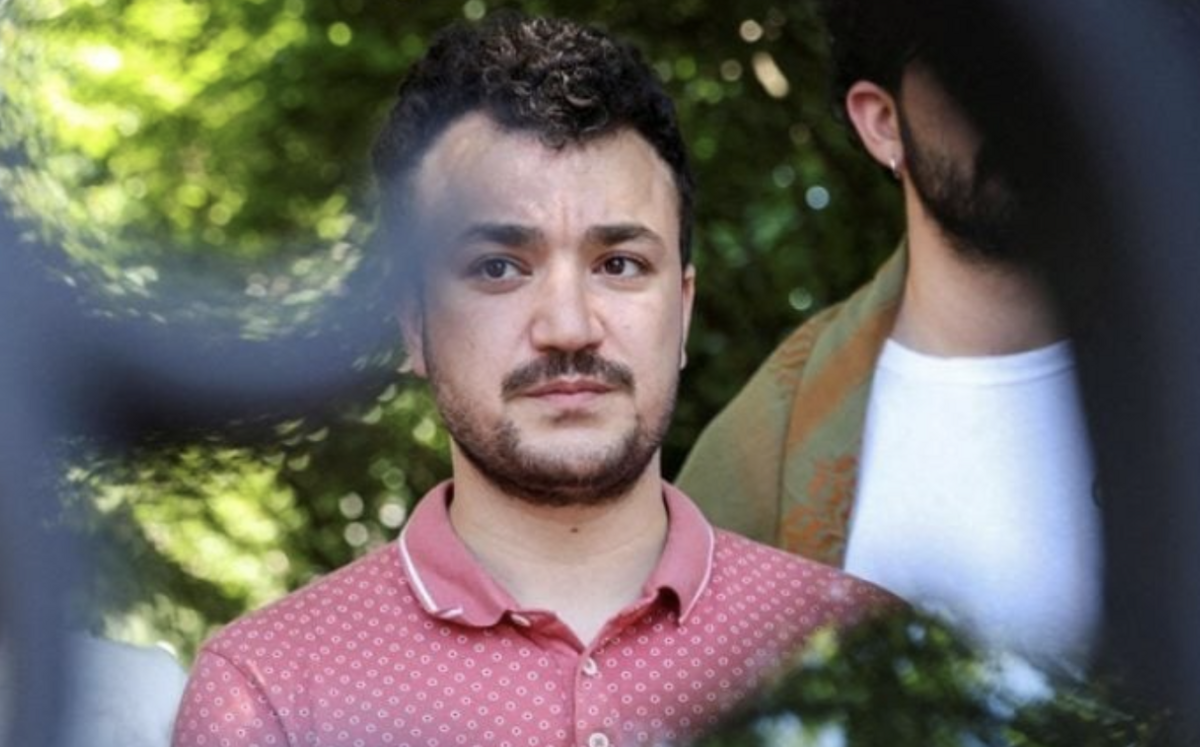







Federal Judge Michael Farbiarz, who is presiding over Mahmoud Khalil's case, ruled Wednesday that the Palestinian student and activist from Columbia University cannot be deported or detained, based on an order from US Secretary of State Marco Rubio.
The judge's preliminary injunction will not take effect until Friday, giving the government time to appeal. The judge has kept the preliminary injunction in place until 9:30 a.m. on Friday, June 13, 2025.
"This is the news we've been waiting for for more than three months," Khalil's wife, Dr. Nour Abdullah, said in a statement issued by the American Civil Liberties Union (ACLU), which is among the legal teams involved in the case.
Rubio cited an obscure provision of the Immigration and Nationality Act of 1952 to justify Khalil's removal from the United States, arguing that he posed a threat to national security. He argued that this provision allows the Secretary of State to "determine" whether Khalil should remain in the country.
U.S. District Judge Michael Farbiarz ruled that Khalil could not be deported or detained based on Rubio's order.
Khalil was a student at Columbia University and played an active role in protests against Israel's war on Gaza on the university's Manhattan campus last year.
He was arrested by federal agents on March 8 and has been in detention since then, as he and his lawyers challenged his deportation efforts. The Trump administration accused him of leading "activities aligned with Hamas, a designated terrorist organization."
A Department of Homeland Security spokesperson claimed that Khalil acted to "glorify and support terrorists," a claim that has been proven false.
Khalil, who has not been charged, described the allegations last week as "suspicious and false."
In his decision on Wednesday, the judge said, "His career and reputation are being harmed, and his ability to express himself is being stifled, compounding the irreparable damage."
The Department of Homeland Security also argued that Khalil could be detained because he inaccurately completed his application for permanent residency.
But Farbiarz wrote that this would not be an excuse to keep Khalil in detention.
"The evidence is that legal permanent residents are rarely detained pending deportation" because of these types of omissions, he wrote.
“This strongly suggests that the Secretary of State’s decision is the motivation for the petitioner’s continued detention—not the other charge against him,” Farbiarz wrote.
The American Civil Liberties Union described the preliminary injunction as a "major victory."
Khalil's lawyers called for his immediate release, saying they would not stop fighting until he returned home to his wife and child, who was born during his detention.
“This proves what Mahmoud has asserted from day one—that the government cannot detain or deport him based on Rubio’s statement,” said Ramzi Kassem, co-founder of the Center for Constitutional Rights.
The Department of Homeland Security and the Department of State have not yet commented on the judge's decision.
Khalil was among the first campus protesters targeted by the Trump administration, which pledged to respond to protests over the Gaza war, which Israel has waged since October 7, 2023.
Trump targeted Columbia and Harvard universities, claiming that their efforts to combat anti-Semitism on campuses were insufficient.
Last week, the Trump administration alleged that Columbia University violated the rights of Jewish students and threatened the Manhattan school's accreditation.

Share your opinion
A federal judge rules that Palestinian student Mahmoud Khalil cannot be detained.