







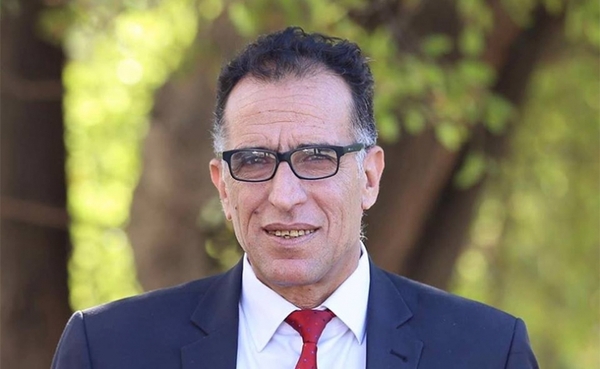
The statements of the head of the Democratic Party, General Yair Golan, reflected the reality and orientations of the entire Israeli political system, both the coalition and the opposition, and their positions and behavior in the war of extermination. In an interview with Kan Radio (Reshet B), Golan said, "Israel is on its way to becoming a pariah state among the nations, as South Africa was during the time of apartheid, if it does not return to functioning as a rational state that does not wage war against civilians, does not kill children as a hobby, and does not set itself goals of expelling the population."
Since serving as Deputy Chief of Staff of the Israeli Defense Forces (IDF), Golan has made a habit of making veiled criticisms of the Israeli political leadership. I recall what he said in May 2016, in a Holocaust Remembrance Day speech, when he declared, "It is frightening to recognize in ourselves acts that took place in Germany 70, 80, or 90 years ago, and that there is evidence of such things happening in Israel in 2016." At the time, the right attacked him and the center-left celebrated him, and his political star rose. However, he immediately backed down, explaining that he "did not intend the comparison" and that "the Israeli army is a moral army that maintains the purity of its weapons."
Reactions to his recent statements have ranged from rejection to acceptance to criticism, both from within Israel, including within the Zionist left and center-left, and from movements that describe themselves as radical leftists opposed to the occupation's policies and crimes.
Among the critics, journalist friend Amira Hass wrote a post on her Facebook account directed at Golan and the left in general, saying: “On days when those who refuse military service or those who come out against the occupation or the war are celebrated, it is easy to raise slogans like ‘Where were you?’ as if to say: What did you suddenly remember?”
It's easy to blame any reservist who refuses to report now, but they were organizers in previous wars, enforced curfews on the camps, and contributed to the occupation. It's easy to ridicule those who, until recently, were committed Zionists and today participate in commemorating the Nakba.
The radical left must acknowledge a fundamental truth: no one arrives at the "right" position at the perfect time. Even the children of old communist or leftist families, the "lucky few," are not necessarily politically or morally pure. Absolute purity is an illusion.
What we are asking for, in fact, is not an apology, but continuity. That those who have begun to see the occupation for what it truly is not retreat, and that they not abandon their new position, however belated.
She concluded by saying, "We are living through a cruel paradox. We participated in the Balfour protests against the judicial coup, hoping that this movement would open a deeper awareness of the connection between internal oppression (against Jews) and the ongoing oppression against the Palestinians. We rejoiced at everyone who went from holding a "democracy for all" sign to accompanying shepherds in the Jordan Valley. But we were shocked by how quickly they returned to supporting the war."
This is our disappointment, but it is also our hope: that something will shake inside these people, that their anxiety and the shock of reality will lead them to a deeper and more radical rejection.
Our role now is to stop the war. Stop it by all means. Support all those who choose to refuse, publicly or silently. Expand political spaces for doubt, anger, and reflection. Protests that hold up images of murdered children are not a ritual performance. They are a shock aimed at the heart of a society living in denial.
Orly Noy, a left-wing journalist, editor of the Sicha Mekomit website, and chair of the board of directors of B'Tselem, said that the dynamics within the left-wing camp were predictable and familiar: overwhelming admiration, followed by a sarcastic "Have you remembered now?" complaint, followed by a rebuke to the same critics that change, even if it comes late, is worth welcoming.
This is a debate in which everyone seems to be "right," but it is not the real debate that statements of this kind should provoke.
She adds, "For a former deputy chief of staff and leader of the Zionist center-left to say that Israel kills children as a hobby—even if it isn't the most appropriate word to describe the ongoing systematic genocide—is not a trivial matter. But on the other hand, the sense of outrage at all the Palestinian blood that was and is being shed before these words were spoken, as well as those who say that dismissing the value of this transformation is an apolitical position, because politics, at its core, is opening the doors to change."
The fundamental question is: Is the change that has occurred in Golan, and in his peers among generals and central figures in the Zionist camp and the center-left, tactical or substantive?
Yair Golan clearly has influence in the Israeli military and among Ashkenazi Jews. But the question is: Does his transformation represent a profound political shift, one that demonstrates that the occupation itself is the root of all evils, practicing genocide, and that the fascist Israeli regime, based on apartheid, ethnic cleansing, and racial supremacy, and that the attempt to impose Jewish sovereignty over the lands of the West Bank and Gaza Strip, home to millions of Palestinians, is the original crime?
Share your opinion
Yair Golan: No fundamental change in his positions