






Dr. Ahmed Rafiq Awad: The new official tone toward Israel reflects a marked shift in the political and popular mood within Europe.
Major General Wasef Erekat: Palestinians are looking beyond humanitarian aid to recognition of their political rights.
Dr. Abdul Majeed Suwailem: The biggest challenge is to exploit this shift to advance international justice and impose real pressure on Israel to halt its genocide.
Muhammad Hawash: The shift in the American position has encouraged European countries to adopt more assertive stances toward Israel.
Issam Abu Bakr: European calls may be merely a "political ploy" to respond to the growing US role in mediating between Russia and Ukraine.
Dr. Mohamed El-Tamawy: It's merely a political showdown, as long as it's not accompanied by practical steps, such as suspending military cooperation or supporting international legal proceedings against Israel.
European attitudes toward Israeli policies are undergoing a significant shift, reflecting a shift in the political and popular mood within the continent, driven by growing discontent with Israeli violations in the Gaza Strip.
Recent official statements from the United Kingdom, France, and Canada, which threatened to take "concrete measures," including sanctions, against Israel if it continued its military offensive and withheld humanitarian aid during its war on the Gaza Strip, reveal a shift in tone described as "different."
In separate interviews with Al-Quds, writers, analysts, and experts assert that this shift, which reflects popular pressure on their governments, opens the door to translating these statements into practical steps, such as suspending trade partnerships or imposing economic and cultural boycotts, amid mounting condemnation of Israel's "genocide" in the Gaza Strip.
They believe this shift is due to multiple factors, most notably the growing popular movement in Europe, where opinion polls and the positions of intellectual elites and parliaments show growing rejection of Israel's "shocking" and "reckless" policies that violate international and humanitarian laws.
However, some have expressed reservations about the effectiveness of these positions, with some statements viewed as potentially "political ploys" aimed at countering growing US influence on international issues such as the war in Ukraine, rather than expressing a genuine commitment to ending the war in Gaza.
The new European dialect sounds "honest and different."
Writer and political analyst Dr. Ahmed Rafiq Awad says that the new official European tone toward Israel reflects a marked shift in the political and popular mood within the European continent. He notes that this tone appears "sincere and different" and may translate into concrete plans or measures against Israel.
Awad asserts that this shift reflects a genuine shift in the European public, supported by opinion polls and the positions of intellectual, artistic, and journalistic elites, as well as parliaments, in addition to statements by heads of government, the European Union itself, and countries such as Ireland and Spain, which have demonstrated more progressive positions on the Palestinian cause.
Awad explains that this change, whether rapid or slow, reflects growing discontent with Israel's "shocking" and "reckless" policies, which he believes violate international and humanitarian law and even conflict with the interests Europe seeks for Israel.
Awad points out that Israel has become an "isolated" state practicing "genocide," prompting Europe to take a more assertive stance that reflects these changes and condemns Israeli practices.
The European position is ahead of the American position.
Awad believes this European position clearly advances over the US position, which has traditionally supported Israel, especially in light of the disagreements between the European Union and the United States over issues such as taxes and the war in Ukraine.
Awad asserts that Europe seeks to protect its interests in the Arab world, realizing that any unrest in the Arab region would negatively impact its security and stability.
Awad cites the experience of the Arab Spring since 2011, which led to waves of migration, terrorism, and violence in Europe, noting that the stability of the Arab region represents a guarantee for the stability of the European continent.
Awad believes that the new European position reflects the mood of the European public, condemning Israeli policies while seeking to preserve European interests by supporting regional stability and establishing a Palestinian state as a key factor in achieving this.
Regarding Europe's ability to besiege or punish Israel, Awad points out that Israel sees itself as part of the European cultural and political space, as a "European creation," which gives Europe multiple levers of pressure.
The European Union's decision to boycott settlement products
Awad explains that the European Union treats Israel as a preferred partner in trade and arms, and has close cultural, security, and political ties with it.
Awad recalls the European Union's symbolic decision to label settlement products to prevent their sale in European markets, arguing that this move, despite its symbolic nature, demonstrates Europe's ability to take more comprehensive measures, such as commercial, security, and cultural boycotts.
Awad believes that current Israeli policies, led by its hardline government, put it on a collision course with the entire world, including Europe, the United States, international organizations, and the Arab region.
Awad believes that these policies are pushing the world to impose sanctions on Israel to bring it back to its senses.
Although he does not expect these measures to be swift, Awad asserts that the European position is moving toward delegitimizing the Israeli occupation, in an effort to achieve regional stability and protect European interests.
Important implications and indicators for the positions of Britain, France, and Canada
For his part, retired military and security expert Major General Wassef Erekat asserts that the threat by the leaders of the United Kingdom, France, and Canada to take "concrete measures," including specific sanctions, against Israel if it does not halt its renewed military offensive on the Gaza Strip and continues to block the entry of humanitarian aid, carries significant implications.
Erekat points out that this position, despite its primarily humanitarian nature, opens the way for Palestinians, Arabs, and advocates of international justice and human rights to benefit from and develop it in the context of confronting the comprehensive war waged by Israel against the Palestinian people.
Erekat explains that these statements constitute confirmation of Israel's crimes and contribute to exposing the claims it makes to justify its "war of genocide and systematic destruction" in Palestine in general and the Gaza Strip in particular.
Erekat believes that this stance by some European countries supports demands to prosecute Israeli leaders as war criminals and strengthens the position of the International Court of Justice and the International Criminal Court.
"Red" demonstration in The Hague
Erekat points out that these statements come as an indirect response to the statements of extremist Israeli Knesset member Tzipi Scott, who said, "The world has grown accustomed to Israel killing 100 Gazans a day without concern," revealing Israel's disregard for international law.
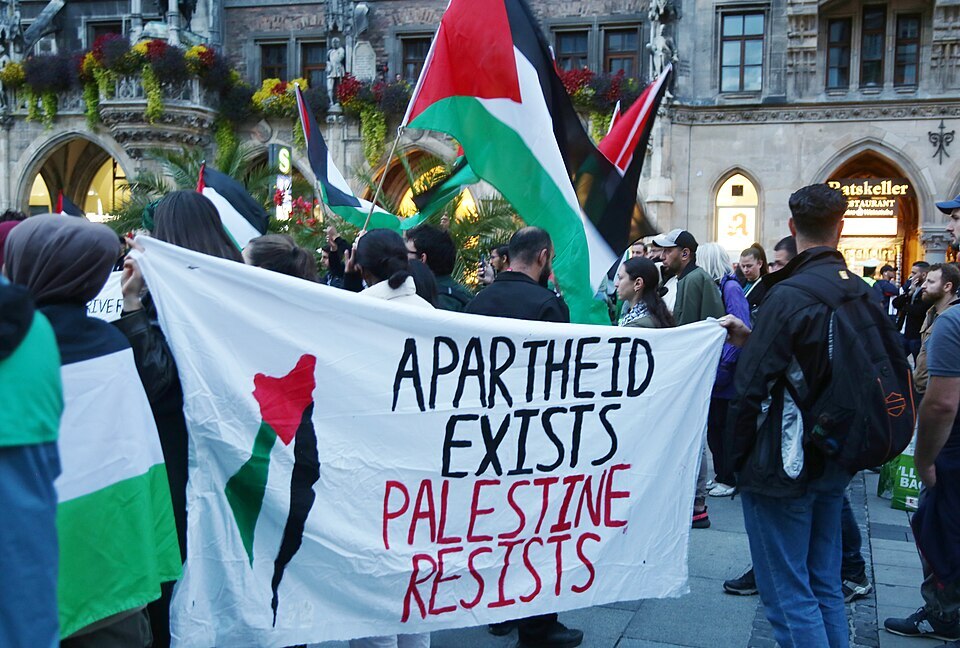
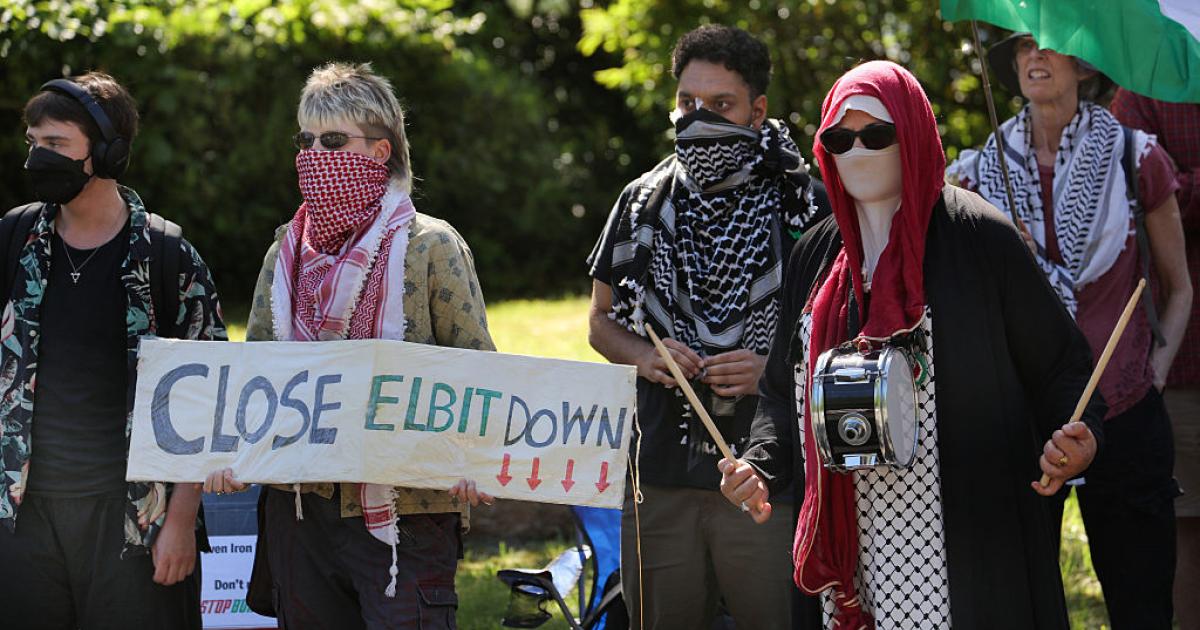
Erekat asserts that these statements by these countries came in response to popular pressure on their governments, citing the "Red Line" demonstration in The Hague, the Netherlands, the largest of its kind in two decades. Demonstrators demanded an end to the genocide and crimes of the occupation, and called for an end to political and military support for Israel.
Erekat points out that some newspapers described the demonstration as an "intifada against Israel," reflecting the growing international awareness that Israel fears, particularly in the "genocide versus anti-Semitism" battle, which aims to distort the facts.
Erekat points out that these statements reinforce influential international public opinion, which Israel cannot ignore and could negatively impact its relations with its allies, especially the United States.
Erekat explains that European leaders have announced that they will reconsider their partnership with Israel based on its commitment to international law.
The occupiers practice "killing children as a hobby."
Erekat points to the growing voices within Israel itself, with Democratic Party leader Yair Golan accusing his country of "killing children as a hobby," describing the war in Gaza as targeting civilians with the aim of displacing them, and asserting that Israel is heading toward Nazism, which is increasing its international isolation.
Erekat believes that this new international stance gives Palestinian and Arab communities and UN institutions greater scope to mobilize and mobilize to expose the occupation's crimes.
Erekat notes that EU foreign ministers are discussing the possibility of suspending the association agreement with Israel, a decision that could impact overall EU-Israel relations and encourage other countries to take tougher positions.
Commenting on Israeli Prime Minister Benjamin Netanyahu's statements, which he described as a "grand prize for Hamas," Erekat wondered whether they would mark the beginning of a new escalation.
Erekat stresses that the Palestinians are looking beyond humanitarian aid to recognition of their political rights.
Erekat believes that the shift in international positions represents a historic opportunity that must be exploited to pressure for these positions to be translated into practical measures on the ground, emphasizing that the battlefield is the decisive factor in resolving this battle.
Reservations on some implicit aspects of the declaration
For his part, writer and political analyst Dr. Abdul Majeed Sweilem asserts that the declaration by the leaders of the United Kingdom, France, and Canada calling for an end to the Israeli war on the Gaza Strip represents a positive step with significant implications, despite his personal reservations about some of the implicit aspects of the declaration.
Suwailem points out that the tone and spirit of the statements reflect a relatively advanced state compared to previous international positions during the period of Israel's genocide in Gaza, which continues unabated.
Suwailem explains that this stance represents a significant advance in international awareness, especially when compared to the silence or cover-up these countries previously provided regarding Israeli massacres.
Suwailem asserts that this announcement reflects a positive mood, as it represents increasing pressure on the occupation government, which continues its crimes.
However, Suwailem expressed his reservations and displeasure at the implicit link in the statements between Israel halting its attacks and the potential recognition of a Palestinian state.
Suwailem believes this link has a negative connotation, as it suggests that recognition of a Palestinian state is conditional upon Israel ceasing its attacks, even if this cessation is temporary or deceptive.
Recognizing the Palestinian state is a matter of principle.
"Recognizing a Palestinian state is a matter of principle that cannot be linked to Israeli practices, whether these massacres stop or continue," Suwailem says. "This link represents a completely unsuccessful media and political misstep."
Suwailem points out that this position, despite his reservations, remains positive overall and represents a step in the right direction, especially as it comes in the context of mounting popular pressure in these countries.
Suwailem explains that popular movements in Britain, France, and Canada played a major role in prompting the leaders of these countries to escalate their protests against Israeli practices.
Suwailem points out that this movement has begun to shift the Palestinian issue from a humanitarian framework to a political one, which could pave the way for more daring positions, such as recognition of the Palestinian state, albeit partial.
Suwailem asserts that the extent of these countries' "breaking" with Israel will remain limited, given their long history of supporting the occupation or covering up its crimes, both from a humanitarian and political perspective.
Suwailem explains that these countries, as part of the Western camp, did not take any real, decisive positions throughout the genocide, but rather contributed, in one way or another, to covering up these crimes.
However, Suwailem points out that the tragic situation in the Gaza Strip, the horrific images broadcast by the media, and the escalating popular protests in these countries have begun to push their leaders to change their tone, albeit gradually and slowly.
An opportunity that must be seized to increase international pressure.
Suwailem believes that the extent of this confrontation depends on two main factors: the continuing tragic situation in Gaza and the impact of media images conveying the horror of Israeli crimes; and the escalating popular movement and protests in these countries, which in turn shape the political positions of their leaders.
Suwailem believes that these countries, despite their declarations, are seeking a way out that would spare them the need to radically escalate their positions against Israel, given their affiliation with the Western camp, which has historically supported the occupation.
Suwailem stresses the importance of monitoring these international positions to determine whether they will rise to the level of real pressure on Israel's "fascist" coalition government.
Suwailem points out that these statements, despite their limitations, represent an opportunity that must be exploited to increase international pressure, particularly through popular and civil mobilization, which could push for more decisive positions.
Suwailem emphasizes that this gradual shift in international positions does not diminish its significance as a positive step. However, Suwailem calls for not limiting ourselves to theoretical discussions, but rather working to translate these positions into practical measures.
Suwailem believes the greatest challenge lies in how to exploit this shift in international positions to advance international justice and impose real pressure on Israel to halt its genocide and achieve Palestinian political rights.
A qualitative shift in European attitudes towards the conflict
For his part, writer and political analyst Mohammed Hawash says that the joint statement issued by the leaders of Britain, France, and Canada, calling on Israel to halt its war on the Gaza Strip and lift restrictions on humanitarian aid, represents a qualitative shift in European positions on the Palestinian-Israeli conflict.
Hawash points out that this statement, which threatened to take concrete action against Israel, reflects a clearer and more assertive tone compared to previous positions characterized by absolute support for Israel or silence regarding its violations.
Hawash explains that this shift comes amid growing popular pressure in Western countries. Public opinion in Britain, France, and Canada is increasingly rejecting what it describes as Israel's war of extermination in Gaza, in which food is used as a weapon to pressure civilians, a move that contradicts the principles these countries claim to uphold in their human rights declarations.
Hawash asserts that the massacres shown on television have become a stain on the brow of countries that claim to be committed to human rights, prompting widespread public protests against the ongoing war and the policies of European and American governments that previously supported it.
A state of division within Israeli society
Hawash points to statements by the leader of the Democratic Party in Israel, Yair Golan, in which he asserted that the war in Gaza no longer had clear military objectives since June 2024, noting that its continuation only serves the political survival of Israeli Prime Minister Benjamin Netanyahu's government.
Hawash asserts that this view reflects the state of division within Israeli society itself, as internal voices have begun to express their rejection of the continuation of the conflict without clear strategic objectives.
Hawash points to a strategic gap between the position of the United States, led by President Donald Trump, and that of Netanyahu, explaining that the new US administration believes its interests could be harmed if it continues to unconditionally support Netanyahu's government.
Hawash explains that Trump expressed his displeasure with the continuation of the war, considering it to be inconsistent with broader American interests in the region, particularly the relationships he has built with Arab countries.
Hawash asserts that this shift in the US position has encouraged European countries to adopt more assertive stances toward Israel, after their previous calls for a ceasefire and the entry of aid were met with disregard due to the US's unwavering support for Israel.
Threatening to impose economic and trade sanctions on Israel
Hawash believes that European pressure, which includes threats of economic and trade sanctions against Israel, is not a political dispute, but rather reflects the interests of Western countries in the Arab region. These interests go beyond ensuring Israel's security, but rather reflect their own interests.
Hawash explains that the Israeli economy is already suffering from the repercussions of the war, and that any economic sanctions, such as suspending trade agreements with the European Union, could cause significant damage.
Hawash believes that these pressures may push the Israeli government to respond to international demands to halt the war and end the targeting of civilians.
Hawash points out that France's previous call for recognition of a Palestinian state formed the basis for this shift, which aims to change the course toward a political solution that addresses the roots of the conflict.
Hawash asserts that continued absolute Western support for Israel at the expense of Palestinian rights leads to profound problems that threaten the stability of the region and the interests of Western countries.
Hawash points out that these countries, with their political and economic power, are capable of influencing the American and Israeli positions, enhancing the chances of reaching a political solution that ends the war and guarantees the rights of civilians in Gaza.
Calls with limited political impact
For his part, Egyptian writer and analyst of Israeli and international affairs, Essam Abu Bakr, cautiously welcomes any call or statement aimed at halting the war of extermination waged by the occupying state of Israel against the Gaza Strip, describing it as "a war without parallel in history."
However, Abu Bakr stresses that these calls, despite their humanitarian importance, remain limited in their political impact due to the lack of implementation mechanisms and the weakness of international pressure on Israel to compel it to comply.
Abu Bakr points out that Israel's continued destructive war on Gaza is due to "international inaction," primarily "Arab inaction," which has left the international arena devoid of any significant Arab influence.
This vacuum, according to Abu Bakr, allowed other countries to step in to fill it, while unlimited American support for Israel—politically, militarily, and financially—reinforced Israel's sense that it was a "state above the law."
Abu Bakr explains that Israel does not recognize international law and pays no attention to the international community's calls, citing Israeli Prime Minister Benjamin Netanyahu's response to the recent statement, which he described as a "grand prize" being awarded to Hamas, indicating Israel's clear rejection of these calls.
The timing of the statement raises questions about the reasons for its delay.
Abu Bakr asserts that recent calls for a ceasefire, issued by some European countries, may be merely a "political ploy" aimed at responding to the growing US role in mediating between Russia and Ukraine.
Abu Bakr points out that the timing of this statement—more than a year and a half after the massacres, war of extermination, and starvation in Gaza—raises questions about the reasons for its delay.
"Where have these countries been all this time?" Abu Bakr asks, noting that the statement coincided with Russian President Vladimir Putin's announcement of a lengthy phone call with US President Donald Trump about ending the war in Ukraine, a call Putin described as "good."
Abu Bakr points to statements by US Vice President James David Vance, who confirmed that talks between Russia and Ukraine are going well.
An attempt to regain some political influence
Abu Bakr believes that these calls may reflect European countries' sense of marginalization by the United States, which controls decisions to end the war in Ukraine without regard for the interests of the European Union.
Abu Bakr explains that these countries feel "betrayed" by their removal despite their participation in supporting Ukraine, prompting them to issue such statements as an attempt to regain some political influence.
However, Abu Bakr downplays the effectiveness of these calls, noting that the signatory states do not have the ability or desire to force Israel to stop the war or even allow humanitarian aid into Gaza.
Abu Bakr asserts that Israel, with its unlimited American support, treats these calls with contempt, considering them to have no binding power.
Abu Bakr believes that such calls, while welcome from a humanitarian perspective, remain far from being implemented on the ground due to the lack of sufficient international pressure and mechanisms to compel Israel to comply.
Sharp language that goes beyond traditional diplomatic frameworks
For his part, political economy and international relations researcher Dr. Mohamed El-Tamawy believes that the joint statement issued by Britain, France, and Canada, calling for an end to the war, the entry of humanitarian aid, and urgent action to avoid standing idly by, represents a significant shift in the tone of Western political discourse toward Israel.
Al-Tamawi explains that this statement, characterized by harsh language that goes beyond traditional diplomatic frameworks, reflects a growing sense of frustration among these countries regarding Israel's handling of the conflict, particularly in light of the worsening humanitarian crisis and the declining justification for military operations in the eyes of international public opinion.
Al-Tamawi asserts that these Western capitals have gradually begun to abandon their equivocal positions and general statements, preferring instead to use cautionary language that expresses a growing awareness of the political and moral cost of remaining silent regarding the bloody spectacle.
Al-Tamawi believes that this shift reflects the mounting internal and external pressures facing the governments of these countries, as the deteriorating humanitarian situation has become a burden on their credibility with their people and the international community.
However, Al-Tamawi asserts that this verbal escalation remains within the limits of calculated political confrontation, as these statements were not accompanied by practical steps such as suspending military cooperation or supporting international legal proceedings against Israel.
complex strategic calculations
Al-Tamawi explains that this reservation stems from complex strategic calculations, as these countries fear entering into a direct confrontation with the United States, Israel's main ally, or incurring the strategic costs that might result from severing ties or imposing sanctions.
Al-Tamawi points out that Britain, France, and Canada, despite hints of reassessing their positions, continue to adopt a "middle-ground" policy, maintaining a delicate balance to prevent a radical escalation that could jeopardize their interests.
Al-Tamawi asserts that this shift in Western rhetoric indicates a partial crack in the wall of absolute support for Israel, but it has not yet reached the stage of actual challenge or tangible political consequences.
Al-Tamawi believes that the primary goal of these statements remains to alleviate popular and human rights pressure on Western governments, while avoiding any radical rupture with Israel, reflecting a pragmatic approach that preserves long-term strategic interests.
Share your opinion
Europe Escalates Its Rhetoric Against Israel: Popular Pressure or Regional Interests?