





At the dawn of the war on October 7, 2023, Mohammed stood in front of the mirror, combing his hair while humming, "A migrant for the sake of God bids farewell to his family." He then applied perfume before bidding farewell to his wife and four children, leaving to participate in the Palestinian resistance's attack on the Gaza Strip settlements, never to return.
After more than a year and a half of this absence, his wife, Alaa, stands in front of the same mirror, with a piece of paper hanging on it, on which she has written, “How narrow life would be without the glimmer of hope.” She still does not know whether her husband is “on earth or in heaven,” as she says, and she is still suffering as a prisoner of that last moment when her husband’s shadow disappeared from before her eyes, and she is reeling between two pieces of news, both of which are bitter: “Is he a martyr or a prisoner?”
She told Al Jazeera Net, "I live in a state of detachment. Sometimes I think it would be easier for him to be a martyr than to suffer the torture of prison. But when I am exhausted by education and consumed by longing, I wish he were a prisoner serving his sentence and then returning to me."
The weight of an unknown fate
Confusion leaves her helpless in front of her children who never stop asking about their father. It is difficult for her to explain to them the meaning of “unknown fate.” She can only answer them with tears and requests for prayers for him. Alaa explains, “My daughter (8 years old) has not given up on her repeated attempts to call her father’s phone every night, which is turned off. She insists that she wants to hear his voice for just one minute.”
As the night drags on, haunted by obsessions and thoughts, her questions become overwhelming: “Even if he is a martyr, will he be a body or will he become bones? Will I be able to say goodbye to him? Will they hand over his body? Will I accept that this will not happen?” asks Alaa, who has been unable to get used to his absence or fill the empty space in his life and the lives of her children, which remain suspended, with no news on the horizon, whatever its content.
Confusion grips the hearts of hundreds of families, desperate to know the fate of their loved ones, whose disappearances occurred for a variety of reasons. However, there are significant incidents in which thousands of Palestinians were lost during the war, beginning with its first day, and including the loss of hundreds while crossing the Netzarim axis separating the northern and southern parts of the Gaza Strip, in addition to the ground invasions of the northern Gaza Strip and the Hamad Hospital in Khan Yunis and the Shifa Hospital in Gaza.
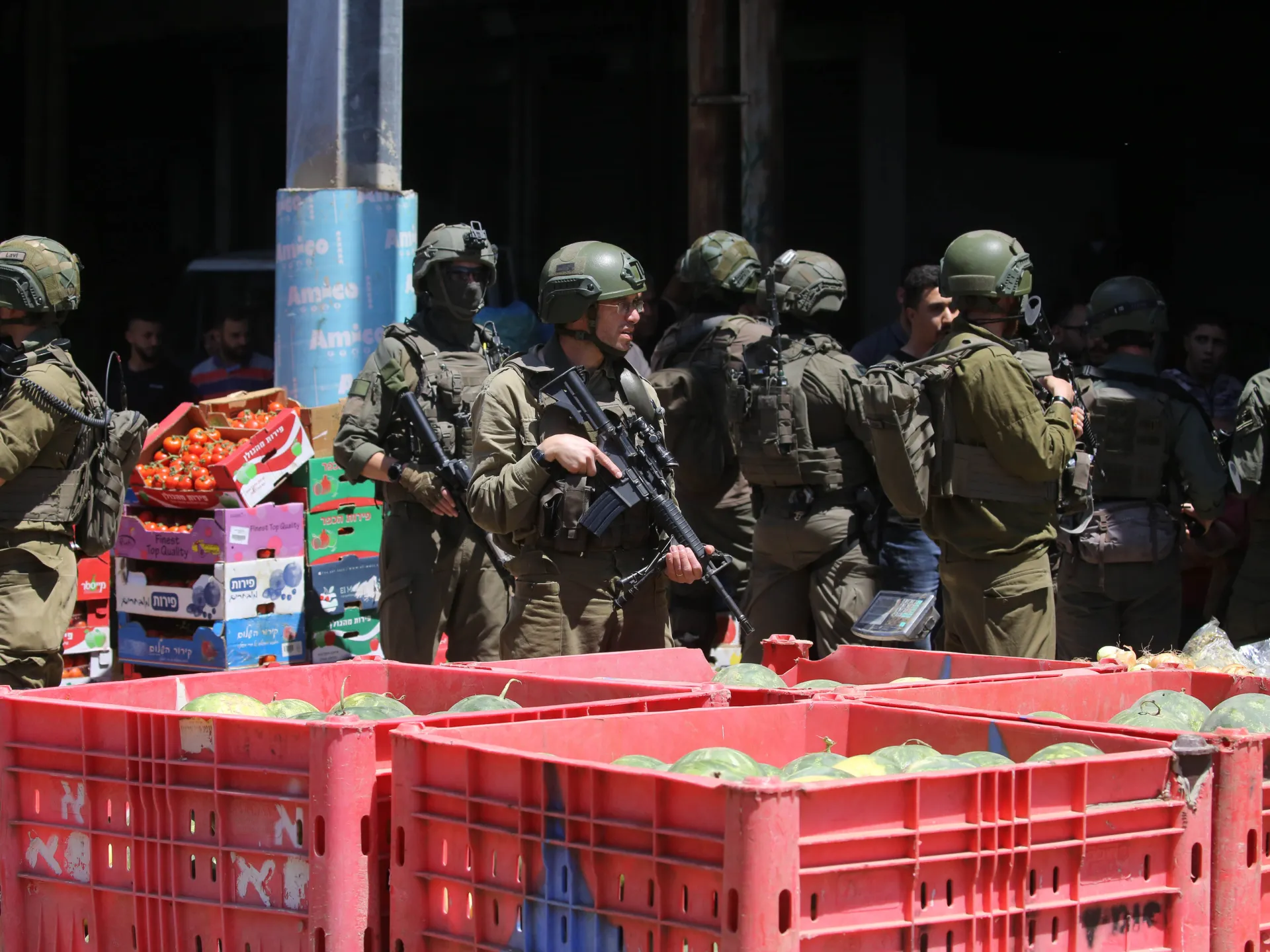
"Contact someone to evacuate us from the house now. Tanks are at the entrance to the house, and the building next to us is burning." This was the content of the last call from Dr. Ahmed Murtaja to his displaced daughter in the southern Gaza Strip, following the Israeli siege of the Al-Shifa Medical Complex compound following a surprise attack by the occupation forces in March 2024. After that, contact with him and her brother, who were together in their apartment next to the hospital, was lost.
Alaa made persistent attempts and contacts with the Red Cross to evacuate them, but to no avail. Their fate has remained unknown ever since. The families of the missing persons are in a state of confusion, especially with the conflicting news and inaccurate information they are receiving from various sources.
Alaa told Al Jazeera Net, "The occupation forces published a video clip of their soldiers storming our house with their dogs. But when my brother came to check on them after the withdrawal, he found the house destroyed, which raised our expectations that they were bodies under the rubble."
Bones without identity
While acquaintances and friends were offering their condolences to Alaa, a prisoner emerged from the Negev prison and announced that he had seen her father, further frustrating their confusion. The family began a search and search for the doctor and his son after receiving repeated reports from released prisoners that they had seen him.
However, the occupation authorities, through human rights organizations, refused to provide any information about their fate and continued to deny their presence in Israeli prisons. This means they were forcibly disappeared, a term given to individuals whose presence in prisons is clearly indicated by eyewitnesses who saw them at the time of their arrest, or by released prisoners who saw them inside prisons. However, the occupation authorities deny this and refuse to provide any information about them.
The rubble conceals another tragedy and a new, featureless face of loss. The rubble contains the remains of thousands of Palestinians, unable to be recovered due to the lack of heavy equipment to lift the concrete ceilings covering their bodies. This has forced Salim Abu Ighbit, three months ago, to dig with his bare hands to rescue 25 members of his family from beneath the layers of their home, which collapsed on top of them after being targeted during the recent invasion of Jabalia last October.
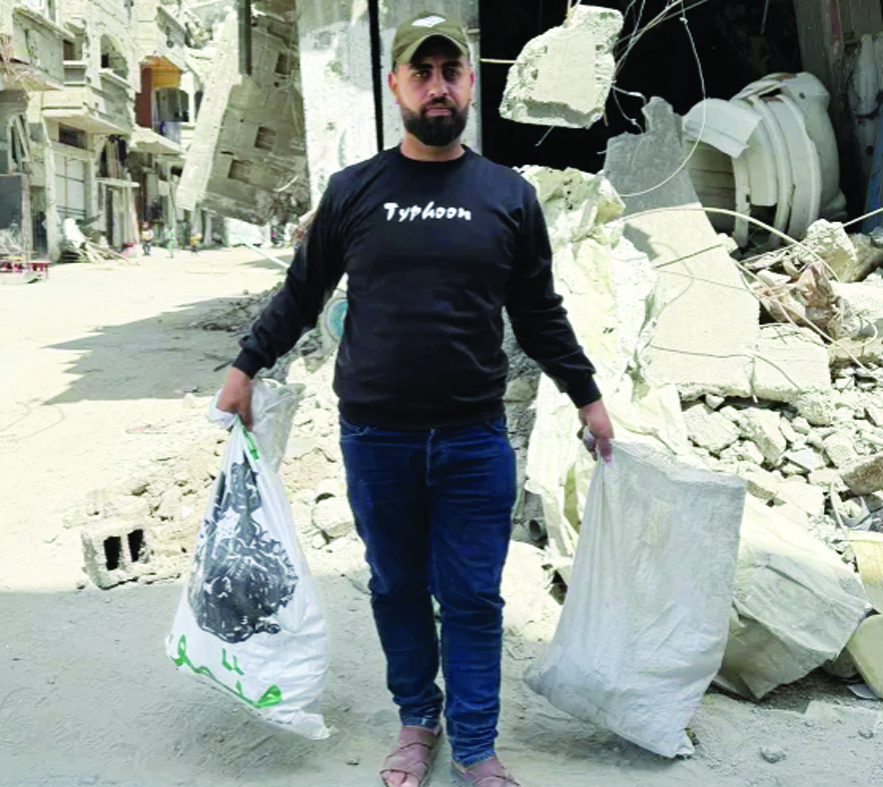
With patience unmatched by that of any human, Salim did not despair of searching for his family. He carried a straw bag in his hands, opening it as he spoke to Al Jazeera Net. “Here I collect the skulls, vertebrae, and bones I recovered from them. Then, when the bag is full, I dig and bury them together in one grave.”
While the eyes of the sole survivor, Salim, could not hide his shock at the state he was living in, when Al Jazeera Net asked him if he could list the bodies he had recovered over the past three months until today, he said, "I do not know how many were buried or who. I did not find a complete body or a skeleton attached together, nor was I able to distinguish one person from another, except for my niece, who had remnants of her black hair, and I recognized my brother from his wallet in the pocket of his worn trousers."
He fell silent, his eyes fixed on the rubble, before continuing, "What hurts me most is that my mother is lost under the rubble. She has no face for me to kiss, no hand to hold."
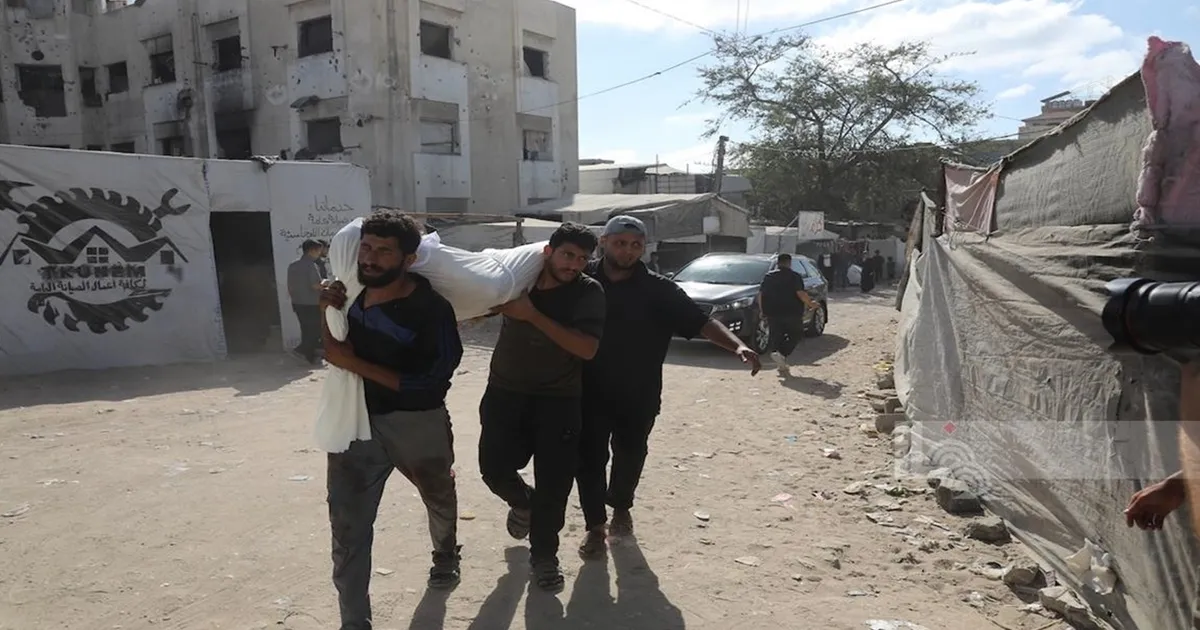
Saleem's story was not just an individual tragedy, but rather a poignant illustration of hundreds of tragic stories experienced by the people of Gaza, in which the loss transcends the mere meaning of bereavement and extends to despair of finding a trace. There is no farewell, no prayer, no funeral, but rather the ruins of homes that resemble vast cemeteries, which people flock to gather the remnants of memories and the fragments of bodies.
Israeli intransigence
While the government media office revealed to Al Jazeera Net that the number of missing persons during the war on Gaza is estimated at 11,000, including martyrs who never reached hospitals and whose fate remains unknown, a number of Palestinian statistics centers classify those missing under the rubble as outside the classification because their fate is known even if they have not been recovered. Their numbers, according to their statistics, range from 6,000 to 8,000 missing persons.
Ghazi al-Majdalawi, an official in the field research unit at the Palestinian Center for Missing and Exploited Persons, revealed that it is difficult to determine their number or arrive at a final statistic, "as the number will continue to rise with the ongoing military operations in the Gaza Strip."
Al-Majdalawi stressed that the occupation refuses to allow the DNA testing necessary to identify unidentified martyrs before burial, calling on the Ministry of Health to collect unidentified bodies in designated mass graves until DNA testing is available to identify their owners.
He pointed out that 315 bodies were handed over to the occupation in containers by the Red Cross on four separate occasions. They arrived decomposed, with no information about their identity or where they were abducted. This was part of what was declared a search for the bodies of Israeli prisoners, making it difficult to identify them without DNA testing.
He also called on the families of the missing to interact with the missing persons registration links, as they were able to learn the fate of a number of them through continuous searches, and their families were informed of the same.
The center criticizes the lack of serious action on the missing persons issue, calling on international institutions to lead an urgent humanitarian operation to uncover the fate of thousands of missing persons in Gaza, "a right guaranteed by international laws and conventions in conflict zones."
Source: Al Jazeera

PALESTINE
Tue 20 May 2025 9:44 am - Jerusalem Time
"Unknown Fate": The Suspended Stories of Thousands of Missing Persons in the Gaza Strip
Tags
MORE FROM PALESTINE
Share your opinion
"Unknown Fate": The Suspended Stories of Thousands of Missing Persons in the Gaza Strip