





Dr. Dalal Erekat: The Israeli escalation is not merely a negotiating pressure, but rather an attempt to break the will of the Palestinian people, empty Gaza, and implement an ethnic cleansing plan.
Muhammad Joda: Israel is using a "pressure with fire" policy to impose a deal that serves its interests and advance its broader strategic project of completely breaking Gaza.
Daoud Kuttab: The escalation reflects the Netanyahu government's desire for revenge through the utmost violence and destruction, after it felt the Trump administration had dealt it political blows.
Samah Khalifa: Netanyahu is trying to emphasize that any deals or settlements brokered by Trump will not influence his decisions, and he will not submit to any pressures that do not serve his interests.
Talal Okal: The Israeli government is seeking to impose the terms of a temporary deal that will not stop the war, but rather ease internal and external pressures on it.
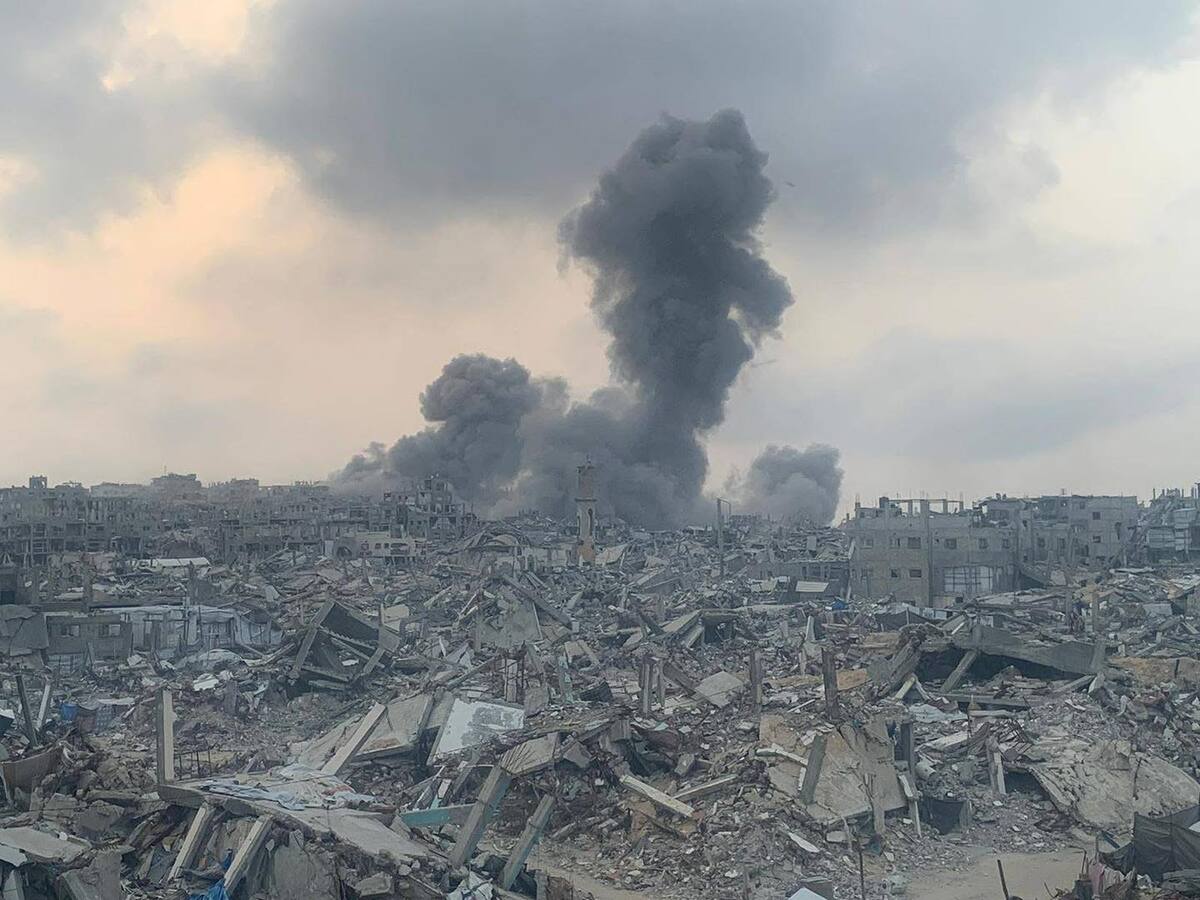
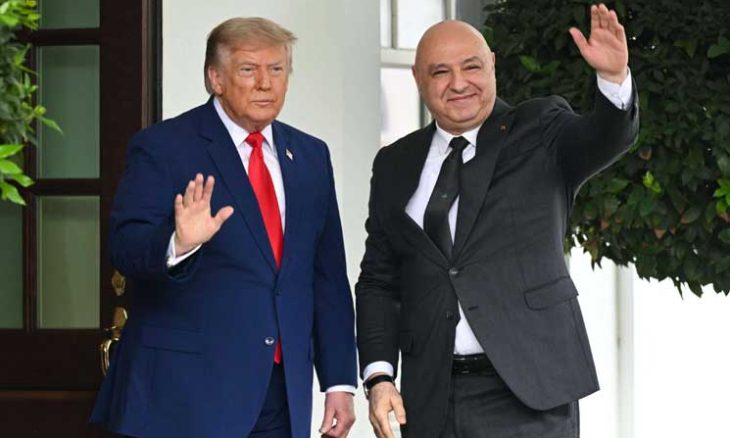
The Gaza Strip is experiencing an unprecedented Israeli escalation, raising questions about whether it is an extension of a systematic genocide project or a pressure tool to impose a negotiated settlement. This is especially true given that the escalation coincided with US President Donald Trump's visit to the region and amid what is said to be a tense relationship between Trump and Israeli Prime Minister Benjamin Netanyahu.
In separate interviews with Al-Quds, writers, political analysts, and university professors believe that the severe escalation, which includes comprehensive bombardment, targeting of civilian infrastructure, and massacres against civilians, indicates a deliberate intent to destroy the foundations of life in the Gaza Strip and break the will of the Palestinian people. This is not simply a matter of pressure during negotiations, even if it comes as a result of pressure during negotiations.
They point out that inhumane tools, such as forced displacement and starvation warfare, reinforce the hypothesis that the goal is to empty Gaza of its population through ethnic cleansing, amid international silence that exacerbates the tragedy.
At the same time, they assert that the escalation also comes as part of an Israeli strategy to exert pressure in negotiations that may relate to a prisoner exchange deal or post-war arrangements.
They point out that the intensive military operations in areas such as Rafah and Khan Yunis, along with tactics such as "burning" areas before advancing, are aimed at forcing the Palestinian resistance to make concessions.
They believe this approach, known as "pressure with fire," seeks to impose Israeli conditions that ease internal and external pressure on the government, while maintaining a policy of impunity that allows Israel to circumvent international law.
Writers, analysts, and university professors assert that the balance between these two goals reveals an internal Israeli crisis, with violence reflecting a political failure to achieve goals through traditional solutions.
They point out that whether the goal is to conclude a temporary deal or advance a long-term genocidal project, the result is a worsening humanitarian catastrophe. There is an urgent need for international intervention to halt this aggression, dismantle the destructive project, and hold those responsible accountable, to ensure the protection of Palestinian rights and end their ongoing suffering.
Continuation of a systematic genocide project
Dr. Dalal Erekat, professor of diplomacy and conflict resolution at the Arab American University, warns that what is happening in the Gaza Strip constitutes a continuation of a systematic genocide project led by the occupying state of Israel.
Erekat asserts that the unprecedented scale of violence, the organized terrorism, the use of advanced weapons, the targeting of civilian infrastructure, and the repeated massacres of civilians are all clear indications that this escalation is not merely a temporary military operation or a negotiating pressure to secure a deal. Rather, it is a deliberate attempt to break the will of the Palestinian people, empty Gaza of life, and implement a systematic plan for ethnic cleansing.
Erekat explains that the occupation uses inhumane pressure tools, including deliberate killing and forced displacement, to force Palestinians to leave or surrender.
Erekat points out that the forced displacement project is still ongoing, supported by military campaigns aimed at making life in Gaza impossible.
Erekat asserts that this escalation may coincide with behind-the-scenes negotiations, where political cards are being used at the bargaining table. However, she emphasizes that Palestinian lives are not bargaining chips, but rather victims of international silence and political complicity that allow this humanitarian tragedy to continue.
Two Israeli messages to the Palestinians and the international community
Erekat asserts that Israel seeks, through this escalation, to send two messages: the first, directed at the Palestinians, stating that "there are no red lines" in the face of their will, and the second, to the international community, expressing Israel's ability to impose new equations by force, without regard for international law or human conscience.
Erekat points out that Israel continues to enjoy impunity, as the international narrative has been shifted to focus on blaming Hamas, rather than confronting the threat of military occupation and its crimes.
In her analysis of the motives behind this escalation, Erekat believes that the brutal violence reveals a deep internal crisis plaguing Israel, reflecting a political failure and a strategic inability to achieve the occupation's goals through traditional means.
Erekat explains that Israeli Prime Minister Benjamin Netanyahu relies on continued military operations to bolster his domestic political standing, at the expense of Palestinian blood and suffering.
The need to act on multiple levels
Erekat calls for action at multiple levels to confront this escalation, stressing that condemnations alone are not enough.
Erekat calls for a restructuring of the Palestinian political landscape, increased international pressure to halt the occupation's crimes, and accountability for the system that enables this genocidal project to continue under flimsy pretexts.
Erekat asserts that the Palestinian humanitarian voice and political rights cannot be silenced by raids, noting that the steadfastness of the Palestinians, along with international legal developments related to holding Israel accountable, constitutes a force that cannot be underestimated.
Erekat stresses that Israel's impunity must end, and that what is required is not only a ceasefire, but also the dismantling of the genocidal project and the accountability of those responsible, to ensure the protection of the rights of the Palestinian people and end the historical injustice they are subjected to.
Part of a comprehensive Israeli strategy
For his part, writer and political analyst Mohammed Joda says that the Gaza Strip is witnessing an unconventional Israeli escalation, exceeding in intensity the bombing and level of destruction witnessed since the war began in October 2023, more than a year and a half later.
Joudeh believes that this escalation is not merely a military response, but rather part of a comprehensive Israeli strategy aimed at changing the demographic and geographic reality in Gaza, while sending multi-dimensional messages to internal and international parties.
Joudeh explains that there are two main possibilities behind this escalation: expanding the policy of genocide and displacement, or using it as a pressure tool to impose an Israeli vision in political-security negotiations.
Joudeh asserts that there are strong indications that Israel is continuing its long-term destructive project, which aims to demographically empty Gaza of its population and destroy all aspects of life there. The high death toll, the massive destruction, the intensity of the bombing, and the systematic targeting of infrastructure all confirm that Israel seeks to bring about lasting change in the Strip.
Joudeh explains that this escalation comes amid a lack of effective international coverage and a marked weakness in diplomatic activity, giving Israel the sense that there is an open window of opportunity to implement its agenda without accountability.
Joudah describes this approach as an attempt to impose a "complex genocide" that includes military, economic, psychological, and demographic aspects, with the potential to push the population toward a "forced migration" scenario.
At the same time, Joudeh believes that the escalation could be a pressure tool to impose harsh Israeli conditions in negotiations related to a prisoner exchange deal or post-war arrangements.
A military tactic to force Hamas to make concessions
Joudeh points out that the intensive Israeli military operations in Rafah, Khan Yunis, Jabalia, and Beit Lahia, along with the implementation of the "Gideon Vehicles" plan, are being used as a tactic to force Hamas to make concessions. Israel also seeks to confuse mediators, such as Egypt, Qatar, and the United States, to advance the negotiations in line with Israel's vision.
Joudeh asserts that Israel is using a "pressure with fire" policy to impose a deal that serves its interests, but at the same time, it is exploiting this escalation to advance its broader strategic project: to completely break Gaza and weaken it as a center of resistance.
Joudeh explains that Israel is seeking to send messages of return through this escalation, which targets multiple parties.
According to Joudeh, Israel wants to send a message to the Israeli interior, where Prime Minister Benjamin Netanyahu's government is trying to demonstrate that it still holds the initiative and is capable of achieving "victory" or at least humiliating Hamas.
Joudeh explains that Netanyahu is using the escalation to distract from his internal political crises, attempting to maintain his hold on power by continuing the war.
In another message sent by Israel to Hamas and the Palestinian factions, it states that it will not cease the war except on its terms, and that any political flexibility from Hamas will only be extracted under fire, not through equal negotiations, Judeh confirms.
Israel is in no hurry to stop the war.
Joudeh points to Israel's message to the international community and mediators, emphasizing that it is in no hurry to stop the war and will not submit to humanitarian or international pressure.
According to Joda, the escalation in Rafah and the south represents a message to Egypt and Qatar, urging them to pressure Hamas to accept Israel's conditions, or Israel will continue to implement its plans unilaterally.
As for the message to the regional environment, including Iran and Hezbollah, Judeh explains that Israel seeks to confirm its ability to manage several fronts simultaneously, and its readiness to confront threats from the north (Lebanon) or far away (Iran).
Joudeh asserts that Israel is acting within a strategic vision that transcends the current moment.
Joudeh stresses that what appears to be a military escalation is in reality a "complex messaging war" that includes internal, negotiating, and existential dimensions.
The ultimate goal, according to Joudeh, is to impose an irreversible fait accompli in Gaza and achieve a political victory that can be marketed internally, regardless of the enormous human cost.
Joudeh warns that this approach could lead to an unprecedented humanitarian catastrophe, in the absence of real international pressure to de-escalate the situation.
An Israeli approach reflects a strategic miscalculation.
Writer and political analyst Daoud Kuttab asserts that the extremist Israeli occupation government, through its unprecedented military escalation in the Gaza Strip, seeks to achieve complex political and military objectives that go beyond the war on the Gaza Strip and beyond its traditional goals.
Writers believe that this escalation, which is taking the form of a war of extermination against the Palestinian people, reflects the Israeli government's desire to exact revenge on the administration of US President Donald Trump by employing extreme violence and destruction in the Gaza Strip, after it perceived Trump as having dealt it political blows.
Writers point out that the Israeli government believes that intensifying its war on Gaza will lead to the elimination of the Palestinian resistance, a goal they describe as illusory.
Writers explain that this approach reflects a strategic miscalculation, as escalating violence will not achieve Israel's political or military goals, but may instead strengthen the resistance's resilience and exacerbate its international isolation.
Writers assert that the extremist Israeli government, rather than seeking diplomatic solutions, is opting for a scorched-earth policy, leading to unprecedented destruction and massive human suffering in Gaza.
The authors explain that this escalation comes amid tensions with the Trump administration, which is viewed as a traditional ally of Israel, but it demonstrates an Israeli attempt to impose its will and defy any potential American pressure for a settlement. They conclude by asserting that Israel is miscalculating, as continuing the war of extermination will not end the resistance but may open the door to further regional escalation and international condemnation.
Netanyahu rejects any settlement that would tarnish his image as a "victorious" leader.
Writer and political analyst Samah Khalifa explains that the unprecedented Israeli escalation in the Gaza Strip, which has surpassed in intensity and devastation what the Strip has witnessed since the beginning of the war 19 months ago, is an attempt by Israeli Prime Minister Benjamin Netanyahu to affirm his rejection of defeat, both externally and internally. This is achieved by his rejection of the "plea" deal that began in 2022 in exchange for his admission of "moral shame." He now rejects any settlement that would tarnish his image as a "victorious" leader, even if it amounts to a "dignified" exit from the judiciary besieging him and ending his political career.
Khalifa asserts that Netanyahu rejects any solution that might end his war in Gaza by admitting defeat, because he seeks to leave a historical legacy as a leader who achieved major victories, rather than being remembered as a defendant in an internal trial that would bring a humiliating end to his career.
Khalifa points out that Netanyahu's primary goal is to implement an "ethnic cleansing project" in Gaza, using a "scorched earth" policy that has transformed the Strip into a battlefield of total destruction. Israel currently occupies 35% of Gaza's territory and continues to expand the "buffer zone."
Khalifa asserts that Netanyahu's acceptance of any settlement, whether a prisoner exchange deal or a ceasefire, will not garner domestic support that would enable him to remain in power unless he obtains external guarantees that constitute a "safety net."
Khalifa doubts Netanyahu will win any upcoming elections unless he once again succeeds in deceiving Israelis with vague promises.
Israeli escalation in response to Trump's directions
Khalifa links the recent Israeli escalation in Gaza to the release of the American prisoner and US President Donald Trump's visit to the Gulf region, suggesting that Netanyahu is trying to send a message that any deals or settlements brokered by Trump will not influence his decisions, and that he will not submit to any external pressures that do not serve his personal interests.
Khalifa asserts that Trump is capable of directing Netanyahu according to his agenda, especially since the Palestinian cause and stopping the genocide in Gaza are not his priorities. On the contrary, Netanyahu's continued policy of total destruction and expanding the occupation serves Trump's interests in the region, who operates with a "two-faced" policy: the face of a "dove of peace" after the release of the American prisoner and the lifting of sanctions on Syria, and the face of a "crow of death" who supports killing and destruction in Gaza to achieve strategic interests.
Khalifa points out that Israel, under Netanyahu's leadership, is seeking to alter Gaza's demographics through forced displacement and systematic destruction, serving its regional expansionist agenda.
Khalifa recalls that the recent intensive bombardment and ground invasions aim to empty the Gaza Strip of its population, paving the way for a new reality that will be difficult to reverse in any future negotiations.
Khalifa points out that Netanyahu will not cease his war unless he achieves a "victory" that will immortalize him in Israeli history, even if the price is the complete annihilation of Gaza. Meanwhile, the international community, particularly the United States, has no real desire to stop this war as long as it serves its geopolitical interests at the expense of Palestinian blood.
A state of "Israeli madness"
Writer and political analyst Talal Okal asserts that the ongoing Israeli escalation in the Gaza Strip, characterized by violent and comprehensive bombardment of all areas, reflects a state of "Israeli madness" resulting from the resurgence of Palestinian resistance operations and their steadfastness in ceasefire negotiations.
Okal explains that this escalation, which includes increasing the death and injury rates, tightening the blockade, and continuing the war of starvation, aims to impose the occupation's terms in a temporary deal that does not halt the war, but rather seeks to alleviate internal and external pressures on the Israeli government, in light of the unprecedented humanitarian catastrophe the population of the Gaza Strip is suffering.
Awkal points out that the intense bombardment, accompanied by displacement and deliberate killings, is part of an expansion of the Israeli military operation, which is no longer just a threat but a reality on the ground.
Awkal asserts that the Israeli occupation army resorts to "burning" targeted areas before advancing in order to minimize its losses and avoid any surprises that the resistance fighters may prepare.
Israeli concern about the resistance's capabilities
Awkal believes this tactic reflects Israeli concern about the resistance's capabilities, which have demonstrated military and negotiating flexibility despite the ongoing war.
In the context of the negotiations, Okal hints that the time available to the Israeli negotiating delegation, with US support, is running out, especially with the escalating international discourse surrounding the humanitarian dimension of the crisis, particularly from the new US administration led by President Donald Trump.
Awkal asserts that this escalation is compounding the suffering of the people of Gaza, as the humanitarian situation is worsening due to the blockade and widespread destruction, necessitating urgent international intervention to halt the aggression and lift the siege.
Okal warns that the continuation of this Israeli approach could lead to a greater humanitarian catastrophe, calling for increased international pressure to compel Israel to halt its aggression and reach a permanent agreement that ends the war and guarantees the rights of the Palestinian people.

PALESTINE
Sun 18 May 2025 8:55 am - Jerusalem Time
Israeli escalation in Gaza: Completion of the displacement plan or negotiating pressure through fire?
Tags
MORE FROM PALESTINE
Share your opinion
Israeli escalation in Gaza: Completion of the displacement plan or negotiating pressure through fire?