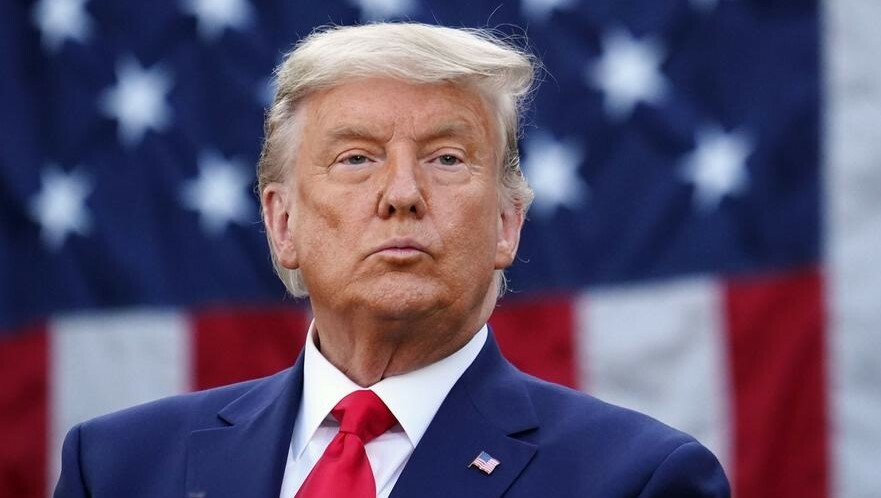







Fear and uncertainty are spreading across many U.S. college campuses ahead of President-elect Donald Trump’s inauguration on Jan. 20, 2025, as some schools have advised international students to return early from winter break amid promises of another travel ban like the one that stranded students abroad at the start of Trump’s first term in January 2017, when Trump imposed his first executive order warning citizens, including students from seven Arab and Muslim countries, of travel restrictions.
In a country where more than 1.1 million international students are enrolled in U.S. colleges and universities during the 2023-24 academic year, the former (and incoming) president has pledged tougher immigration policies upon his return to the White House, including expanding his previous travel ban on people from Muslim-majority countries and revoking student visas for “anti-American and anti-Semitic aliens” in a cover-up targeting students who protested last year, and continue to protest, Israel’s war of genocide in Gaza.
International students generally have nonimmigrant visas that allow them to study in the United States but do not provide a legal path to remain in the country.
From New York to California, students are reportedly not only scrambling to take final exams before the winter break (mid-month), but some are also preparing for potential disruption to their lives and the possibility of not being able to complete their studies, with some universities urging students to postpone or shorten travel plans outside the United States before Trump's inauguration.
The Office of Global Learning at Cornell University in New York advised students traveling abroad to return before the spring semester begins on Jan. 21, the day after Trump's inauguration, or "contact an advisor about your travel plans and prepare for delays," according to the university announcement.
The university warned students late last month that “the travel ban is likely to go into effect shortly after the inauguration.” “The ban is likely to include citizens of countries targeted by the first Trump administration: Kyrgyzstan, Nigeria, Myanmar, Sudan, Tanzania, Iran, Libya, North Korea, Syria, Venezuela, Yemen, Somalia, and the Palestinian territories. New countries could be added to this list, particularly China and India.”
At the University of Southern California, which had more than 17,000 international students last academic year, officials urged international students in an email to return to the United States a week before Trump returns to the White House, saying “one or more executive orders may be issued that impact travel … and visa processing.” USC has the largest international student population in California.
The university advised students: “While there is no certainty that such orders will be issued, the safest way to avoid any challenges is to be physically present in the United States before the start of the spring semester on January 13, 2025,” according to a report on the student-led media site.
Moreover, Trump’s promise of “mass deportation” resonates beyond critical industries like agriculture, entertainment, hospitality, construction, and health care: It could complicate things for some students regardless of their winter break travel plans. Meanwhile, the president-elect has promised to grant “automatic” green cards to foreign nationals who graduate from U.S. colleges, a proposal that—if Trump pursues it and Congress passes—could pave the way for millions of international students to become legal permanent residents.
But shortly after Trump made the pledge in June, a Trump campaign spokesman said the group would be limited to “the most talented graduates” and would be vetted “to weed out all communists, radical Islamists, Hamas supporters, America haters, and people who rely on or seek public assistance.” Trump has not mentioned the proposal publicly since June, and it’s unclear how his new administration will address the issue.
One day after last month's presidential election, UCLA's Center for Immigration Law and Policy reminded students that the university "will not disclose immigration status or related information in confidential student records... without a court order, subpoena, warrant, or as otherwise required by law."
“The university also has a strict policy that generally prohibits campus police from engaging in joint efforts with federal immigration enforcement or detaining individuals at the request of the federal government,” the center said.
In October 2023, after Israel launched a genocide in Gaza and protests erupted on college campuses across the United States, Trump said at a campaign event that he would revoke student visas and deport “radical, anti-American, anti-Semitic foreigners” enrolled at universities. He criticized pro-Palestinian protests and said he would send Immigration and Customs Enforcement officers to what he called “pro-jihadist demonstrations.”
Trump also vowed to reimpose and expand an earlier travel ban on people from Muslim-majority countries — which limited travelers from Iran, Libya, Iraq, Sudan, Somalia, Syria and Yemen. The administration later expanded the travel ban to include several African countries. President Joe Biden rescinded the travel ban after taking office in 2021.
Trump also pledged to implement "strong ideological screening of all immigrants" and said the United States would prevent "dangerous, hateful, bigoted, and deranged lunatics from ever gaining residency in our country."
Share your opinion
US Universities Urge International Students to Return Before Trump's Inauguration