






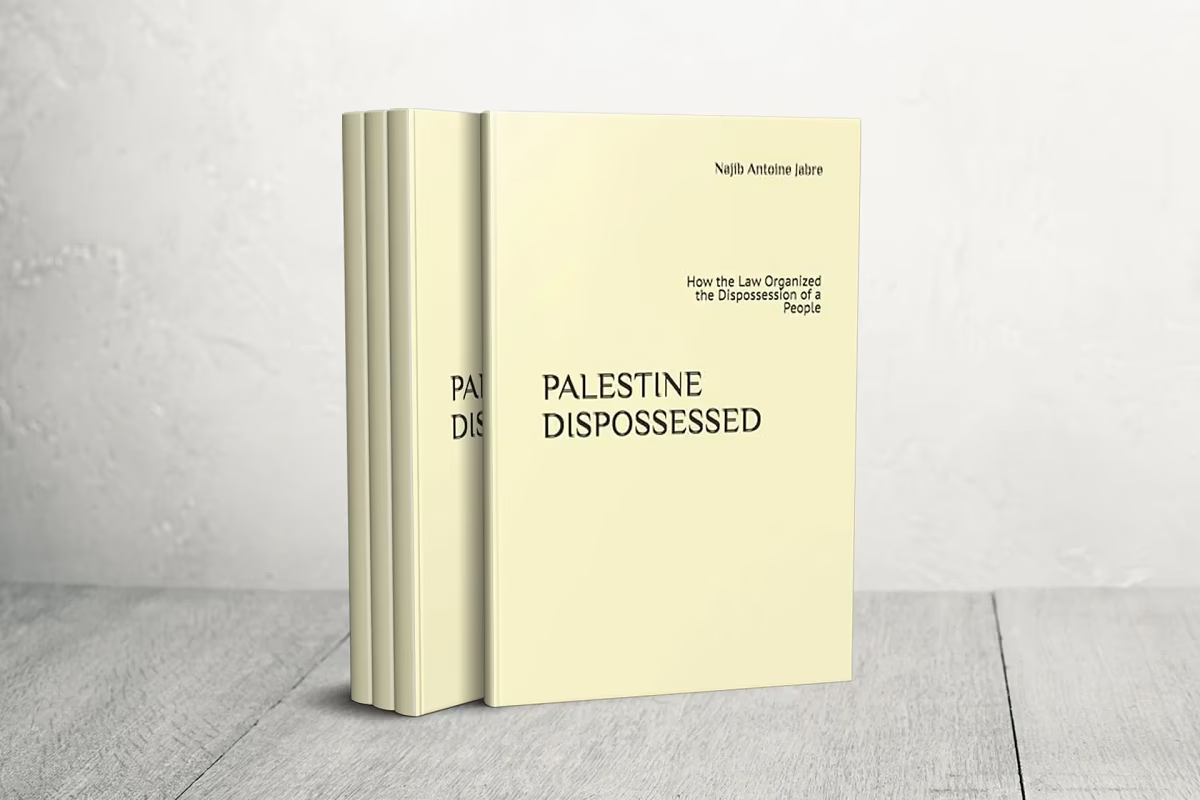
A recent legal study by Canadian jurist Najib Antoine Jabbour has revealed the hidden face of the Palestinian Nakba, which was not written with bullets but through court corridors and the seals of Israeli bureaucracy. The recently published book, titled 'Palestine Plundered,' explains how the occupation used a complex legal system to systematically strip the Palestinian people of their properties and financial assets.
The study confirms that the confiscation of land and financial entitlements was not merely a side effect of war, but a deliberate and continuous process enshrined through the 'Absentees' Property Law.' This law transformed the reality of forced displacement into a permanent legal status, allowing the transfer of ownership of real estate and bank accounts to the occupation authorities under misleading administrative designations.
The occupation relied on surreal classifications such as 'present absentee' to strip Palestinians who remained within the occupied territories of their rights to their properties. Under this classification, the management of these assets was transferred to the so-called 'Custodian of Absentees' Property,' an administrative step in appearance but in essence meaning the final confiscation of historical rights.
The plunder did not stop at land and structures but extended to include bank accounts, stock deposits, safety deposit boxes, and even contractual rights and debts. Sources indicate that freezing these financial assets aimed to cripple the ability of Palestinian families to rebuild their lives or appoint lawyers to claim their stolen rights.
The financial estimates in the book indicate that the total value of frozen properties and accounts today amounts to approximately $161 billion USD. This enormous figure reflects the scale of economic deprivation and the opportunity cost lost over eight decades of occupation and systematic prevention from accessing capital.
The author based his estimates on data from the United Nations Conciliation Commission for Palestine, which in the 1950s recorded millions of British pounds as movable and frozen assets. By calculating inflation rates and assumed annual returns of 10%, the true figure of losses incurred by the Palestinian economy as a result of these policies becomes apparent.
The study touched upon famous legal cases such as the 'Arab Bank' dispute against 'Barclays Bank,' which revealed how Palestinian depositors' balances were forcibly transferred to the occupation's treasury. These cases demonstrate that the banking system was a partner, willingly or unwillingly, in implementing the confiscation decisions issued by the 'Custodian of Absentees' Property.'
The book describes the 'procedural trap' in which the Palestinian refugee was placed, where they were asked to seek justice within the legal system that originally prevented their return. If entry into the country is prohibited and legal representation requires security approvals, then avenues for redress become practically and legally impossible.
The term 'abandoned properties' promoted by the Israeli narrative is a misleading term intended to conceal the reality of forced expulsion and prevention of return. A home is not abandoned if its owner possesses the key and is prevented from accessing it by force of arms or administrative decisions that prevent their movement.
The study asserts that international law considers displacement and loss of property without compensation as injustices requiring full restitution and compensation, and cannot be considered mere transient administrative procedures. It emphasizes that recognition of states does not grant moral immunity to legal structures built on the ruins of individual and collective property rights.
Subsequent Israeli real estate development and legislation bodies contributed to entrenching the plunder operations by transferring ownership to quasi-governmental channels to complicate recovery paths. These mechanisms made the recovery of any property in Jerusalem or the occupied cities a legal battle lost in advance, given the judiciary's complete bias towards the settlement system.
The book represents a transparent methodological study that goes beyond emotional narratives to provide conclusive legal evidence of the use of administrative authority as a tool of war. It calls on researchers and human rights advocates to examine banking records and old court files as incriminating documents that are beyond interpretation against the policy of illicit enrichment.
The conclusion of the work is that the Israeli legal system did not come to manage the consequences of the conflict, but was an integral part of the tools of displacement. Laws were designed to produce the same material outcome every time: stripping Palestinians of their financial means and preventing them from defending their land.
The issue of Palestinian property remains an unresolved matter as the largest organized plunder operation in modern history, where politics intertwined with law to serve the settlement project. Understanding the conflict today necessarily requires understanding how 'paper and pen' became weapons no less lethal than cannons in obscuring Palestinian rights.
Forced Palestinian displacement was not only the result of soldiers and battles, but also the result of legal definitions, banking restrictions, and bureaucratic obstacles that made plunder an institutionalized system.




شارك برأيك
By Law and Bureaucracy: How Israel Plundered $161 Billion of Palestinian Wealth?