






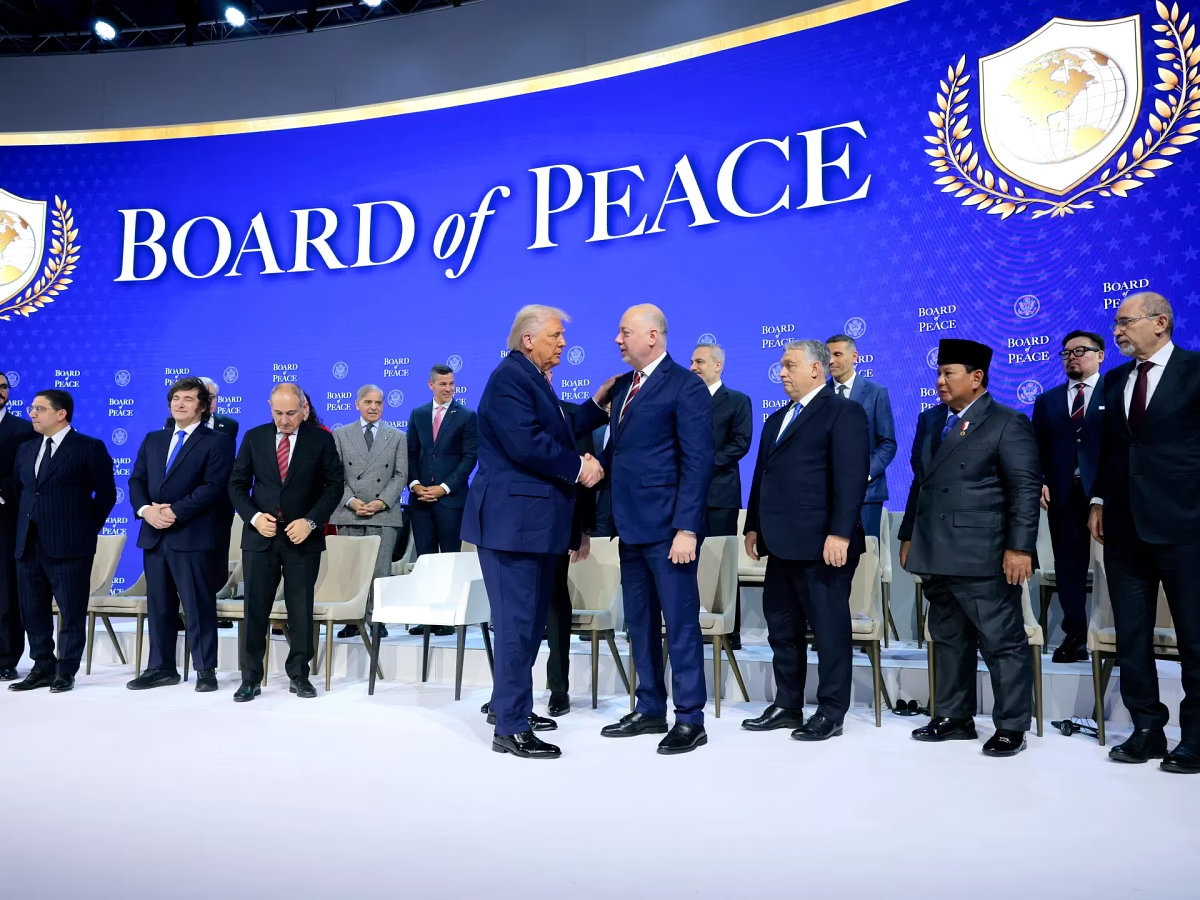
The plan promoted by the so-called 'Peace Council' of US President Donald Trump's administration has seen a dramatic decline in its objectives related to the Gaza Strip. After the proposed vision included comprehensive reconstruction of infrastructure throughout the Strip, ambitions have shrunk to settle on a limited experimental project focused on the southern region.
International press sources reported that the current project is limited to establishing a temporary camp on the outskirts of Rafah city, aimed at accommodating tens of thousands of displaced people only. This contraction comes amidst ongoing Israeli military operations that have made the implementation of major projects almost impossible at present.
Field data indicates that the project will not see the light before the end of this year, despite some initial logistical movements. Reports have monitored the arrival of a limited number of officers from Morocco and Kosovo to the occupied territories, to form the nucleus of an international stabilization force that is supposed to oversee the security of the targeted area.
In the context of preparations, a logistical supply base was established near the Kerem Shalom crossing to store the necessary vehicles and equipment for the work. However, satellite images confirm that excavation work within the proposed camp site is still very limited, and no actual construction operations for facilities or for the international force's headquarters have begun.
Western diplomats in Jerusalem link the project's faltering to the internal political scene in Israel, especially with the approaching elections on October 27. It is believed that any real progress may remain frozen until the fate of Benjamin Netanyahu's government becomes clear, which may face radical changes or complete replacement.
Since the announcement of the US-brokered ceasefire last October, intermittent Israeli raids on various areas in the Strip have not stopped. These attacks, along with severe restrictions on the entry of aid and construction materials, have created continuous obstacles to any attempt to begin actual reconstruction.
International parties fear that the collapse of this experimental project may open the door for extremist currents within the Israeli government to push for more aggressive plans. These plans include scenarios for widespread forced displacement and resettlement in areas of the Strip, which those in charge of Trump's plan are trying to avoid by keeping the project alive, even minimally.
On the ground, the Israeli army currently imposes direct control over about 60% of the Gaza Strip's area as a result of continuous incursions. The occupation authorities stipulate that Hamas must agree to full disarmament to defuse a comprehensive confrontation, which the movement rejects and considers unacceptable surrender.
In the Egyptian capital, Cairo, recent discussions took place on complex mechanisms for the possibilities of disarmament and identifying the international bodies that might receive the equipment. However, informed Palestinian sources confirmed that these discussions will not lead to tangible results as long as Israeli military expansion and systematic bombing operations continue.
In an attempt to salvage the situation, US negotiator Aryeh Lightstone sent messages to the Israeli government demanding a relaxation of restrictions on 'dual-use' materials. The demands included allowing the entry of water pipes and solar panels, in addition to facilitating the access of Palestinian police officers trained in Egypt to assume security tasks within the camp.
This reality represents a significant retreat from the promises made by former White House advisor Jared Kushner, who previously pledged to restart vital services within 100 days. The current plan, recently discussed in Cyprus, does not go beyond the idea of temporary housing units in a buffer zone, with an international force that could reach 5,000 personnel.
Finally, the project faces a suffocating funding crisis, as only meager amounts have been disbursed from the original $17 billion allocated for the original plan. The proposal to use withheld Palestinian tax money to fund the camp caused anger among the Palestinian Authority, which considered it piracy of the Palestinian people's rights and illegal use of their money.
The project's goal has become to keep something moving for fear of its complete collapse in the face of displacement and settlement plans.
شارك برأيك
From comprehensive reconstruction to a border camp.. How did the ambitions of Trump's plan in Gaza shrink?