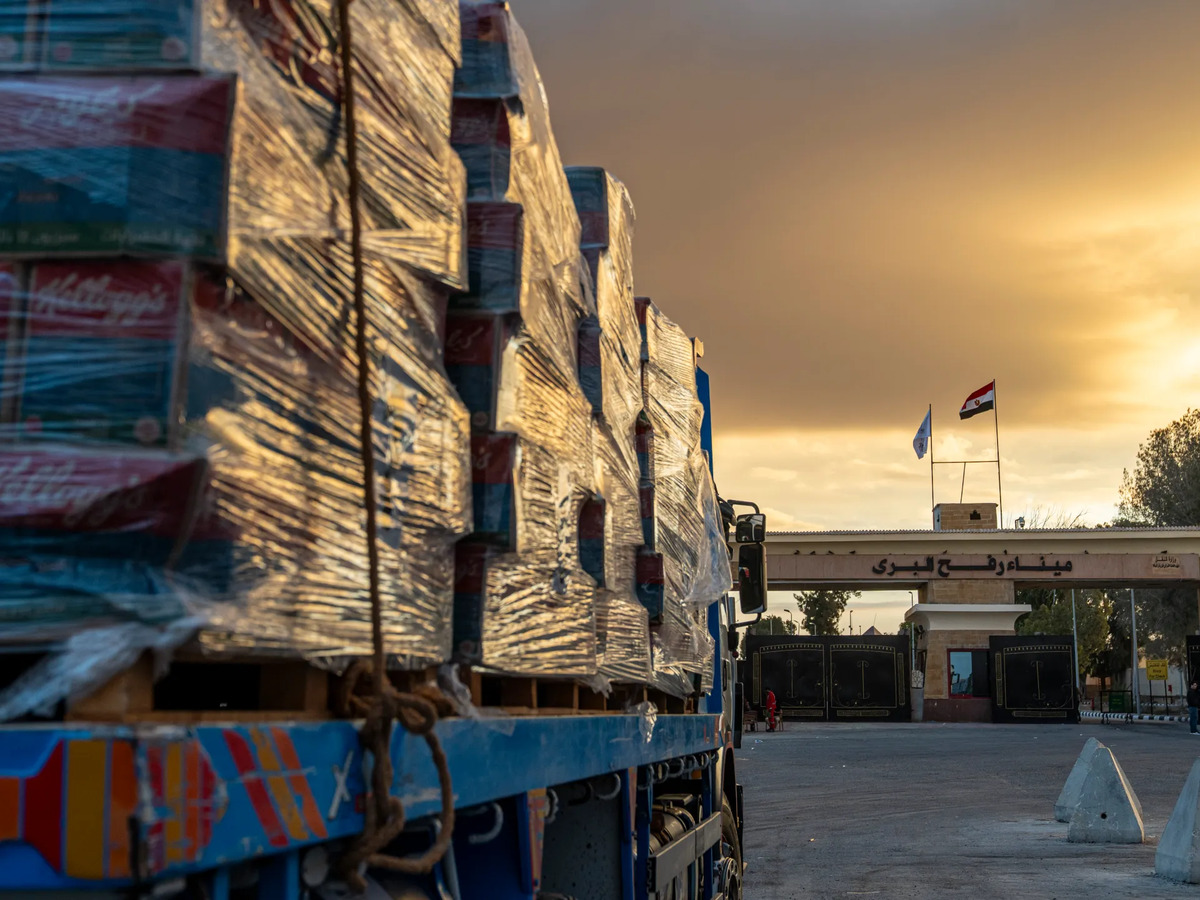







The United Nations Relief and Works Agency for Palestine Refugees in the Near East (UNRWA) confirmed that Israel is preventing the entry of vital supplies needed for shelter and heating in the Gaza Strip despite the increasing need for them. Local and international officials have also reported ongoing suffering in essential sectors and facilities due to the lack of necessary materials since the ceasefire.
UNRWA stated today, Saturday, that the need for shelter and warmth in Gaza is increasing as winter approaches, and we have the necessary materials in Jordan and Egypt, but their entry is being blocked.
The agency emphasized the need to restore its role in delivering humanitarian aid to the Gaza Strip. The Israeli occupation continues to prevent UNRWA from resuming its work in Gaza despite the International Court of Justice ruling last Wednesday, which confirmed that no organization can replace UNRWA in supporting the residents of Gaza.
On another note, Dr. Mohammed Abu Afash, director of the Medical Relief Association in Gaza City, stated that primary health services are still struggling due to the ongoing lack of resources.
Abu Afash added in an interview with Al Jazeera, "We had hoped to bring in what the health sector needs, but the suffering continues."
He pointed out that mobile clinics and field hospitals are an urgent necessity for the residents of the sector, and he called for clear policies to revive the residents of Gaza—especially children—after two years of Israeli genocide.
In a related context, Andreas Krafik, Norway's Deputy Foreign Minister, stated in an interview with Al Jazeera that Israel has systematically targeted hospitals and health workers in Gaza, emphasizing the need to work on rehabilitating medical facilities in the sector.
Krafik also urged Israel to take legal responsibility for allowing aid to enter, stressing the necessity of more trucks carrying medical and food aid and the entry of heavy machinery to remove rubble and clear debris.
Meanwhile, the Gaza Municipality has appealed to international and humanitarian organizations for urgent action to provide essential needs to alleviate the humanitarian disaster in Gaza City, as Israel continues to close vital crossings to the north of the sector.
Gaza Municipality spokesman Asim Al-Nabi said in an interview with Al Jazeera, "Everything that has been done so far in the Gaza Strip is merely emergency measures."
Al-Nabi called for the opening of all crossings and indicated that a list of needs has been prepared, along with agreements on plans and details for their entry into the sector.
On another front, the United Nations Children's Fund (UNICEF) warned that the water, sanitation, and hygiene sectors are in an extremely critical situation in Gaza.
The organization added that the basic needs of families for water, sanitation, and hygiene have not yet been met, noting that half of Gaza's families receive less than the minimum humanitarian standard of water daily.
UNICEF indicated that over the past two years, the organization and its partners have only managed to prevent the complete collapse of the water and sanitation system.
A ceasefire is currently in effect in the Gaza Strip under the agreement reached in Sharm El-Sheikh, Egypt, on October 9, mediated by Qatar, Egypt, and Turkey, with the participation of the United States, after two years of Israeli genocide.
Despite the agreement, Israel has not stopped conducting airstrikes and artillery shelling in the Gaza Strip, and it continues to close the Rafah crossing between the Palestinian sector and Egypt, with aid trucks still waiting on the Egyptian side of the crossing.
The need for shelter and warmth in Gaza is increasing as winter approaches, and we have the necessary materials in Jordan and Egypt, but their entry is being blocked.
شارك برأيك
The occupation prevents vital supplies to Gaza, and suffering continues in the health sector.