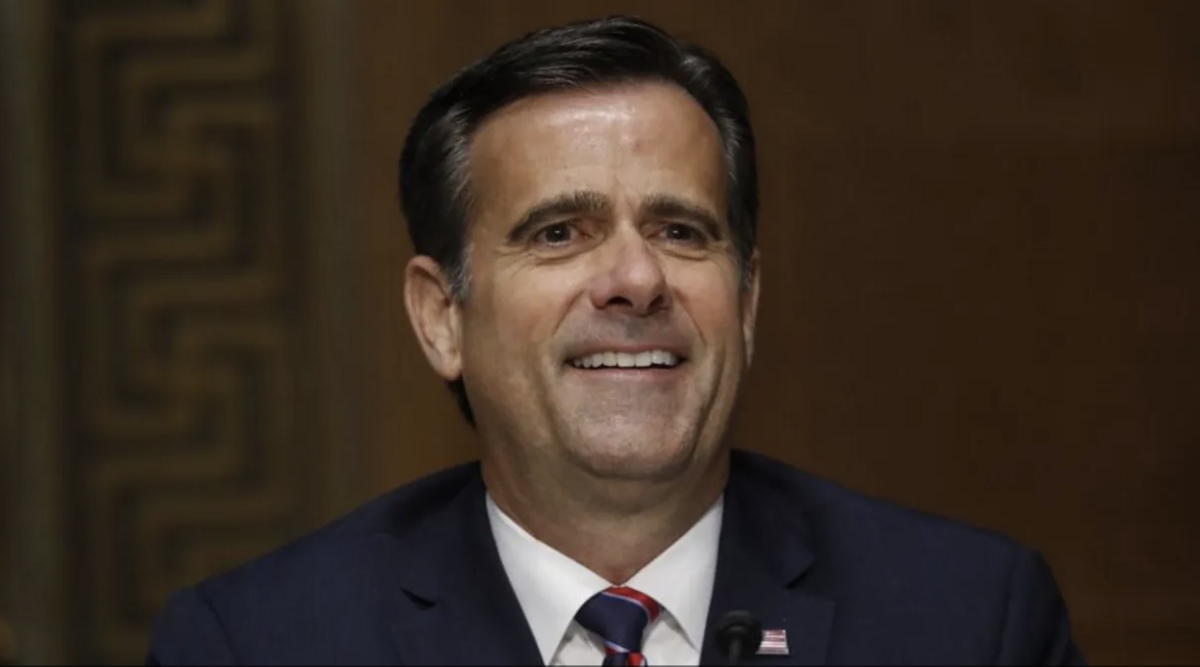







CIA Director John Ratcliffe said Wednesday that US airstrikes last Saturday "inflicted significant damage" on Iran's nuclear program, while the Trump administration insisted that the initial report, issued by the Defense Intelligence Agency (DIA), was based on preliminary and outdated assessments.
Classified intelligence on damage to Iran's nuclear program from US strikes was at the center of a political storm on Wednesday, with intelligence chiefs pushing for new assessments and President Trump continuing to defend his assertion that Iran's key facilities had been "destroyed."
While other US spy agencies are assessing the damage, none of these agencies have supported Mr. Trump's description of the level of destruction caused by the US attack, although they all confirmed that the damage was extensive.
The Defense Intelligence Agency report was based on information obtained just over 24 hours after the US attacks on three Iranian nuclear sites.
The report described the level of damage as moderate to severe, according to people familiar with or familiar with its contents.
One of these people said that if the Defense Intelligence Agency's assumption that Fordow, the deepest underground site, had sustained moderate damage was correct, the facility would be rendered inoperable and Iran would not attempt to rebuild its enrichment capabilities there. The report added that if this assumption proves incorrect, Iran could quickly build a nuclear weapon within months.
The report estimated that the nuclear program had generally been delayed by months, according to leaked information. However, the report's conclusion indicated "low confidence" in this finding, reflecting the preliminary nature of the assessment and the variables and uncertainty that intelligence agencies have long struggled with in predicting Iran's nuclear progress.
CNN and other news agencies have reported that the US Defense Intelligence Agency (DIA) has found that Iran's nuclear program has been delayed by only a few months.
The CIA offered a different assessment on Wednesday, with Ratcliffe saying it had gathered new information about the state of Iran's nuclear program and the sites struck by US bombers.
“This includes new intelligence from a reliable and historically accurate source/method that many of Iran’s key nuclear facilities have been destroyed and will need to be rebuilt over the course of years,” Ratcliffe said in a statement.
The National Security Agency, which focuses on intercepting phone and internet communications, is studying what the Iranians are saying about the strikes and the fate of their uranium stockpiles. Officials said the National Geospatial-Intelligence Agency, which studies satellite imagery, was monitoring movements around nuclear sites in the days leading up to the US strikes.
Tulsi Gabbard, Director of National Intelligence, posted new intelligence on social media showing that it would take years if Iran chose to rebuild the three sites hit by the US attack.
The officials added that her comment was also based on new US intelligence gathered since the Defense Intelligence Agency's report was written on Sunday. The new intelligence relates to existing facilities targeted by US strikes, not whether Iran could use other covert facilities to further its nuclear weapons work. Battles over intelligence agencies' conclusions have been at the heart of US foreign policy debate for more than two decades, from warnings about al-Qaeda before the September 11, 2001, attacks, to intelligence about Iraqi weapons programs used by the George W. Bush administration to justify the 2003 invasion of Iraq, which was later disproved, to blaming the Chinese government for the spread of the coronavirus.
For his part, US Defense Secretary Pete Hegseth argued that bombing Iran's nuclear sites likely caused "significant damage," just days after reports emerged that the military's intelligence arm had assessed Tehran's program as only a few months behind schedule.
In a tense press conference on Thursday, Hegseth did not deny the report's findings, but argued that its assessments were "preliminary" and "low confidence."
"This was a historically successful attack," Hegseth said.
The Senate was also scheduled to hear from intelligence officials on Thursday, but the administration decided that Secretary of State Marco Rubio, who is also the interim national security adviser, and Defense Secretary Hegseth would deliver the briefing. Administration officials agreed to Ratcliffe's attendance after senators expressed concern about the absence of intelligence officials from the briefing, according to a person familiar with the briefing plans. At a Senate Intelligence Committee hearing on Wednesday, Senator Mark Warner of Virginia, the panel's top Democrat, expressed hope that government officials could address the discrepancies between Mr. Trump's claims and the fact that "the intelligence may not be as rosy."
"This repeated pattern of manipulating or distorting intelligence to support a political narrative is deeply troubling," Warner said. "We've seen where this road leads."
Trump's angry responses to the news reports, delivered during a press conference at the NATO summit in the Netherlands, focused on the extent of the damage caused by the attacks on two nuclear sites, at Natanz and Fordow, buried under a mountain and secured by hundreds of feet of concrete, as well as a separate cruise missile attack on a site in Isfahan.
The DIA report became a flashpoint in public debate.
Much of the controversy stemmed from Trump's choice of words within hours of the strikes, as B-2 bomber pilots were still returning to their base in Missouri. He said that the Iranian nuclear sites struck by the United States had been "totally destroyed"—an assessment not directly echoed by any intelligence official.
However, the damage to the three sites is only one part of a larger question about the extent to which all aspects of Iran's nuclear program were crippled by the US attack and the nearly two-week Israeli war. Israel killed Iranian nuclear scientists, eliminated military officials, and bombed enrichment facilities before the US military sent in its bombers.
Various intelligence agencies in the United States, Israel, and Europe are now racing to determine exactly how much damage has been done to the Iranian program, how much remains, and what Iran will now choose to do—abandon the program or become even more determined to get the bomb, something Mr. Trump has expressed confidence it will not do.
Iran has other nuclear sites, and officials said other information, including comments from the International Atomic Energy Agency, indicates the Iranians have moved a significant portion of their enriched uranium stockpile. If Iran decides to move quickly to build a bomb, it is unlikely to use the facilities targeted in the US strike, but it likely has plenty of raw materials and the expertise to continue, experts say.
شارك برأيك
Ratcliffe: US strikes inflicted 'significant damage' on Iran's nuclear program